
Fibre is your top priority
You want to compare the fibre content of granolas per 100 g, rather than relying on the wording on the front of the pack.


For a weekend breakfast, start by comparing fibre per 100 g: according to Albert Heijn and Jumbo, both Zonnatura Granola classic crunchy vezelrijk and Quaker Zero Sugar Added Granola Naturel contain 22 g. Don’t base your choice on that figure alone. The amount of sugar, ingredients, allergens and your usual portion size can all influence which pack suits your needs. You can assess crunchy muesli using the same nutritional values, but it isn’t the same product as granola.
You want to compare the fibre content of granolas per 100 g, rather than relying on the wording on the front of the pack.
You’re looking for a crunchy weekend breakfast and want to check both added sugar and the sugar content in the nutritional information.
You want to choose from your usual supermarket and read the label when comparing products side by side.
Start with the fibre per 100 g. Then decide whether sugar, ingredients or availability matters most for your weekend breakfast.
| What to consider | What to check | Who it matters to |
|---|---|---|
| Fibre | Compare fibre per 100 g and consider how much you usually serve yourself. | If fibre is my priority, I want to compare two granolas on an equal basis. Around 33% of consumers say fibre content is their top priority. |
| Sugar | Check any claim about added sugar, as well as the ‘of which sugars’ line per 100 g. | I want a crunchy option, but I don’t want to judge how sweet it is by the claim on the front alone. Sugar is the biggest consideration for around 27% of consumers. |
| Ingredients and allergens | Check the ‘contains’ and ‘may contain’ information on the pack you’re buying. | If someone at the table needs to avoid certain ingredients, a suitable label matters more than a higher fibre figure. Ingredient suitability comes first for around 20% of consumers. |
| Pack size and availability | Check the pack size and whether your preferred option is available in your shop. | For a regular weekend breakfast, I want to choose a pack that fits in with my shopping. Around 20% of consumers prioritise availability and pack size. |
The wording on the front of the pack doesn’t tell you how the fibre content of two products compares.
Compare the figures per 100 g, then check the rest of the nutritional information and the ingredients too.
Jumbo says Quaker Zero Sugar Added Granola Naturel has no added sugars, but also lists 3.2 g of sugars per 100 g. These claims don’t mean the same thing.
Check the ‘of which sugars’ line on the current pack as well as the claim.
The Zonnatura, Quaker and Jumbo options mentioned have different ingredients and allergens. A fibre figure tells you nothing about whether a product is suitable for someone with an allergy.
When buying, check both the ‘contains’ and ‘may contain’ information on the label of the exact product.
A product page doesn’t necessarily tell you where you can buy the same pack. Lidl describes the granola mentioned as an in-store product.
Check where it’s sold and compare the label of the option you find in store.
Albert Heijn lists 22 g of fibre per 100 g for Zonnatura Granola classic crunchy vezelrijk.
Jumbo lists 17.1 g of fibre and 24.1 g of protein per 100 g for its Granola Proteïne.
Albert Heijn’s granola range includes its own options as well as products from Zonnatura.
Lidl lists granola in super berry and super nutty varieties, and describes them as available in store only.
Aldi lists Golden Bridge Granola in a 500 g pack, alongside other types of breakfast cereal.
Below you’ll find one granola and three crunchy muesli or Cruesli options for breakfast. Check the product type and compare the nutritional information on the exact pack before choosing.
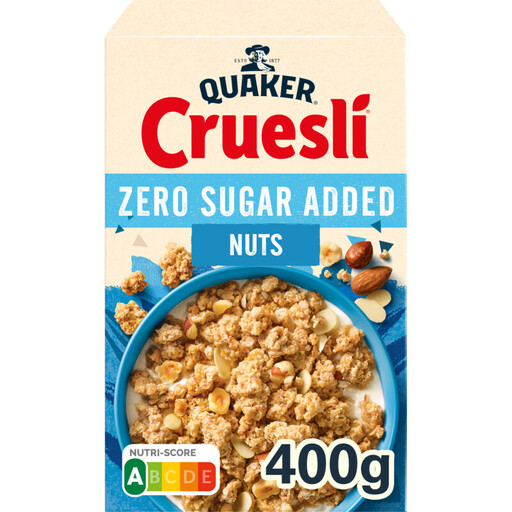 Image unavailable
A Cruesli option to consider if you’re watching your sugar intake as well as looking for a crunchy breakfast. Compare fibre and sugar per 100 g, and check the ingredients if you have allergies.
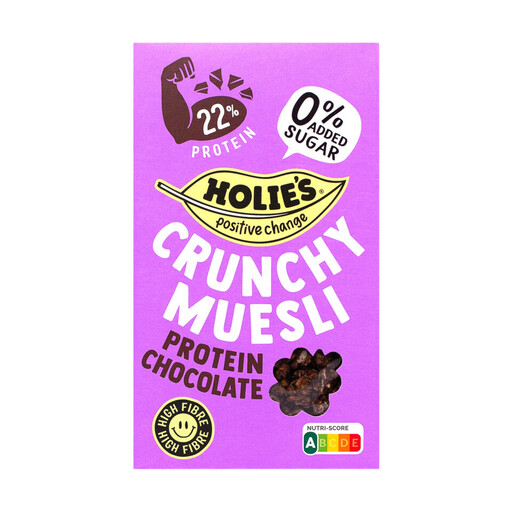 Image unavailable
A crunchy muesli for anyone who wants to compare protein as well as fibre in their breakfast cereal. Check the nutritional information per 100 g and, if you have allergies, read the label on the pack.
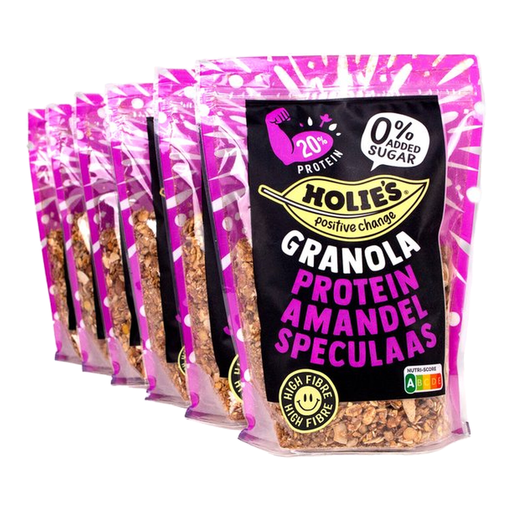 Image unavailable
A granola in a pack of six for anyone who plans to enjoy this option regularly. Check the current pack before comparing sugar, energy or protein with another granola, and read the allergen information too.
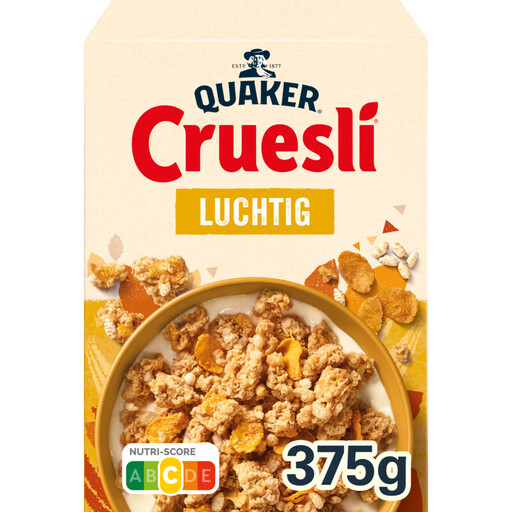 Image unavailable
A crunchy muesli for anyone looking to compare another breakfast cereal mix with granola. As well as fibre, check the sugar content and ingredients on the exact pack.
Under Regulation (EC) No 1924/2006, the EU nutrition claim ‘high in fibre’ requires at least 6 g of fibre per 100 g or 3 g per 100 kcal. Before buying, also compare the actual fibre content per 100 g of the options you’re considering.
No. The fibre content per 100 g alone doesn’t tell you how long someone will feel energised. Check the full nutritional information and bear in mind the portion you eat.
The Voedingscentrum recommends at least 25 g of fibre a day for adult women and at least 30 g for adult men. Granola isn’t the only way to get fibre; other foods contribute too.
On the current pack of the exact option, check both the ‘contains’ and ‘may contain’ information. The Zonnatura, Quaker and Jumbo products mentioned contain different ingredients and may have different traces, so don’t rely on the brand name alone.