
Breakfast fans keeping an eye on fibre
You want to make granola part of your regular morning routine and compare its fibre content. Check the amount per 100 g before choosing based on flavour or packaging.


For a weekday breakfast, start by comparing the fibre content of granola per 100 g, then see which option best suits your other preferences. A ‘high-fibre’ claim doesn’t tell you how much sugar or fat the product contains, or which allergens it may include, so check the nutritional information and ingredients for the exact variety too.
You want to make granola part of your regular morning routine and compare its fibre content. Check the amount per 100 g before choosing based on flavour or packaging.
You’re looking for crunchy granola with no added sugar, but also want to know how much sugar it contains overall. Check both the ingredients list and the ‘of which sugars’ line.
You’re looking for a different nutritional profile alongside fibre. Compare the values per 100 g and check the ingredients: for example, a protein-focused option may contain soya.
Start with fibre per 100 g, then use sugar, other nutritional values and ingredients to compare granolas. Under EUR-Lex rules, one of the requirements for the ‘high fibre’ nutrition claim is at least 6 g of fibre per 100 g. Meeting that threshold doesn’t tell you everything about the product.
| What to look for | What to check when buying | Who is this important for? |
|---|---|---|
| Fibre content | Check the fibre per 100 g on the packaging of the exact variety. Compare granolas on the same basis. | If fibre is my main priority for a regular breakfast, I want to be able to compare products directly. Around 44% of consumers prioritise fibre content. |
| Added and total sugars | Check the ingredients list for added sugar, and also read the ‘of which sugars’ amount per 100 g. | I want crunchy granola with no added sugar, but don’t expect it to be sugar-free. For around 33% of consumers, this distinction matters most. |
| Protein and carbohydrates | Compare protein, carbohydrates, fibre and fat per 100 g; check the ingredients too. | If I’m choosing based mainly on protein or carbohydrates as well as fibre, I want to know which ingredients contribute to that profile. Around 23% of consumers prioritise these nutritional values. |
The fibre claim relates to fibre content; it doesn’t tell you about the amount of sugar, fat or salt, or which allergens are present.
Use the claim as a starting point, then compare the other nutritional values and ingredients per 100 g.
Granola with no added sugar can still contain sugars. Quaker Nederland lists 3,2 g of sugars per 100 g for Cruesli Granola Zero Sugar Added Naturel.
Check both the ingredients list and the total amount of sugars on the label of the variety you’re buying.
A product name doesn’t tell you which grains, nuts or other allergens the granola contains or may contain.
Every time you buy it, check the ingredients list and any warnings on the packaging of the exact variety.
Quaker Nederland offers granola with no added sugar under the Cruesli name, among other products.
Zonnatura offers granolas including Classic Crunchy, as well as varieties with nuts or cocoa.
Albert Heijn offers several own-brand granolas, including varieties with nuts and options marketed as high-protein or reduced-carbohydrate.
Jumbo offers own-brand granolas with ingredients including nuts, seeds or red berries.
Lidl lists its in-store granola varieties as Super Berry and Super Nutty.
ALDI lists Golden Bridge Granola among its breakfast cereals, alongside separate muesli products.
This selection of Joybuy products includes granola for breakfast and one separate product labelled as crunchy muesli. When choosing, check the product type, pack size and ingredients of the exact variety.
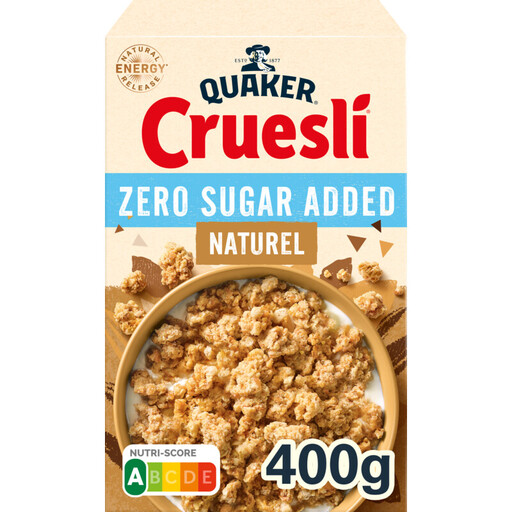 Image unavailable
An option to consider if you’re looking for Cruesli as part of your regular breakfast. Compare the nutritional information on this pack with other varieties; don’t assume it has the same values as a similarly named Quaker product.
If you have allergies, check the ingredients and warnings on the packaging.
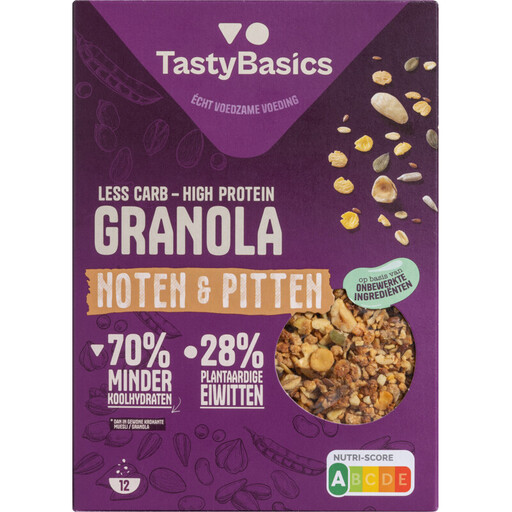 Image unavailable
A granola to consider if you’d like a variety with nuts and seeds for breakfast. If these values matter to you, compare protein, carbohydrates, fibre and fat per 100 g.
If you have allergies, check the ingredients and warnings for this variety.
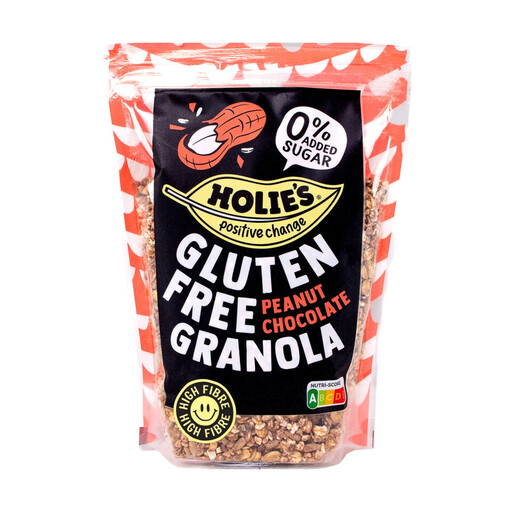 Image unavailable
A granola with peanut and chocolate for anyone looking for those flavours at breakfast. The peanut in the product name is an important consideration if you need to avoid peanuts.
Always check any dietary or allergen claim on the packaging of this exact variety.
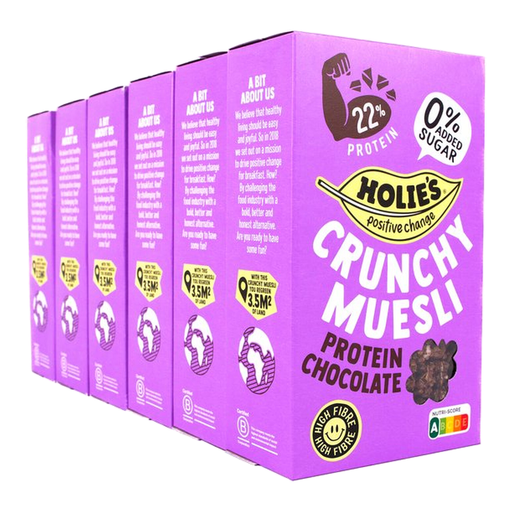 Image unavailable
An alternative to consider if you’re thinking of having crunchy muesli as well as granola for breakfast. This product is labelled as muesli, so don’t automatically treat it as the same type of product.
The pack contains 6 x 400 g. Check the nutritional information and allergens for this variety.
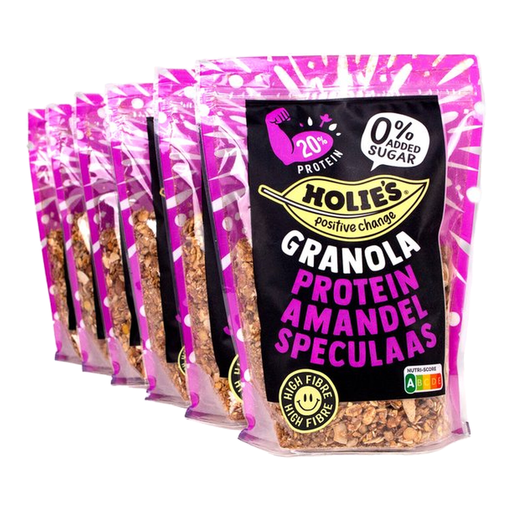 Image unavailable
A granola to consider if you’re looking for almond and speculaas flavours. The pack contains 6 x 350 g.
Check the label on the exact pack for nutritional values and allergens, especially if they’re important to your choice.
Under European rules on nutrition claims, published via EUR-Lex, the ‘high fibre’ claim can be used, among other criteria, when a product contains at least 6 g of fibre per 100 g or 3 g per 100 kcal. Also check the other nutritional values and ingredients: the fibre claim doesn’t assess them.
Compare the nutritional values per 100 g. The Netherlands Nutrition Centre recommends using this basis when comparing labels; for granola, look at sugars, saturated fat and salt as well as fibre.
No. For example, Quaker Nederland lists 3,2 g of sugars per 100 g for Cruesli Granola Zero Sugar Added Naturel. So check both the ingredients list and the ‘of which sugars’ amount on the packaging of the product you choose.
Check the ingredients list and any warnings on the packaging of the exact variety. According to the Netherlands Food and Consumer Product Safety Authority, allergens must be clearly identified in the ingredients list; don’t rely on the flavour name alone.
Follow the storage instructions on the packaging of the exact variety. For example, Jumbo advises storing its Granola Rood Fruit in a cool, dry place and closing the pack tightly after opening.