When comparing granola for a high-fibre breakfast, don’t rely on a claim such as ‘no added sugar’ alone: check the fibre, carbohydrate and sugar content per 100 g, then consider how much you actually eat. The Zonnatura Classic Crunchy, Crunchy Cacao and Amandel Cashew varieties listed by Albert Heijn contain 21–25 g of fibre, but also 50–53 g of carbohydrates per 100 g. So, if you have diabetes, a high fibre content doesn’t mean you can ignore portion size or the rest of your meal.
Who might find these points useful?
Fibre is your top priority
You’re looking for granola for a breakfast where fibre matters. Compare the nutritional information per 100 g: the Netherlands Nutrition Centre recommends using fibre and sugar content to compare breakfast cereals. Also check how much of the product you eat.
Keeping an eye on portions and carbohydrates
For you, the carbohydrates in your own bowl matter more than a claim on the front of the pack. Remember to include yoghurt, milk or other additions when assessing your meal. If you have diabetes, discuss changes to a low-carbohydrate eating pattern with your doctor and dietitian, as Diabetes Fonds advises.
Less added sugar, with a satisfying crunch
You want to compare granola or crunchy muesli by their added sugar content. A statement about added sugar doesn’t tell you how many carbohydrates are in a weighed portion, so check the nutrition table too.
What should you consider when choosing?
Start by comparing dry granola per 100 g. Then consider what the amount in your bowl, together with any additions, means for the meal as a whole.
| What to consider |
What to check when buying |
Who it matters to |
| Fibre |
Compare the number of grams of fibre per 100 g of dry granola. |
If fibre is my main priority, I want to know how much the granola contains before considering the portion. Around 42% of consumers are expected to prioritise this need. |
| Carbohydrates and portion size |
Check the carbohydrates per 100 g and weigh the amount you use. |
When I count carbohydrates, the amount in my bowl, together with the rest of breakfast, needs to fit my agreed plan. This need is expected to be the top priority for around 33% of consumers. |
| Added sugar |
Check the sugars per 100 g and look for ingredients such as sugar, syrup and honey. |
I want a crunchy option without mistaking a claim about added sugar for a low carbohydrate content. This need is expected to be a priority for around 25% of consumers. |
What could you get wrong?
-
Taking ‘high in fibre’ to mean ‘low in carbohydrates’
The Zonnatura varieties listed by Albert Heijn contain 21–25 g of fibre and 50–53 g of carbohydrates per 100 g. Fibre content alone therefore doesn’t tell you how many carbohydrates are in your breakfast.
Compare both figures, then consider your weighed portion and what else you add to your bowl.
-
Relying on ‘no added sugar’ alone
That statement doesn’t mean a granola is low in carbohydrates. Albert Heijn lists 53 g of carbohydrates per 100 g for Zonnatura Classic Crunchy, alongside the statement ‘0% added sugar’.
Check the nutrition table for carbohydrates, sugars and fibre, and look at the ingredients list too.
-
Comparing a prepared portion with dry granola
The nutritional information shown by Albert Heijn for Quaker Cruesli Zero Sugar Added Nuts is for a serving made with 45 g of product and 100 ml of low-fat yoghurt. This isn’t directly comparable with dry granola per 100 g.
Compare like with like. Then use the amount of breakfast cereal and additions you actually have to assess your meal.
-
Overlooking allergens in a cereal or nut mix
Ingredients vary between products. For example, Zonnatura Granola Amandel Cashew contains almond and cashew; other products mentioned include ingredients such as oats and wheat.
Before buying, check the current ingredients and allergen information on the pack you’ve chosen.
Brands and product ranges to consider
Zonnatura
The Classic Crunchy, Crunchy Cacao and Amandel Cashew granola varieties can be compared individually using their listed nutritional information.
- Albert Heijn lists 21–25 g of fibre and 1.6–1.9 g of sugars per 100 g for these three varieties.
- They also contain 50–53 g of carbohydrates per 100 g. Check the ingredients and allergens for the variety you choose.
Quaker Cruesli
Cruesli Zero Sugar Added Nuts is a crunchy muesli option, not the same product category as granola.
- The product information shown by Albert Heijn states that it contains no added sugars or sweeteners.
- Don’t compare nutritional information for a prepared portion directly with figures for dry granola per 100 g. Check the allergens on the pack too.
AH
AH Granola Noten is a supermarket own-brand variety for which Albert Heijn lists nutritional information per 100 g.
- The listed figures are 8.1 g of fibre, 11 g of sugars and 56 g of carbohydrates per 100 g.
- The ingredients list includes sugar, glucose syrup and honey. Compare the ingredients if limiting added sugar is your priority.
Jumbo
The own-brand range includes Granola Noten, Pitten en Zaden and Granola Haver, Pitten en Bessen.
- The varieties mentioned offer a choice of different ingredients.
- To compare fibre, carbohydrates, sugars and allergens, read the label on the specific variety.
Golden Bridge (ALDI)
ALDI describes Golden Bridge Granola as a mix with oat flakes, nuts and seeds or red fruits.
- The pack listed contains 500 g.
- Check the nutritional information and allergens for your chosen variety on the pack.
Lidl
Lidl lists granola varieties called Super Berry and Super Nutty.
- The varieties mentioned offer different flavour profiles.
- Check the label in store for the ingredients, allergens and nutritional information of the variety you’re considering.
Granola and crunchy muesli on Joybuy
This selection includes both granola and crunchy muesli. Keep the distinction in mind when comparing ingredients, and use the nutritional information on the pack you choose to work out your own portion.
 No image available
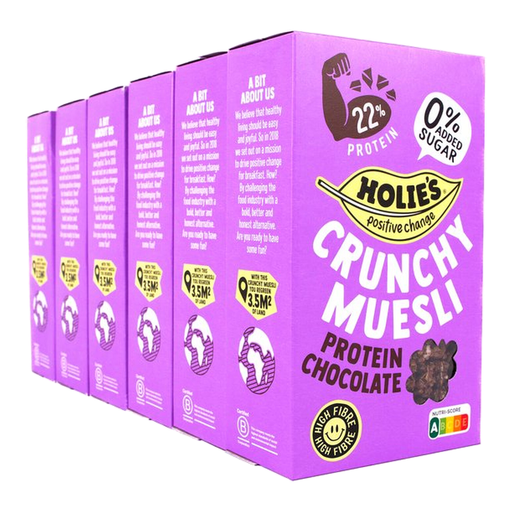
Holie's Crunchy Muesli Protein Chocolate, 6 × 400 g
A crunchy muesli option if you’re after chocolate flavour and several packs. Check the fibre and carbohydrate content on the pack for your breakfast, and check the latest allergen information.
View on Joybuy
 No image available
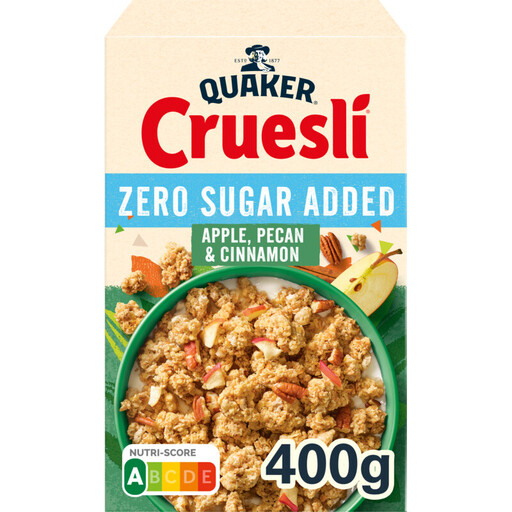
Quaker Cruesli Zero Sugar Added Apple, Pecan and Cinnamon, 400 g
A crunchy muesli option if you’re looking for apple, pecan and cinnamon. Check the carbohydrate and sugar content for the amount in your bowl, noting the serving basis stated on the pack; also check the allergens.
View on Joybuy
 No image available
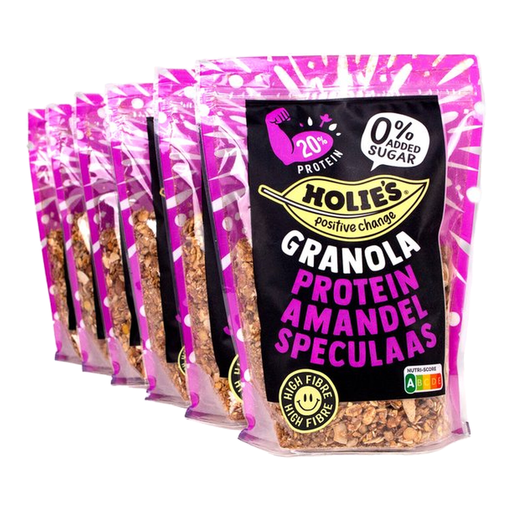
Holie's Granola Protein Amandel Speculaas, 6 × 350 g
A granola option if you’re looking for almond and speculaas flavours and want a pack of six. Use the carbohydrate and sugar figures on the current pack to work out your portion, and check the allergen information.
View on Joybuy
 No image available
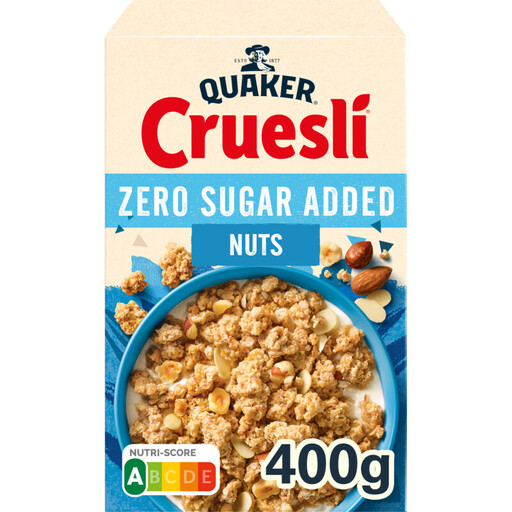
Quaker Cruesli Nuts Zero Sugar, 400 g
A crunchy muesli option if you’re considering a nut variety. Compare fibre, carbohydrates and sugars with other products on the same basis, and read the latest allergen information.
View on Joybuy
Frequently asked questions
Is granola with no added sugar also low in carbohydrates?
No, those are not the same thing. Albert Heijn lists ‘0% added sugar’ and 53 g of carbohydrates per 100 g for Zonnatura Classic Crunchy. Check the carbohydrate content for the amount you actually eat.
How do I compare two types of granola?
Compare fibre, carbohydrates and sugars per 100 g using the same product basis, then read the ingredients list. The Netherlands Nutrition Centre recommends fibre and sugar as useful points of comparison for breakfast cereals; nutritional information for a prepared portion can’t be compared directly with that for dry granola.
Is it worth weighing my portion if I count carbohydrates?
Weighing helps you work out the carbohydrates in the amount of granola in your bowl. Diabetes Fonds discusses weighing portions, including for children who use insulin; the guidance that applies to you depends on your individual treatment plan.
Can I start a very low-carbohydrate diet on my own if I have diabetes?
Discuss a low-carbohydrate or carbohydrate-restricted eating pattern with a doctor and dietitian first. Diabetes Fonds recommends getting support when you start, as your medication may need to be adjusted.


