
If fibre is your priority
You want to know how much fibre your breakfast actually contains. Compare the nutritional information per 100 g, then work out how much is in the portion you eat rather than relying on the front of the pack.


When choosing granola for a quick breakfast, compare the fibre per 100 g and the amount you actually eat; a claim on the front of the pack doesn’t tell you how much fibre is in your portion. Also compare sugars, ingredients and allergens if they matter to your choice. Bear in mind that crunchy muesli and granola are different product categories, even when you eat them in the same way for breakfast.
You want to know how much fibre your breakfast actually contains. Compare the nutritional information per 100 g, then work out how much is in the portion you eat rather than relying on the front of the pack.
You’re looking for a crunchy breakfast option with no added sugars. Also check the total sugars, fibre and energy: no added sugars doesn’t mean a product contains no sugars or calories.
You want to take protein or carbohydrates into account as well as fibre. Compare the values on the same basis and read the ingredients and allergen information for the variant you choose.
Start with your main requirement, then compare the nutritional information on the same basis: per 100 g, followed by your own portion. This makes it easier to see what a difference on the label means for your breakfast.
| What to consider | What to check when buying | Who it matters to |
|---|---|---|
| Fibre per portion | Compare grams of fibre per 100 g and work out how much is in the amount you eat. | If fibre is my main reason for choosing granola, I want to know what I get from my usual portion; around 50% of consumers make this their priority. |
| Added sugars | Check the information about added sugars and also compare total sugars and fibre. | I’m looking for a crunchy breakfast with no added sugars, but I don’t want to overlook fibre. This is the most important factor for around 30% of consumers. |
| Protein and carbohydrates | Compare protein, carbohydrates and fibre per 100 g; also check energy and allergens. | If I want to tailor my breakfast around protein or carbohydrates, the overall composition matters as well as the fibre content; this is the top priority for around 20% of consumers. |
A variant with no added sugars may still contain sugars, and its fibre and energy content may differ from other variants. Albert Heijn lists AH Granola koolhydraat verlaagd 0% suiker as containing 16 g of fibre and 532 kcal per 100 g; the AH nut variant lists 14 g of fibre per 100 g.
Compare fibre, sugars and energy on the same basis, then consider your portion.
Jumbo lists Jumbo Granola Haver, Pitten & Bessen as containing 8.2 g of fibre per 100 g, and TastyBasics Low Carb - High Protein Granola Naturel as containing 25 g per 100 g. You can’t tell the difference from the product names alone.
Use the nutrition table to compare variants per 100 g, then work out the amount in your own portion.
The variants mentioned have different ingredients and warnings about possible contact with allergens. According to the Netherlands Food and Consumer Product Safety Authority, allergen information must appear on the label of pre-packed products.
Read the ingredients and allergen information on the packaging of the exact variant you’re buying, even if you already know the brand.
A range page and an individual product page may give different information about availability. Jumbo’s listings for Quaker Zero Sugar Added Granola Naturel and Jumbo Granola Haver, Pitten & Bessen state that these products are no longer available online.
Before ordering or visiting a shop, check that the variant you want is currently available and look at its packaging.
The differences below apply to the products mentioned and not necessarily to every granola from the same brand. For your final comparison, use the nutritional information for the variant you intend to buy.
Jumbo lists Quaker Zero Sugar Added Granola Naturel as containing 22 g of fibre per 100 g, with no added sugars or sweeteners.
Albert Heijn lists AH Granola noten 0% toegevoegd suiker as containing 14 g of fibre per 100 g, and AH Granola koolhydraat verlaagd 0% suiker as containing 16 g per 100 g.
Jumbo lists own-brand variants with nuts, kernels and seeds, or with oats, kernels and berries, both in 500 g packs.
Lidl Netherlands lists granola in Super Berry and Super Nutty variants and directs shoppers to the store for this product.
ALDI Netherlands lists Golden Bridge Granola in a 500 g pack, with variants based on ingredients including nuts and seeds or red fruits.
Albert Heijn lists Zonnatura Classic Crunchy Vezelrijk as containing 22 g of dietary fibre and 1.6 g of sugars per 100 g, with 0% added sugar.
This selection from Joybuy includes Cruesli granola and crunchy muesli for a quick breakfast. Crunchy muesli isn’t granola: compare the product category and nutritional information for each variant separately.
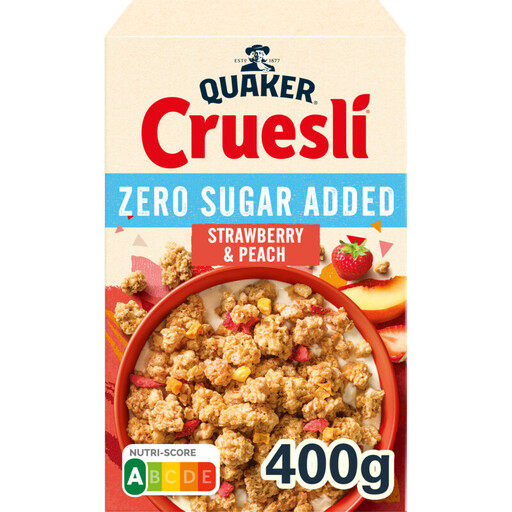 Image unavailable
A granola variant to consider if both fibre and the claim about added sugars matter to you. Compare the fibre per 100 g on the pack with your own portion, and read the allergen information, especially for cereals, milk or nuts.
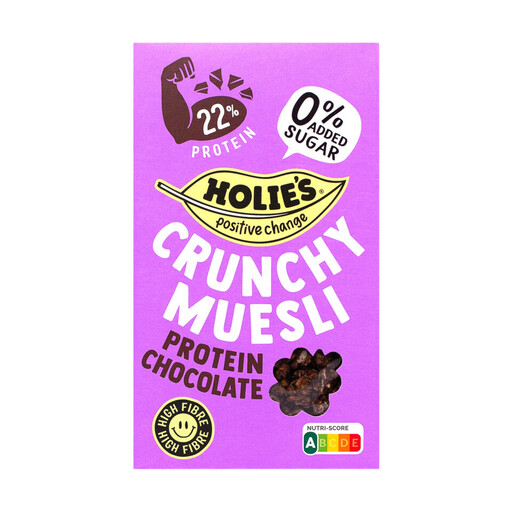 Image unavailable
A crunchy muesli to compare separately from granola if protein matters to you as well as fibre. Check the values per 100 g on the pack and work out how much is in your portion; check the allergen information for cereals, nuts, milk and peanuts.
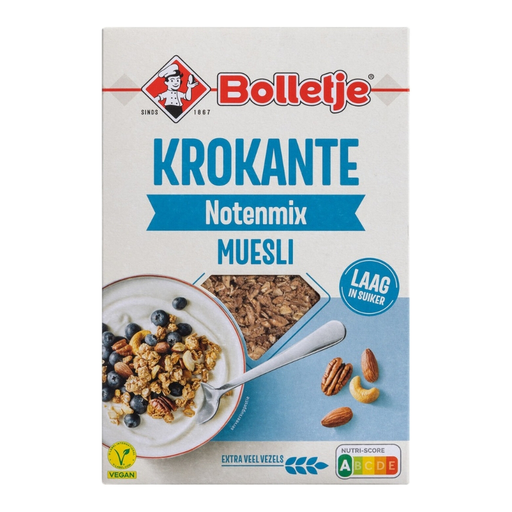 Image unavailable
A crunchy muesli for anyone who wants to compare a nut variant and the fibre in a measured portion. Use the nutritional information on the pack, and if you have allergies, check the nuts listed and whether it may contain milk, soya or sesame.
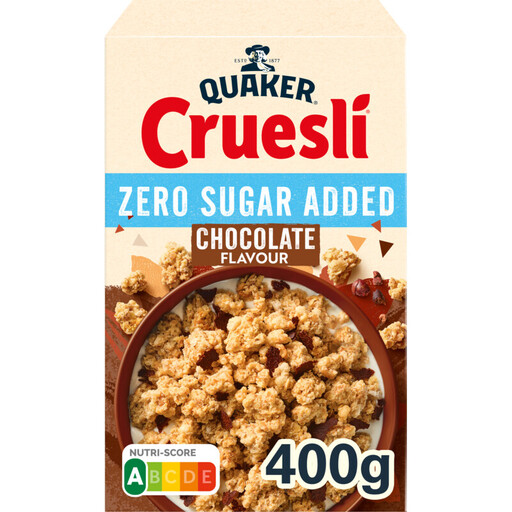 Image unavailable
A chocolate-flavoured option to consider if the sugar claim matters to you. Before comparing fibre, check which quantity the fibre value refers to on the pack, and check the allergen information for milk, cereals and nuts.
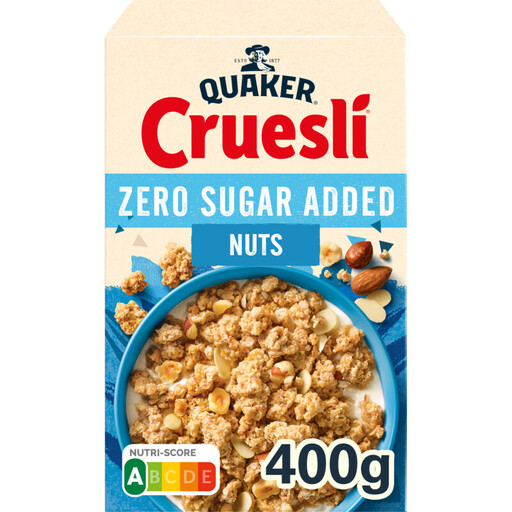 Image unavailable
A nut variant to consider if the sugar claim and ingredients influence your choice. To compare it with other options, check the fibre per 100 g on the pack; if you have allergies, read the information about ingredients including almonds, hazelnuts, cereals and milk.
First compare the grams of fibre per 100 g, then work out how much is in your portion. As a guide, Albert Heijn lists Zonnatura Classic Crunchy Vezelrijk as containing 22 g per 100 g, while Jumbo lists Jumbo Granola Haver, Pitten & Bessen as containing 8.2 g per 100 g. Always check the nutritional information for the variant you’re buying.
No, granola doesn’t have to be the only source of fibre in your breakfast. Look at the other foods you eat too, and assess the granola based on the fibre in your portion.
Before choosing a product, read the ingredients and allergen information on the packaging of the exact variant. According to the Netherlands Food and Consumer Product Safety Authority, allergen information must appear on the label of pre-packed products; also look out for warnings about the possible presence of other allergens.
Pack a measured portion in a sealed container, and add any liquid ingredients just before eating if you want to keep it crunchy. Follow the storage instructions on your product’s packaging after opening.