
Breakfast lovers comparing fibre content
You want to know how much fibre granola contains per 100 g, then work it out for the portion you actually eat. A fibre claim on the front of the pack isn’t a substitute for that comparison.


First, choose granola for your Sunday breakfast by comparing the fibre content per 100 g. Then check the sugars, ingredients and allergens that matter to you. Under EU Regulation 1924/2006, the claim ‘high in fibre’ may be used for products containing at least 6 g of fibre per 100 g or 3 g per 100 kcal. The claim doesn’t tell you how much fibre is in your portion.
You want to know how much fibre granola contains per 100 g, then work it out for the portion you actually eat. A fibre claim on the front of the pack isn’t a substitute for that comparison.
For example, you might be looking for a variety with no added sugar, while still wanting to check the total sugars and ingredients. This information appears in different places on the packaging.
Before buying, you check the ingredients, allergen information and any warnings about cross-contamination. A gluten-free label doesn’t, on its own, tell you whether the product contains nuts or soya.
Start with the fibre content per 100 g and your usual portion size. Then compare the other nutritional information and ingredients with what matters most to you at breakfast.
| What to consider | What to check before buying | Who it matters most to |
|---|---|---|
| Fibre per portion | Check the fibre content per 100 g and work it out for the portion you have. The EU claim ‘high in fibre’ requires at least 6 g per 100 g or 3 g per 100 kcal. | If fibre is my priority, I want to know how much it contributes to my own bowl of granola. Around 33% of consumers say fibre content is their main priority. |
| Sugars and ingredients | Compare ‘of which sugars’ per 100 g with the ingredients list; check for added sugars if they’re listed separately. | I’m looking for something with no added sugar for Sunday breakfast, but I don’t want to assume that means it’s sugar-free. For around 27% of consumers, this check matters most. |
| Allergens and dietary requirements | Read the current allergen information and any relevant warnings about possible cross-contamination. Check the product itself for a gluten-free label if you need one. | If I need to avoid certain ingredients, suitability matters more than a high fibre content. This is the top priority for around 20% of consumers. |
| Availability | Check whether the variety you’ve chosen is available through your preferred shopping route, and check the packaging again when you buy it. | I want to be able to pick up or order the granola I’ve chosen for Sunday breakfast. Around 20% of consumers give this practical availability the highest priority. |
The EU claim sets a minimum level, but it doesn’t mean two products contain the same amount of fibre. For example, Jumbo lists 25 g of fibre per 100 g for TastyBasics Low Carb - High Protein Granola Naturel and 22 g per 100 g for Quaker Zero Sugar Added Granola Naturel.
Compare fibre values on the same basis, then work it out for your own portion.
A product with no added sugar can still contain sugars. For Quaker Zero Sugar Added Granola Naturel, Jumbo lists 3,2 g of sugars per 100 g.
As well as checking the claim on the front of the pack, read the ‘of which sugars’ figure and the ingredients list.
Gluten-free granola may contain other allergens. Jumbo’s product information for Holie's Gluten Free Granola Protein Nuts, for example, lists nuts and soya.
Check the current packaging for ingredients, allergens and any warnings that are relevant to you.
How you can buy granola varies by product. Lidl lists its granola as available in-store only, so a product listing doesn’t automatically mean you can order it online.
Before you shop, check how the specific variety is sold.
Always compare the specific granola, not just the brand name: nutritional information, ingredients and where it’s sold can vary from one variety to another.
The AH own brand includes Granola noten, a variety you can compare using its nutritional information.
At Jumbo, you can view the product information for different granola varieties individually, including options from TastyBasics and Holie's.
Lidl lists granola as an option for in-store shopping.
ALDI Nederland lists Golden Bridge Granola in a 500 g pack.
Zonnatura Granola Amandel Cashew is a specific variety for anyone who wants to check the ingredients as well as the fibre content.
This selection includes granola, a Cruesli variety and crunchy muesli for breakfast. Compare their product categories and check the nutritional information on each pack before choosing based on fibre or sugars.
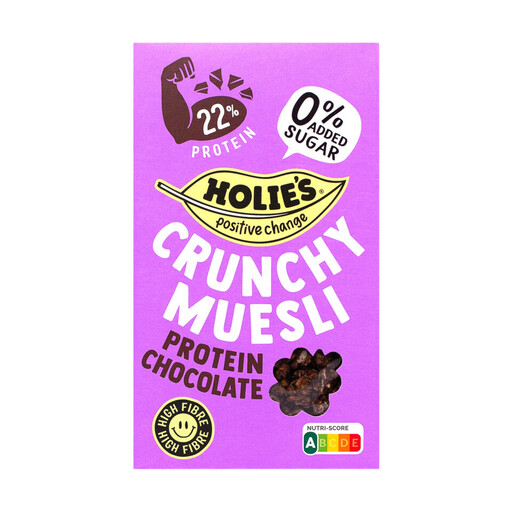 Image unavailable
Crunchy muesli for anyone considering this product category for Sunday breakfast too. Compare the fibre content on the pack with that of granola. Check the ingredients and allergens, including oats and wheat.
 Image unavailable
Granola with chocolate and nuts for anyone who wants to compare the ingredients and nutritional values with other varieties. The pack contains 350 g. If you have allergies, check the latest information, including details of soya, oats, hazelnuts and almonds.
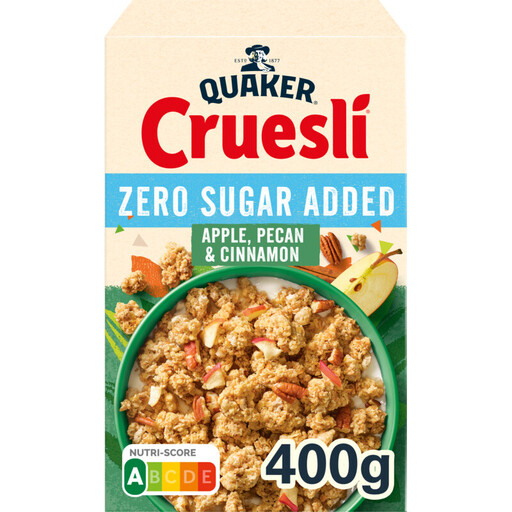 Image unavailable
A Cruesli variety for anyone particularly interested in checking added sugars. Check the total sugars and fibre on the label too; the name alone doesn’t tell you what you need to know. If you have allergies, check the information about oats, wheat and pecans, among other ingredients.
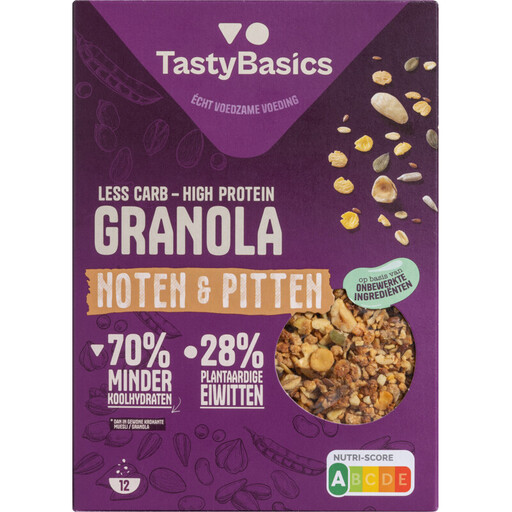 Image unavailable
Granola with nuts and seeds for anyone looking for these ingredients and wanting to compare nutritional values per 100 g. The pack contains 350 g. If you have allergies, check the current packaging carefully, particularly the information about milk and sesame.
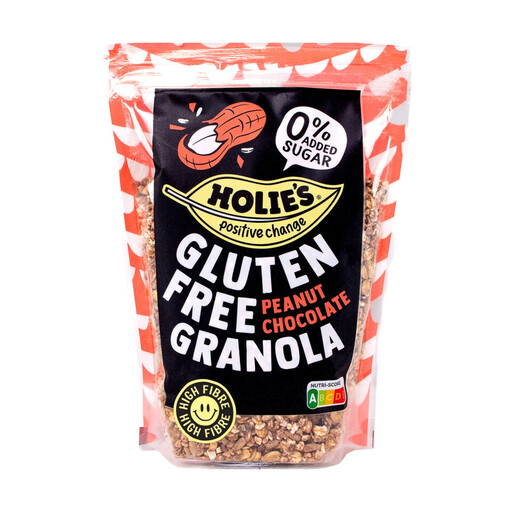 Image unavailable
A granola to consider if a gluten-free label is important to you; check the current packaging for this claim. The pack contains 330 g. If you have allergies, also check the information about peanuts and oats, as well as possible traces of other nuts and soya.
Under EU Regulation 1924/2006, this nutrition claim may be used if a product contains at least 6 g of fibre per 100 g or 3 g of fibre per 100 kcal. To compare packs, check the stated fibre content per 100 g, then work it out for your own portion.
No, granola with no added sugar may still contain sugars. For example, Jumbo lists 3,2 g of sugars per 100 g for Quaker Zero Sugar Added Granola Naturel, so check both the ingredients list and the ‘of which sugars’ figure.
No, a fibre claim and a gluten-free label relate to different properties. If you need a gluten-free product, check the specific pack for this claim and read the other allergen information too.
Yes, check the current packaging every time you buy it if allergens matter to you. The Netherlands Food and Consumer Product Safety Authority explains the mandatory allergen labelling on packaging; also look for any warnings about possible cross-contamination that are relevant to you.