When choosing breakfast cereal for a toddler, don’t rely on a high-fibre claim alone. The Netherlands Nutrition Centre recommends offering children aged 1 to 3 porridge, muesli and other wholegrain breakfast cereals with no added sugar or salt as breakfast alternatives. Then compare the ingredients, nutritional information and allergens on the current packaging. With flakes or granola in particular, the product name doesn’t tell you enough.
Who is this choice relevant to?
Parents looking for wholegrain breakfast cereals
You want to alternate flakes or another cereal breakfast with bread without relying on the words ‘high fibre’ alone. The Netherlands Nutrition Centre recommends wholegrain breakfast cereals with no added sugar or salt as a breakfast alternative for children aged 1 to 3.
Families checking allergens and childcare rules
You need to be able to check which grains and other allergens a product contains before buying it or packing it for your child. The Netherlands Food and Consumer Product Safety Authority says allergens must be clearly listed on the label of prepacked foods. Also ask your childcare provider or school about its own rules.
Parents with busy morning routines
You’re looking for a breakfast that fits into your morning routine, without overlooking the ingredients and allergens. When comparing porridge with flakes or granola, check the preparation instructions on the packaging as well as how convenient each option is.
What should you look for when buying?
Start with the ingredients: is the cereal base wholegrain, and has sugar or salt been added? Then check the fibre content, allergens and preparation method to see what suits your toddler.
| What to consider |
What to check when buying |
Who is this most important for? |
| Wholegrain base and fibre |
Check which grains are wholegrain and compare the fibre per 100 g. Don’t let a high-fibre claim take the place of checking the ingredients. |
I want to choose a wholegrain cereal for breakfast, not just a pack with a prominent high-fibre claim. For around 36% of consumers, a wholegrain base with fibre comes first. |
| Added sugar and salt |
Check the ingredients list for added sugar and compare the salt per 100 g in the nutritional information. |
When choosing between breakfast cereals, I want to know whether sugar or salt has been added. Around 29% of consumers give this check top priority. |
| Allergens and rules for packed food |
Read the current allergen information, including any ‘may contain’ statements, and ask your childcare provider or school about its own rules. |
Before packing breakfast cereal for my child, I need to know whether the ingredients and allergens meet their requirements. This is the top priority for around 21% of consumers. |
| Preparation and texture |
Compare the preparation instructions and check that the final texture and temperature will suit your toddler. |
On a busy morning, I want to be able to prepare something my toddler will enjoy eating. For around 14% of consumers, fitting breakfast into the morning routine is the main concern. |
Common mistakes
-
Choosing based on fibre alone
A fibre claim doesn’t tell you whether the cereal base is wholegrain or whether sugar and salt have been added. For breakfast alternatives for children aged 1 to 3, the Netherlands Nutrition Centre specifically recommends wholegrain breakfast cereals with no added sugar or salt.
Compare the ingredients and nutritional information first, then use the fibre content to distinguish between products.
-
Taking a brand claim as a serving recommendation for toddlers
Kellogg’s states that its All-Bran Fibre Plus claim requires an intake of at least 10 g of wheat bran fibre per day. This condition is not a guide to a suitable serving for a toddler.
Don’t use a claim on the packaging to work out a serving for your toddler. Assess the product and its preparation instructions separately.
-
Relying on the product name to check allergens
A product name or a previous purchase is no substitute for checking the current allergen information. For example, Albert Heijn lists possible traces of wheat and rye in Brinta Havermout.
Check the label when you buy the product, and make sure any food you pack meets the rules of the childcare provider or school in question.
Brands compared
Brinta
Worth considering if you want to compare porridge with flakes, rather than treating both as the same type of breakfast cereal.
- Albert Heijn lists 100% oat flakes as the ingredients in Brinta Havermout.
- Albert Heijn also notes possible traces of wheat and rye in this product. Check the label if gluten is a factor in your choice.
Albert Heijn
Offers a product called AH Glutenvrij Vezelrijke bran flakes for anyone specifically looking to compare flakes.
- The product name tells you what type of flakes you can look into further.
- Don’t base your choice for your toddler on the name alone: check the current ingredients, nutritional information and allergen details.
Kellogg’s
All-Bran Fibre Plus is an example of a product where it’s important to understand the context of a fibre claim.
- Kellogg’s states that All-Bran Fibre Plus contains 11 g of wheat bran fibre per serving.
- The daily intake condition Kellogg’s gives for its claim is not a recommendation on suitability or serving size for toddlers.
Breakfast cereals at Joybuy
These products let you compare porridge and granola for a toddler’s breakfast. Check each pack to make sure the ingredients, nutritional information, allergens and preparation instructions suit your needs. Granola is a different type of product from porridge or bran flakes.
 Image unavailable
Brinta Oatmeal 450 g
An option to consider if you want to prepare porridge for your toddler’s breakfast.
Compare the preparation instructions on the packaging and check the allergen information, including any possible traces of wheat and rye.
View at Joybuy
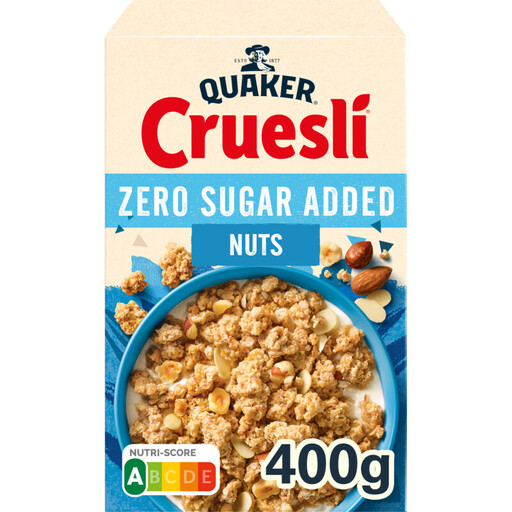 Image unavailable
Quaker Cruesli Nuts Zero Sugar 400 g
If you’re comparing granola with porridge, also check that your toddler will be comfortable with the crunchy texture.
Check the current ingredients and allergen information, paying particular attention to the almonds, hazelnuts and wheat listed. Assess the nutritional information separately from the product name.
View at Joybuy
 Image unavailable
Quaker Oatmeal 600 g
Another porridge option to consider if you’re thinking of preparing a cereal breakfast for your toddler.
Check the ingredients, salt content and preparation instructions on the packaging. Also check the allergen information and any possible traces of wheat and barley.
View at Joybuy
Frequently asked questions
Are high-fibre flakes automatically suitable for a toddler’s breakfast?
No. A high-fibre claim alone isn’t enough to make a choice. For children aged 1 to 3, the Netherlands Nutrition Centre recommends porridge, muesli and other wholegrain breakfast cereals with no added sugar or salt as breakfast alternatives. Also check the allergens and preparation instructions for the product you choose.
Can breakfast cereals be an alternative to bread at breakfast?
Yes. According to the Netherlands Nutrition Centre, porridge, muesli or other wholegrain breakfast cereals with no added sugar or salt can occasionally be an alternative at breakfast for children aged 1 to 3. Consider this choice as part of what your child eats throughout the day, rather than treating one bowl of cereal as a replacement for all grain foods.
How do I check for gluten and other allergens?
Read the allergen information on the current packaging before use. The Netherlands Food and Consumer Product Safety Authority lists cereals containing gluten among the allergens that must be clearly shown on the label of prepacked foods. Ask your childcare provider or school separately about its rules for food brought from home.
Is ‘gluten-free’ in an online product name enough?
No. If you need a gluten-free option, don’t rely on an online product name instead of checking the current packaging. Check the product’s ingredients and allergen information before choosing it for your toddler.


