When stocking up for the week, start by comparing the fibre per 100 g in the exact variant. Under EU rules for the ‘high fibre’ claim, a product must contain at least 6 g of fibre per 100 g or 3 g per 100 kcal. Then check sugars, portion size, allergens and pack size: a fibre claim alone won’t tell you whether a product is right for your shop.
Who is this choice relevant to?
Fibre is your main priority
You’re buying chocolate breakfast cereal for several mornings and want to compare the fibre content of the exact variant. Start with the nutritional information per 100 g; the EU requirement for the ‘high fibre’ claim is at least 6 g per 100 g or 3 g per 100 kcal.
Chocolate flavour, with sugars in mind
You want to choose a chocolate variant, but also check how much sugar a portion contains. Compare the nutritional information per 100 g and read the ingredients list on the pack you’re buying.
Stocking up for several breakfasts
Check the pack weight and how many portions you’ll get from a pack. If allergens are important, check the label of each variant separately.
What should you look for when choosing?
Use the nutritional information per 100 g to compare variants, then consider the portion size and the pack you’ll actually be taking home.
| What to consider |
What to check when buying |
Who it matters to |
| Fibre content |
Check the fibre per 100 g for the exact variant; the EU requirement for the ‘high fibre’ claim is at least 6 g per 100 g or 3 g per 100 kcal. |
If fibre is the deciding factor for me, I don’t want to rely on the front of the pack alone. For around 42% of consumers, checking fibre comes first. |
| Sugars |
Compare sugars per 100 g and per stated portion; read the ingredients list too. |
I want a chocolate flavour, but also want to be able to choose between different sugar levels at breakfast. Around 33% of consumers give this the highest priority. |
| Weekly supply and allergens |
Check the pack weight, portion size, storage advice, and both ‘contains’ and ‘may contain’ statements on the label. |
When buying for several breakfasts, I want a pack that suits how I use it and takes account of the allergens I need to avoid. This matters most to around 25% of consumers. |
Common mistakes
-
Reading ‘source of fibre’ as ‘high fibre’
Albert Heijn lists 4.2 g of fibre per 100 g for AH Chocosmaak schelpen. That doesn’t meet the EU requirement of 6 g per 100 g for the ‘high fibre’ claim on this basis of comparison.
Check the fibre content on the label of the exact variant rather than treating the two claims as the same.
-
Overlooking sugars when checking a fibre claim
A fibre claim doesn’t tell you how much sugar a product contains. Jumbo lists 6.0 g of fibre and 22 g of sugars per 100 g for Kellogg's Coco Pops Chocos.
Compare the fibre and sugar values per 100 g, and check the portion size for your usual bowl too.
-
Assuming a different flavour is the same product
Chocolate breakfast cereals can differ in their ingredients and declared allergens from one variant to another. So checking a different pack previously isn’t enough.
Each time you buy, read the ‘contains’ and ‘may contain’ statements on the pack you’ve chosen.
Brands to consider
The details below apply to the specific variants described, not to a brand’s entire range.
Quaker
Quaker Cruesli Chocolate and Cruesli Zero Sugar Added Chocolate are chocolate cruesli variants with separate nutritional information.
- Albert Heijn lists 9.2 g of fibre per 45 g portion for Zero Sugar Added Chocolate; the product information for Chocolate states that it contains 95% wholegrain cereals.
- Don’t treat the two variants as interchangeable: compare their sugars and allergens on the label of the pack you choose.
Jumbo
Jumbo Choco Kussentjes is a filled chocolate breakfast cereal.
- Jumbo lists 7.2 g of fibre per 100 g for the 500 g pack.
- For this variant, check the declared milk and cereals containing gluten, as well as statements about possible traces of nuts and soya.
Kellogg's
Coco Pops Chocos is a chocolate breakfast cereal to compare per 100 g, rather than by brand name alone.
- Jumbo lists 6.0 g of fibre per 100 g for this variant.
- The same nutritional information lists 22 g of sugars per 100 g; check the ingredients and allergens too.
Nestlé
KitKat Cereals is a chocolate breakfast cereal variant with its own nutrition table.
- Albert Heijn lists 6.4 g of fibre per 100 g for KitKat Cereals.
- Albert Heijn also lists 25 g of sugars per 100 g. Check the label of the exact variant for allergen information.
Albert Heijn
AH Chocosmaak schelpen is an own-brand option to compare with higher-fibre chocolate breakfast cereals.
- Albert Heijn lists 4.2 g of fibre per 100 g for this variant.
- That value doesn’t meet the EU requirement for the ‘high fibre’ claim per 100 g; check the nutritional information if fibre is your main priority.
Chocolate muesli at Joybuy
These products include chocolate cruesli and crunchy chocolate muesli in single packs and multipacks. First choose the product type and pack size that suit how much you’ll use during the week, then compare the nutritional information and allergens for the exact variant.
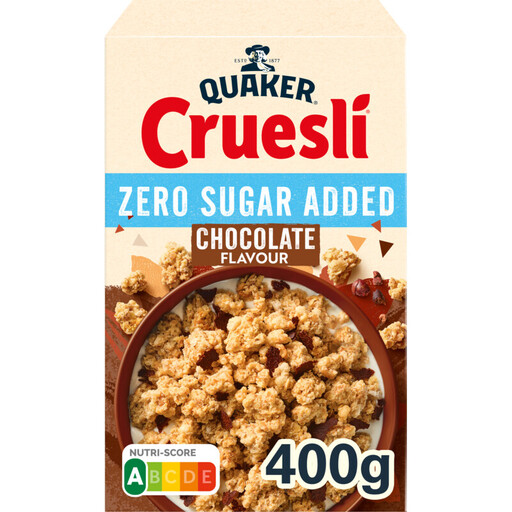 Image unavailable
Quaker Cruesli Choco Zero Sugar, 400 g
A single pack of chocolate cruesli for anyone who doesn’t want to stock up on a multipack. Compare the nutritional information and check the allergens on the current pack.
Pack size: 400 g.
View at Joybuy
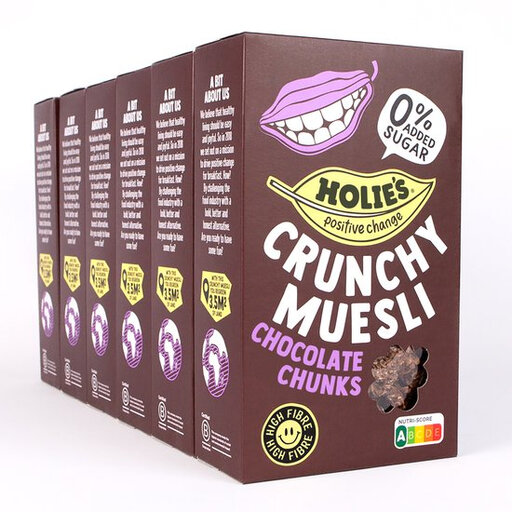 Image unavailable
Holie's Crunchy Muesli Chocolate Chunks, 6 x 400 g
A multipack of chocolate muesli for stocking up for several breakfasts. Check how much you use at a time and read the allergen information on the label for each variant.
Pack size: 6 x 400 g.
View at Joybuy
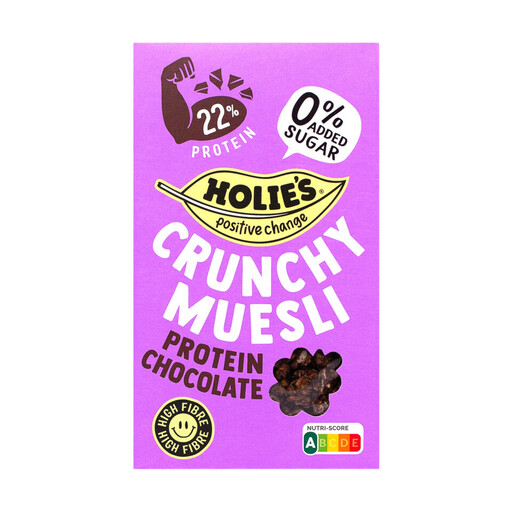 Image unavailable
Holie's Crunchy Muesli Protein Chocolate, 400 g
A single pack of the Protein Chocolate variant. Don’t let the product name make the choice for you: compare fibre and sugars per 100 g and check the allergens.
Pack size: 400 g.
View at Joybuy
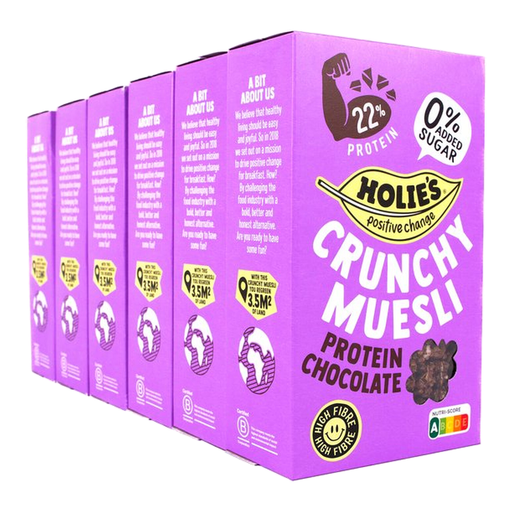 Image unavailable
Holie's Crunchy Muesli Protein Chocolate, 6 x 400 g
The Protein Chocolate multipack is ideal if you want to buy several packs at once. Check the portion size you use and the storage advice for opened packs.
Pack size: 6 x 400 g.
View at Joybuy
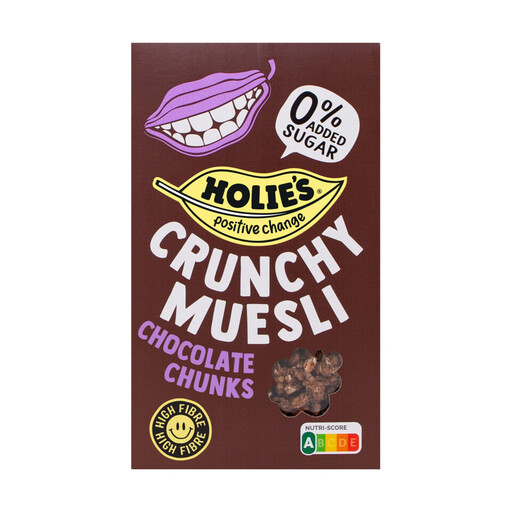 Image unavailable
Holie's Crunchy Muesli Chocolate Chunks, 400 g
A single pack of Chocolate Chunks if you don’t want to choose a multipack straight away. Read the nutritional information per 100 g and check the allergens for this variant.
Pack size: 400 g.
View at Joybuy
Frequently asked questions
When can a chocolate breakfast cereal be called ‘high fibre’?
Under EU rules for this nutrition claim, a product must contain at least 6 g of fibre per 100 g or 3 g of fibre per 100 kcal. Check the nutritional information for the exact variant; ‘source of fibre’ is a different claim.
Why compare sugars and fibre per 100 g?
Comparing per 100 g lets you assess packs with different stated portion sizes on the same basis. The European Commission sets nutritional information per 100 g or 100 ml as the standard reference; after that, check the portion size you use yourself.
Can I rely on the brand name for allergen information?
No. Check the pack for the exact flavour and variant. The chocolate breakfast cereals mentioned have different declared ingredients and possible traces, so read both the ‘contains’ and ‘may contain’ statements.
How should I store a large pack once it’s open?
Follow the storage advice on the pack you buy. The product information described by Albert Heijn and Jumbo recommends storing various variants in a cool, dry place and closing the pack securely after use; also check the best-before date on your pack.


