
If fibre is your priority
You want to know how much fibre the cereal actually contains, so you compare the nutritional information per 100 g rather than relying on the claims on the front of the pack.


If you’re looking for high-fibre chocolate cereals for a weekend breakfast, start with the nutritional information. Under EU rules, a product can only be labelled ‘high fibre’ if it contains at least 6 g of fibre per 100 g or 3 g per 100 kcal. Then compare the sugars, serving size and allergens in the products themselves. A high-fibre option won’t necessarily be the right choice in those other respects.
You want to know how much fibre the cereal actually contains, so you compare the nutritional information per 100 g rather than relying on the claims on the front of the pack.
You’re looking for chocolate flavour without added sugars, but you also want to check the total sugar content and serving size. ‘No added sugars’ doesn’t mean a product contains no sugars.
If several people will be eating breakfast at the weekend, pack size may be a factor. Compare the pack size alongside the nutritional information, so a larger pack isn’t the only reason you choose a product.
First, decide whether ‘high fibre’ is a must-have for your weekend breakfast. Then compare the other nutritional information per 100 g and consider how much you actually want to eat.
| What to consider | What to check | Who it matters to |
|---|---|---|
| Fibre | For the EU ‘high fibre’ claim, check that the product contains at least 6 g of fibre per 100 g or 3 g per 100 kcal. | If I specifically want high-fibre chocolate cereal, the fibre content needs to justify my choice; around 36% of consumers make this their top priority. |
| Sugars | Check ‘of which sugars’ per 100 g and consider any ‘no added sugars’ claim separately. | I want chocolate flavour, but I also check the total sugar content before choosing an option. This is the most important factor for around 29% of consumers. |
| Pack size | Compare the pack sizes and consider how many servings you want to get from each one. | With several people eating breakfast at the weekend, I want to have enough in the cupboard without losing sight of portion sizes; around 21% of consumers prioritise this. |
| Allergens and serving size | Read the allergen information on the current packaging and compare the nutritional values per 100 g and per serving. | If certain ingredients limit my choice, the label on the pack I buy needs to give me the answer. Around 14% of consumers put this check first. |
These are different nutrition claims. Albert Heijn lists 4.2 g of fibre per 100 g for AH Chocosmaak Schelpen and describes it as a ‘source of fibre’. That’s below the EU threshold of 6 g per 100 g for the ‘high fibre’ claim.
Check the fibre content and, if the claim is based on it, the amount per 100 kcal before choosing a product as high fibre.
Albert Heijn lists 10 g of fibre and 16 g of sugars per 100 g for Quaker Cruesli Chocolate. Jumbo lists 6.0 g of fibre and 22 g of sugars per 100 g for Kellogg’s Coco Pops Chocos. So the fibre content alone doesn’t tell you how much sugar either product contains.
Compare the figures per 100 g, then consider what your chosen serving means for your breakfast.
Ingredients and allergens vary from product to product. A previous purchase or product page may not match the pack you have in your hands now.
When you buy, read the current ingredients list and allergen information, including any warnings about possible traces.
Quaker offers chocolate granola in a classic version, as well as a variety called Zero Sugar Added Chocolate.
Coco Pops Chocos is an option if you’re looking for chocolate cereal rather than crunchy muesli.
The own-brand range includes cereals in the Chocosmaak Schelpen variety.
The ALDI own-brand range includes Krokante Muesli Chocolade and Special Flakes Dark Chocolate.
Lidl lists Krokante Muesli Chocolade as a store product in its Dutch breakfast range.
This selection includes crunchy chocolate muesli and chocolate cereal hoops for anyone looking for breakfast cereal for the weekend. Check the nutritional information and current allergen details on each product’s packaging.
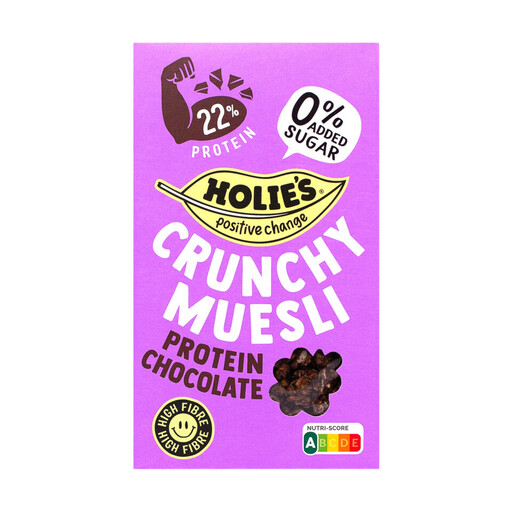 Image unavailable
A pack of crunchy chocolate muesli to consider if you’d like to compare this variety for breakfast. Check the fibre and sugar content, and the allergen information on the current packaging.
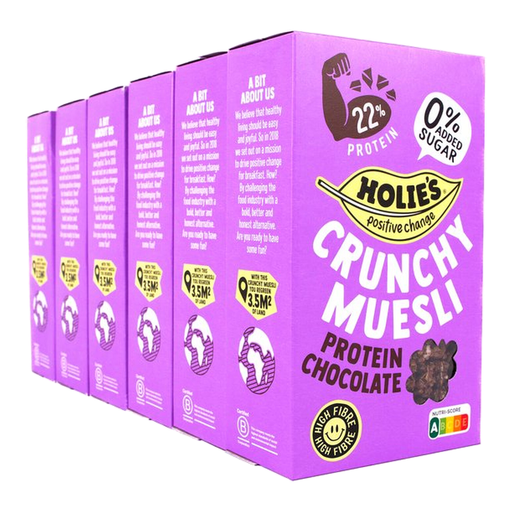 Image unavailable
This multipack contains six 400 g packs and may suit you if you’re stocking up for several breakfasts. Check the nutritional information and allergen details on the packaging.
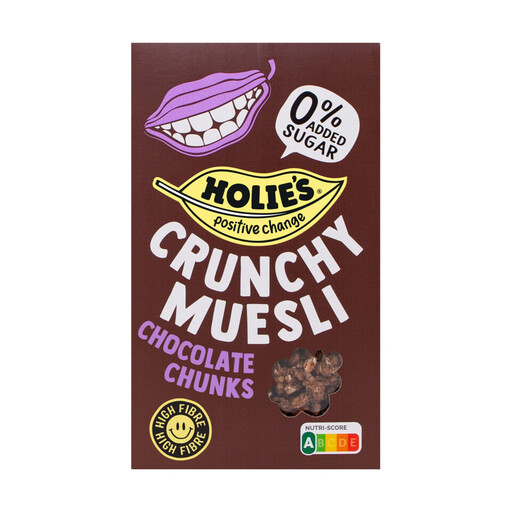 Image unavailable
Crunchy chocolate muesli for anyone looking for the Chocolate Chunks variety. Check the nutritional values per 100 g and the allergen information before comparing it with other options.
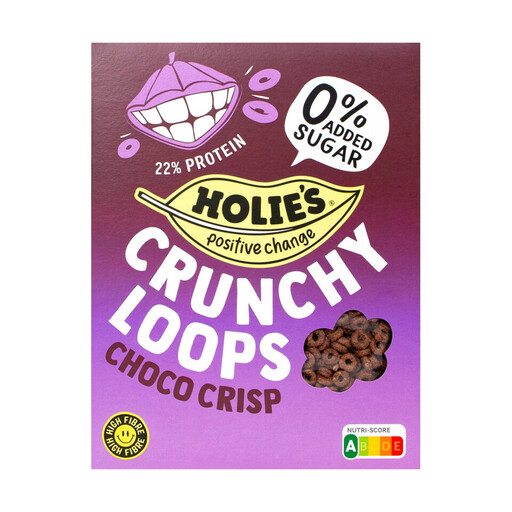 Image unavailable
An option if you’d prefer chocolate cereal hoops to crunchy muesli. Compare the fibre and sugars per 100 g and check the allergen information before choosing.
Under EU Regulation (EC) No 1924/2006, the ‘high fibre’ nutrition claim requires a minimum of 6 g of fibre per 100 g or 3 g of fibre per 100 kcal. The words ‘source of fibre’ or ‘wholegrain’ don’t, on their own, show that a product meets this threshold.
No. Don’t assess your fibre intake based on breakfast cereal alone. The Netherlands Nutrition Centre recommends at least 24 g of fibre a day for adult women and at least 30 g for adult men. Fibre also comes from other plant-based foods.
No. Albert Heijn states that Quaker Cruesli Zero Sugar Added Chocolate contains no added sugars or sweeteners, but does contain naturally occurring sugars. So check the ‘of which sugars’ figure in the nutritional information too.
Check the ingredients and allergen information on the pack you’re buying. The grains and other allergens used can vary between the products discussed here, so check for any warnings about possible traces too.