
Busy breakfast eaters looking for fibre
You want to keep weekday preparation to a minimum and mainly compare chocolate breakfast cereals by their stated fibre per 100 g.


For a weekday chocolate breakfast, first compare the fibre per 100 g, then check the sugars, ingredients and how much you usually eat. Albert Heijn’s product information lists varying fibre values for Holie's Granola Chocolate Crunch and Kellogg's chocolate flakes. So choose based on the exact variant, not the product type or a promise of long-lasting energy.
You want to keep weekday preparation to a minimum and mainly compare chocolate breakfast cereals by their stated fibre per 100 g.
You want to enjoy the chocolate flavour, while also checking sugars, ingredients and how much you put in your bowl.
You consider pack size for weekday mornings and also want to know how much fibre the chosen variant contains per 100 g.
Start with the nutritional information per 100 g, then check the ingredients and finally decide which variant and pack size suit your morning routine.
| What to consider | What to check | Who it matters to |
|---|---|---|
| Fibre | Compare fibre per 100 g and consider how much you usually eat. | If fibre is my main priority, I want to compare variants using the same quantity. Around 42% of consumers put fibre first. |
| Sugars and ingredients | Read the ‘of which sugars’ figure per 100 g and check the ingredients and allergen information for the exact variant. | I want a chocolate flavour, but the sugars or certain ingredients determine which pack I can choose. This is the top priority for around 33% of consumers. |
| Pack size | Check the net weight and, for multipacks, the number of packs. | For breakfast on several weekdays, I want to know how much is actually in the pack. Around 17% of consumers look at this first. |
| Taste and convenience | Choose the type you prefer, such as granola, flakes or cereal hoops, and check the usual serving size. | On a busy morning, I mainly want a chocolate breakfast I enjoy and can prepare quickly. This comes first for around 8% of consumers. |
According to Albert Heijn’s product information, AH Choco-flavoured shells contain 4.2 g of fibre per 100 g, compared with 18 g per 100 g for Holie's Granola Chocolate Crunch. A claim on the front of the pack is no substitute for comparing the figures.
Read the nutritional information per 100 g, then consider how much you usually have.
A claim about added sugars doesn’t tell you the total sugars in a product or which allergens it contains. Albert Heijn’s product information also lists nuts and cereals containing gluten for Holie's Granola Chocolate Crunch.
Check the ‘of which sugars’ figure, ingredients and allergen information on the pack of the exact variant.
A fibre value in the nutritional information won’t tell you whether a particular chocolate breakfast cereal will keep you going until lunch.
Use the stated nutritional values to compare products, not as a guarantee of how you’ll feel after breakfast.
Worth considering if you want to compare chocolate granola with a clearly stated fibre value.
Worth considering if you want to compare different chocolate flakes and other chocolate breakfast cereals from the same brand.
Worth considering if you want to compare own-brand chocolate shells with chocolate granola or flakes.
This selection includes chocolate muesli, cereal hoops, granola and cruesli for weekday breakfasts. When comparing products, check the exact variant and read the nutritional information on the pack.
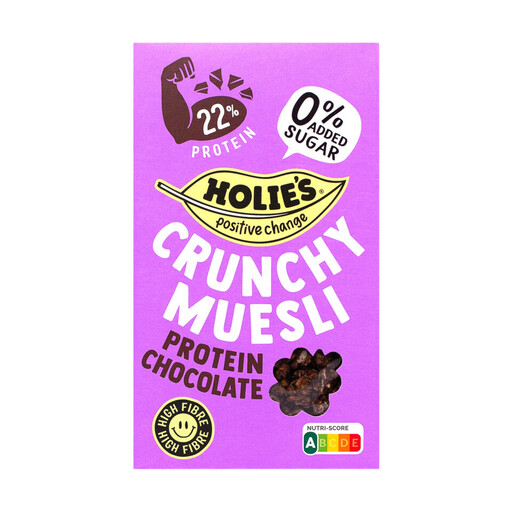 Image unavailable
This chocolate muesli is worth considering if you’re looking for a weekday option with a stated pack size of 400 g. Compare the fibre and sugars on the current pack, and check the allergen information if oats or wheat are relevant to you.
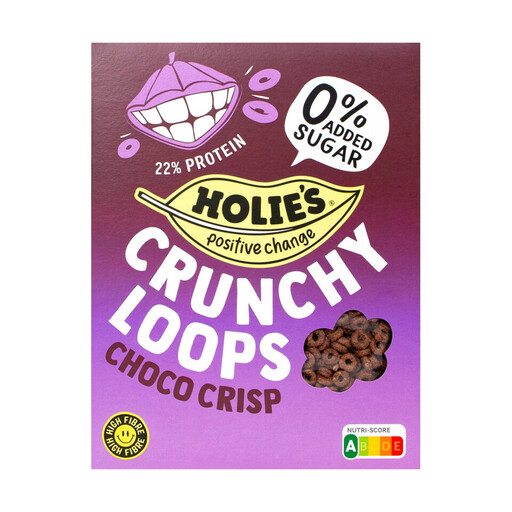 Image unavailable
These chocolate cereal hoops are a good fit if you prefer hoops to muesli or granola in your bowl. The product name states 350 g; for a fibre comparison, check the nutritional information and read the allergen information if wheat or peanuts are relevant to you.
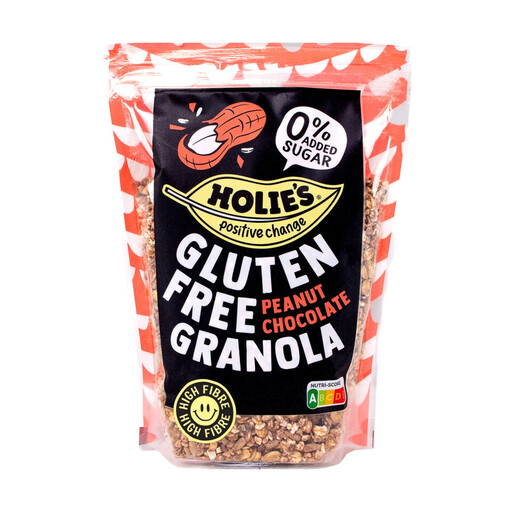 Image unavailable
This chocolate granola is a different product variant from Holie's Granola Chocolate Crunch, so don’t assume it has the same nutritional values. Check how many packs are included in the delivery, and if you have dietary or allergy questions, read the information on the current pack rather than relying on the product name alone.
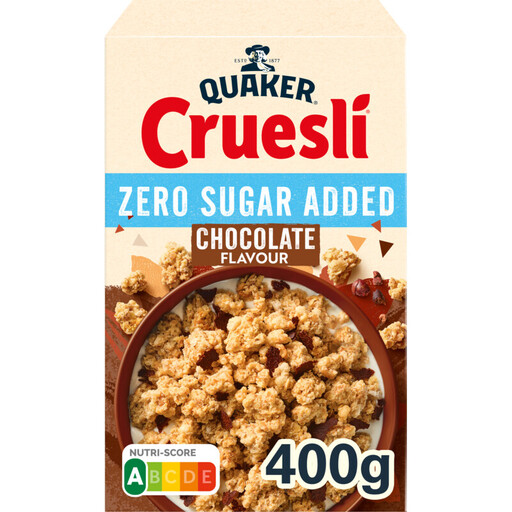 Image unavailable
This chocolate cruesli is an option if you prefer cruesli to flakes or cereal hoops. ‘Zero Sugar’ is part of the product name: check the ‘of which sugars’ figure on the current pack, and compare fibre only once you’ve confirmed what quantity the stated value refers to.
No. Also compare the fibre per 100 g in the nutritional information. Then consider how much you usually eat, so a claim on the front doesn’t take the place of the figure for the exact variant.
A high stated fibre value doesn’t guarantee how you’ll feel until lunchtime. Use fibre, sugars and ingredients to compare products, without assuming they’ll have a particular effect on your energy levels.
Read the allergen information for the exact variant on the current pack. Albert Heijn’s product information lists hazelnuts, almonds and cereals containing gluten, among other ingredients, for Holie's Granola Chocolate Crunch; milk, soya and wheat for Kellogg's All-Bran Choco Flakes; and wheat, barley and milk for Special K Pure Chocolade.
Alongside fibre, compare any other values relevant to the criteria you’ve chosen. For its assessment of breakfast cereals, the Diabetes Fonds lists at least 8 g of fibre and no more than 0.69 g of salt per 100 g, among other criteria. Meeting this criterion alone doesn’t determine whether an individual chocolate variant is suitable.