For a large family, start by choosing a breakfast cereal whose fibre claim or fibre content you can check on the specific pack. Then compare the pack size with how much your family actually eats. Bran flakes, crunchy granola and wholegrain cereal that you prepare warm are different products. A large pack is only practical if the taste and preparation method work for your family too.
Who is this choice relevant to?
Families who prioritise fibre
If you’re mainly looking for a breakfast cereal with a clearly stated fibre content, you can compare a bran product with other options. According to Kellogg’s, a serving of All-Bran Fibre Plus contains 11 g of wheat bran fibre. This figure applies to this specific product, not to all flakes from the brand.
Families looking for a wholegrain breakfast cereal
For households that would rather choose a wholegrain or multigrain breakfast than a distinctly bran-based product. ALDI describes its 7-grain breakfast cereal made with wholegrains as high in fibre. Check the information on the variant you buy.
Families planning their supplies
If you eat it regularly, the pack size isn’t the only thing that matters; your family needs to keep enjoying that particular variant too. So compare the pack sizes and nutritional information of the products you’re considering.
What should you look for when choosing?
Start with the fibre content of the exact variant. Then decide which type of product your family wants to eat and how many packs you’re likely to use.
| What to consider |
What to check when buying |
Who should consider this? |
| Fibre content |
Check the fibre claim for the exact variant and compare the fibre per 100 g. If you’re comparing figures per serving, also check the serving size. |
If fibre is my main reason for choosing breakfast cereal, I want to be able to compare the nutritional information on the pack. Around 42% of consumers prioritise fibre content. |
| Stock and pack size |
Compare pack sizes and think about how much your family uses before buying several packs. |
When I do a big food shop, I want to bring home enough breakfast cereal without leaving packs unused. Stock planning matters most to around 33% of consumers. |
| Taste and how you eat it |
Choose deliberately between options such as bran flakes, crunchy granola and cereal that you prepare. If you’re trying a new variant, check the ingredients and allergen information too. |
I’m looking for something my family enjoys and can eat the way they want; otherwise, buying a bigger supply won’t help. Around 25% of consumers prioritise everyday practicality. |
Common mistakes
-
Assuming ‘wholegrain’ or ‘multigrain’ means ‘high in fibre’
Those words alone don’t tell you how much fibre a specific breakfast cereal contains. In the European Union, the nutrition claim ‘high in fibre’ requires at least 6 g of fibre per 100 g or 3 g per 100 kcal.
Check the claim or nutritional information on the current pack. Compare products on the same basis, for example per 100 g.
-
Assuming all flakes from a brand are the same
Cornflakes, special flakes and bran products are different variants. A fibre claim for one product doesn’t automatically apply to another.
Check the fibre, sugars, ingredients and allergen information for each variant before choosing a family-size supply.
-
Buying several packs based on an older pack
According to Albert Heijn, ingredients, nutritional values and allergy information can change. The flavour and type of product you choose should also suit how your family uses it.
Read the current pack again, especially if allergens are a concern, and only buy more packs once you’ve confirmed the variant is suitable for your household.
Brands to compare
These brands offer different types of breakfast cereal to compare. Check the fibre and ingredients for each product, rather than judging by brand name.
Kellogg’s
All-Bran Fibre Plus is a specific bran product you can compare with other breakfast cereals.
- According to Kellogg’s, a serving of All-Bran Fibre Plus contains 11 g of wheat bran fibre. Jumbo describes the product as high-fibre wheat bran.
- This information doesn’t tell you about the fibre content of other Kellogg’s variants.
Brinta
Brinta Wholegrain breakfast cereal is an alternative for families who aren’t only looking for loose flakes.
- Albert Heijn lists Brinta Wholegrain breakfast cereal in its range.
- Check the fibre content and preparation instructions on the pack you choose before comparing it with cold flakes.
Jumbo
The own-label range includes Special Flakes as one of several variants in a wider selection of breakfast cereals.
- Jumbo describes its Special Flakes as high in fibre.
- Don’t assume cornflakes, honey rings and Special Flakes have the same ingredients or nutritional values.
Golden Bridge
This ALDI own-label range includes a 7-grain wholegrain breakfast cereal and wholegrain muesli.
- ALDI lists the Golden Bridge 7-grain wholegrain breakfast cereal in a 500 g pack and describes its 7-grain breakfast cereal as high in fibre.
- That description doesn’t automatically apply to every Golden Bridge variant, so check the pack you choose.
Albert Heijn
The range includes AH Bran Flakes Wholegrain and Brinta Wholegrain breakfast cereal, which you can compare as different types of product.
- The individual product listings make it easier to search for the right variant.
- Albert Heijn warns that product information can change. Check the current pack for ingredients, nutritional values and allergens.
Breakfast cereals on Joybuy for your family’s store cupboard
This selection includes granola, Cruesli and wholegrain breakfast cereal. They aren’t all loose flakes, and they aren’t all prepared in the same way. When choosing, compare the exact variant, pack size and nutritional information on the packaging.
 No image available
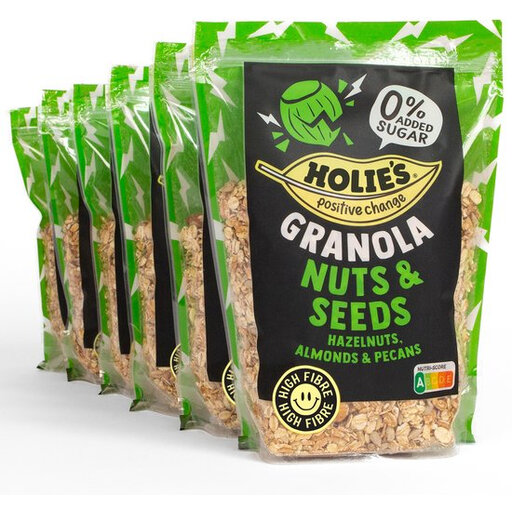
Holie's Granola Nuts & Seeds, 6 × 350 g
This granola is an option if you want to stock up on six packs of the same variant. First check that your family will eat this nuts and seeds variety, and read the current allergen information.
View on Joybuy
 No image available
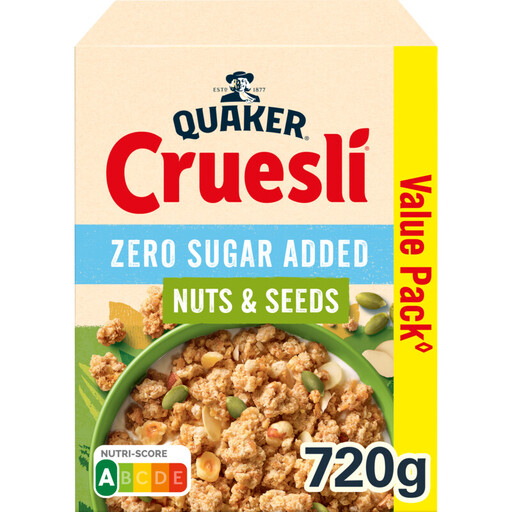
Quaker Zs Cruesli Nuts & Seeds, 720 g
The 720 g pack could suit a family that regularly eats this Cruesli with nuts and seeds. Compare the fibre content on the current pack on a like-for-like basis, such as per 100 g, and check the allergens.
View on Joybuy
 No image available
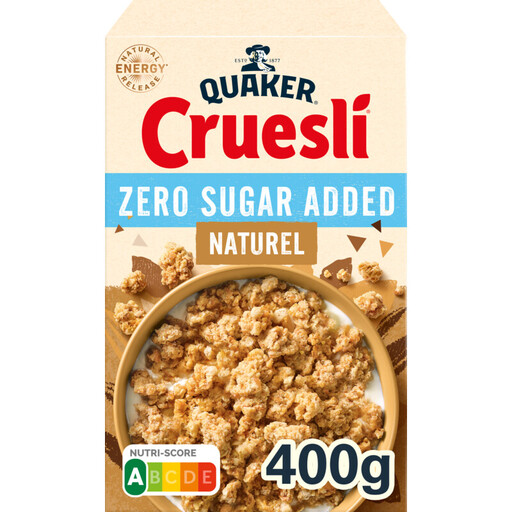
Quaker Zs Cruesli Natural, 400 g
This 400 g pack is another Cruesli variant to compare before you buy more. Check the nutritional information for this specific pack for fibre, sugars, ingredients and allergens.
View on Joybuy
 No image available
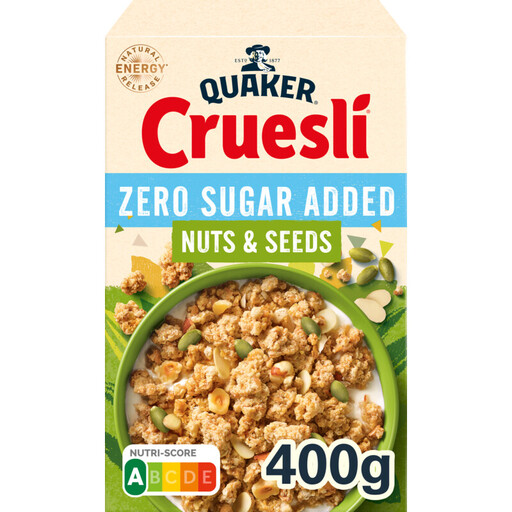
Quaker Zs Cruesli Nuts & Seeds, 400 g
This 400 g pack contains the same Nuts & Seeds variant as the 720 g pack, but in a different size. Compare the pack size with how much your family uses, and check the current packaging if anyone has allergies.
View on Joybuy
 No image available
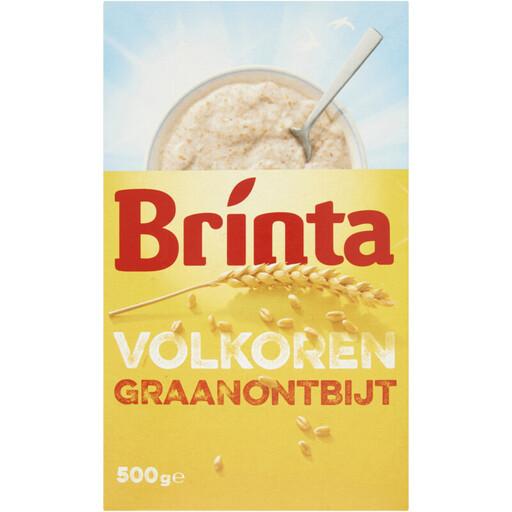
Brinta wholegrain wheat breakfast cereal, 500 g
This 500 g wholegrain wheat cereal is an option if your family also enjoys a hot cereal, rather than only cold crunchy flakes. Check the preparation instructions, fibre content and allergens on the pack.
View on Joybuy
Frequently asked questions
When can a breakfast cereal be called ‘high in fibre’?
In the European Union, the nutrition claim ‘high in fibre’ requires at least 6 g of fibre per 100 g or 3 g per 100 kcal. Check that the claim applies to the exact variant, or look at the fibre content and its unit in the nutritional information.
Is a larger pack always useful for a large family?
No. A larger pack is most practical if your family eats that particular breakfast cereal regularly. Compare the pack size with how much you expect to use before buying several packs.
Can I rely on an old online description for allergen information?
Check the current pack when you buy. Albert Heijn warns that ingredients and allergy information can change. This is especially important if someone in your family needs to avoid an allergen.
Is high-fibre breakfast cereal the only source of fibre I need?
No, breakfast cereal is just one of the foods that can provide fibre. The Voedingscentrum recommends eating a variety of fibre sources, so consider your breakfast cereal as part of your overall diet.


