
Shoppers comparing labels
If you want to assess the carbohydrates and sugars in your breakfast when you have diabetes, compare products on the same basis and consider how much you eat too. A fibre claim alone doesn’t give you enough information.


When comparing breakfast cereals if you have diabetes, don’t focus solely on the fibre claim: check the fibre, carbohydrates and sugars per 100 g, then look at the ingredients and your portion size. Porridge oats or wholegrain porridge make a simple base, so you can choose what to add yourself. If you prefer crunchy granola, check the total carbohydrates too, even for a variety with no added sugar.
If you want to assess the carbohydrates and sugars in your breakfast when you have diabetes, compare products on the same basis and consider how much you eat too. A fibre claim alone doesn’t give you enough information.
If you’re considering porridge oats, wholegrain porridge, bran or muesli, the ingredients and fibre per 100 g are useful points of comparison. Diabetes Fonds lists porridge oats and muesli among its wholegrain breakfast options.
If you need a quick breakfast or have to take allergens into account, check the preparation instructions, ingredients and allergen information for each variety. The high-fibre label doesn’t tell you whether a product is suitable if you have an allergy.
Start by comparing the dry product per 100 g. Then consider your own portion and what you add to the bowl. This way, you won’t compare a pack of porridge oats directly with a prepared bowl of porridge.
| What to consider | What to check when buying | Who it matters to |
|---|---|---|
| Carbohydrates and sugars | Compare carbohydrates and of which sugars per 100 g; check the ingredients if you want to avoid added sugars. | If I want to assess my breakfast for carbohydrates when I have diabetes, I need to know what my usual portion contains. Around 42% of consumers make this their first check. |
| Fibre and grain base | Compare fibre per 100 g and check which grains are listed as the main ingredients. | For my breakfast, I’m mainly looking for a wholegrain cereal with a clear fibre value, rather than relying on the front of the pack. This is the top priority for around 33% of consumers. |
| Allergens and preparation | Read the allergen information for the specific variety and check whether it needs preparing or requires any additions. | I want to choose a breakfast that suits my dietary restrictions or the time I have available. For around 25% of consumers, this practical suitability comes first. |
A fibre claim doesn’t tell you how much sugar or how many carbohydrates the product contains. Albert Heijn lists both 8,8 g of fibre and 23 g of sugars per 100 g for Kellogg's All-Bran Fruit 'n Fibre.
Use the fibre value as a point of comparison, and also read the full nutrition table and ingredients list.
A product with no added sugar may still contain naturally occurring sugars and carbohydrates. This distinction matters for crunchy granola too.
Check both carbohydrates and of which sugars on the pack, and consider how much you actually eat.
Milk, yoghurt, fruit and other additions change the nutritional value of the whole breakfast. A value per 100 g of dry product doesn’t automatically describe what’s in your bowl.
First compare the dry products on the same basis, then consider any additions separately.
Gluten-free and high-fibre answer different questions. Albert Heijn lists 12 g of fibre and 8,2 g of added sugars per 100 g for AH Glutenvrij Vezelrijke Bran Flakes.
If you need a gluten-free product, first check that the specific pack is suitable, then compare its nutritional information too.
The Brinta product ranges reviewed include both porridge oats and wholegrain cereal for a prepared bowl.
Cruesli is a Quaker product range for anyone looking for a crunchy cereal breakfast.
The All-Bran and Oaties products reviewed show why it’s important to compare the nutritional values of each product range.
The own-brand range reviewed includes wholegrain cereal and gluten-free bran flakes with different ingredients.
These products include porridge oats and a range of crunchy breakfast cereals to compare by pack, ingredients and nutritional values. Muesli, cruesli and granola are different product types, so compare the specific variety you’re thinking of buying.
 No image available
For anyone who wants to use porridge oats as a base and choose what to add to the bowl.
Check the pack for fibre, carbohydrates and sugars per 100 g; count milk and toppings separately.
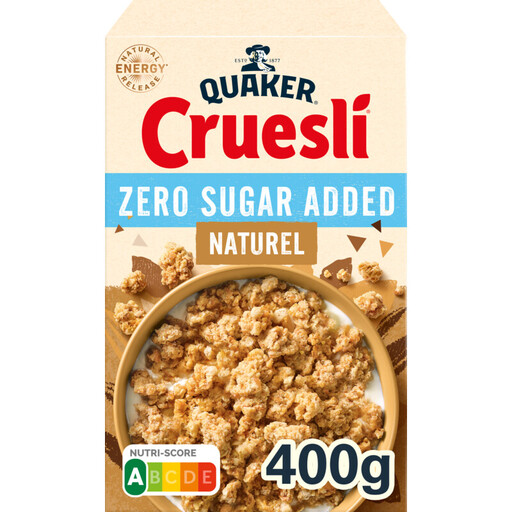 No image available
For anyone considering crunchy granola as an alternative to porridge oats or porridge.
For this variety, check the carbohydrates, of which sugars, portion size and allergens; assess any yoghurt separately.
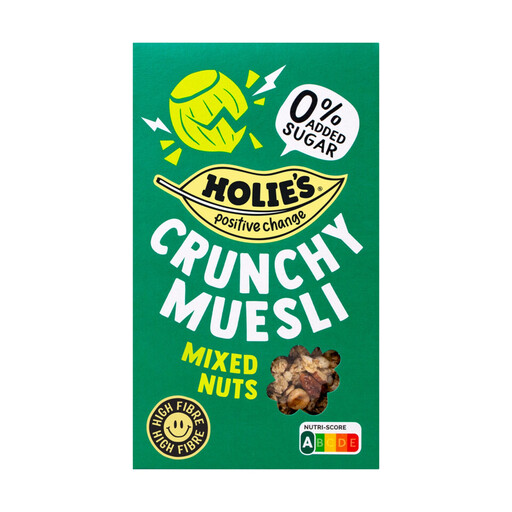 No image available
For anyone looking to compare crunchy muesli with nuts against other breakfast cereals.
If you have a nut allergy, read the allergen information on the pack and compare the nutritional values for the amount you eat.
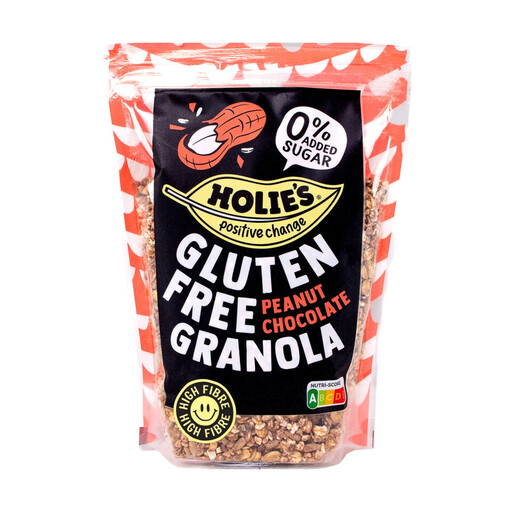 No image available
For anyone considering granola with peanuts and chocolate. If you need a gluten-free product, the label on the specific pack is an important thing to check.
As it contains peanuts, check the allergen information too; also compare fibre, carbohydrates and sugars per 100 g.
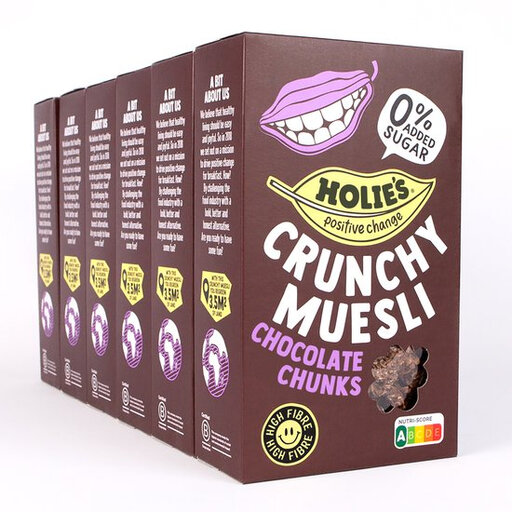 No image available
For anyone looking for crunchy muesli with chocolate chunks and considering a pack of 6 x 400 g.
Compare the nutritional information per 100 g and check the ingredients, allergens and your usual portion size before comparing this variety with other muesli.
No. A fibre claim doesn’t tell you the total carbohydrates, sugars, portion size or allergens. Compare the nutrition table and ingredients for the specific variety, and consider how much you eat.
Compare fibre, carbohydrates and of which sugars per 100 g, so you’re comparing products on the same basis. Then read the ingredients and work out what quantity suits the portion you actually eat.
Not without comparing the specific products. Porridge oats can make a simple base, with additions you choose yourself. With granola, check the ingredients, carbohydrates, sugars and portion size too, even if the pack says it has no added sugar.
Follow the storage instructions on the pack and seal it securely after opening. For Brinta Havermout, Joybuy recommends storing it in a cool, dry place away from direct sunlight.