
Breakfast eaters who count carbohydrates
You want to know how many carbohydrates and how much sugar are in your weighed portion of breakfast cereal, rather than relying on a claim about fibre on the front of the pack.


When comparing high-fibre breakfast cereals, look beyond fibre and check total carbohydrates, including sugars, both per 100 g and per serving. A wholegrain cereal breakfast, a bran product and crunchy muesli are different types of product. Which one suits your breakfast also depends on the ingredients, allergens and your personal carbohydrate plan.
You want to know how many carbohydrates and how much sugar are in your weighed portion of breakfast cereal, rather than relying on a claim about fibre on the front of the pack.
You’re looking for a breakfast with fibre and want to compare serving sizes, ingredients and other nutritional values too. This helps you assess the product as a whole.
You check the ingredients and allergen information for the product you choose, or tailor the amount of carbohydrate to your personal plan.
Start with the type of breakfast you want to make. A hot cereal breakfast, a bran product and crunchy muesli aren’t interchangeable. Then compare the nutritional information for the products that suit you.
Suitable for: anyone looking for a simple cereal base for a hot or cold breakfast. Albert Heijn lists Brinta Volkoren graanontbijt as 100% wholewheat.
Bear in mind: the carbohydrates in your portion; Brinta contains wheat and gluten.
Suitable for: anyone who wants to compare fibre content in particular. Kellogg's lists 27 g of fibre per 100 g for All-Bran Fibre Plus.
Bear in mind: the same product specification also lists 48 g of carbohydrates and 18 g of sugars per 100 g.
Suitable for: anyone looking for a particular texture or combination of ingredients, and comparing products with similar options of the same type.
Bear in mind: products and brands can vary; according to the Diabetes Fund, sugar levels differ between breakfast cereals.
| What to consider | What to check when buying | Who should pay particular attention? |
|---|---|---|
| Fibre and wholegrains | Compare fibre per 100 g and per weighed serving; check which grains are listed in the ingredients. | If fibre is my priority, I want to know what my usual serving of breakfast cereal actually provides. Around 33% of consumers are said to consider fibre their main priority. |
| Carbohydrates and sugars | Check total carbohydrates and of which sugars per 100 g, then calculate the amount for your portion. | When counting carbohydrates, I want to include the total amount in my bowl, not just the sugars. Around 33% of consumers are said to prioritise carbohydrates and sugars. |
| Preparation and product type | Choose between, for example, hot cereal and ready-to-eat flakes; consider any additions as part of the whole bowl. | On a busy morning, I’m looking for a breakfast that fits my routine, without overlooking milk, yoghurt or toppings. Convenience is said to be a priority for around 20% of consumers. |
| Allergens and personal requirements | Check the current ingredients and allergen information, and bear your own carbohydrate plan in mind. | If I need to avoid certain grains or follow a personal carbohydrate plan, that takes priority over my preference for taste or texture. These requirements are said to matter most to around 14% of consumers. |
A high fibre content doesn’t tell you how many carbohydrates or how much sugar the product contains. Kellogg's lists 27 g of fibre, 48 g of carbohydrates and 18 g of sugars per 100 g for All-Bran Fibre Plus.
When comparing products, look at the nutritional values and ingredients together, and calculate them for the amount you plan to eat.
A claim such as wholegrain or high-fibre doesn’t tell you whether the ingredients and portion size fit your carbohydrate plan.
Read the nutritional information and ingredients for the specific product, even when the claims on the front match what you’re looking for.
The nutritional value of the cereal on its own isn’t the same as that of a complete bowl with milk, yoghurt, fruit or other additions.
Weigh your cereal and include the carbohydrates from any additions when assessing your breakfast.
Wholegrain says nothing about whether a product is suitable for someone with an allergy or coeliac disease. Breakfast cereals may contain wheat or other gluten-containing grains, for example.
Check the ingredients and allergen information on the pack of every product you choose.
Brinta Volkoren graanontbijt is an example of a wheat-based cereal for a hot or cold breakfast.
All-Bran Fibre Plus is a wheat bran product for anyone who wants to consider fibre alongside other nutritional values.
ALDI offers several types of product under this own-brand label, including wholegrain muesli, special flakes, cornflakes and a 7-grain wholegrain breakfast cereal.
This selection includes wheat- or oat-based cereal breakfasts and a crunchy mix. Not all of them are breakfast cereals in the form of flakes: use the product type as your starting point, then compare the nutritional information on the pack.
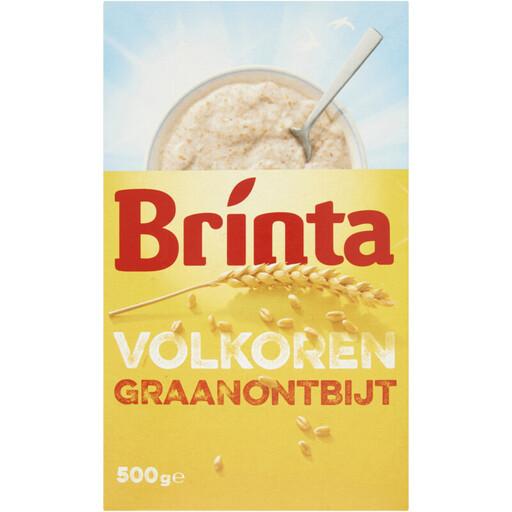 Image unavailable
An option if you’re looking for a wheat-based breakfast and want to weigh out the amount yourself.
Albert Heijn lists Brinta Volkoren graanontbijt as 100% wholewheat, with 10 g of fibre, 64 g of carbohydrates and 4,6 g of sugars per 100 g. The product contains wheat and gluten; calculate the values for your own portion.
 Image unavailable
An oat option if you’d rather prepare a cereal breakfast than choose ready-to-eat breakfast cereal.
Use the nutritional information and allergen details on the pack to assess this product per 100 g and for your own portion.
 Image unavailable
An oat option for anyone looking for a cereal breakfast that needs to be prepared.
Before comparing fibre, carbohydrates and sugars, check whether the nutritional values on the pack are per 100 g or per serving. Count any additions separately.
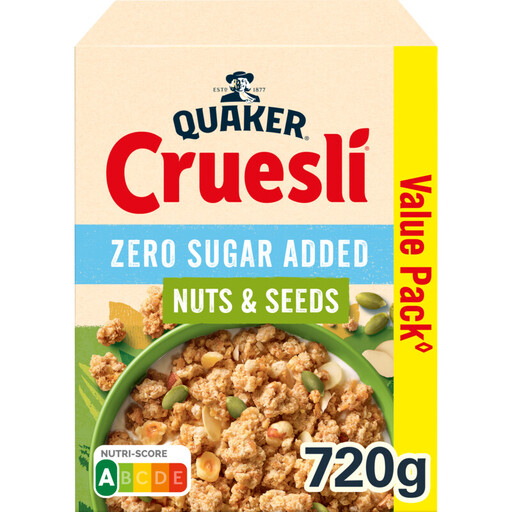 Image unavailable
A crunchy muesli for anyone looking for a different texture from oatmeal or a simple cereal breakfast.
Compare fibre, carbohydrates and of which sugars on the pack, using the same basis as for other products. Check the ingredients and allergen information too if you need to avoid certain grains or nuts.
No. As well as fibre, check total carbohydrates, of which sugars, the ingredients and how much you eat. According to the Diabetes Fund, sugar levels vary between types and brands of breakfast cereal.
Use the per-100 g values to compare like-for-like products, then calculate the values for your own weighed portion. This shows what they mean for the amount in your bowl.
That depends on your personal carbohydrate plan and how much you eat. Count the carbohydrates in both the cereal and any milk, yoghurt, fruit or other additions; diabetes.nl explains that carbohydrates affect blood glucose.
Read the ingredients and allergen information on the specific pack. The Netherlands Food and Consumer Product Safety Authority says allergens must be clearly identified in the ingredients list; don’t rely solely on the product name or a similar-looking pack.
Talk to your doctor and dietitian before starting a low-carbohydrate or carbohydrate-restricted diet, especially if you take medication. The Diabetes Fund recommends getting support when you start, as your medication may need adjusting.