For your Sunday breakfast, start by choosing between crunchy flakes or granola and a warm cereal bowl. Then compare the grain base, fibre and sugars per 100 g and per serving: a bran-based product may suit you if fibre is your main priority, while wholegrain oats or wheat offer a different taste and texture. A fibre claim alone doesn’t promise how long breakfast will keep you feeling energised.
Who might find this choice useful?
Fibre is your main priority
You’re looking for a breakfast cereal with a clearly stated fibre content, and you don’t mind a pronounced bran flavour or texture. Check the amount per serving, rather than relying only on claims on the front of the pack.
Family breakfasts with less sugar
You want an easy-to-enjoy bowl of flakes or oats on Sunday, while keeping an eye on added sugar. The Netherlands Nutrition Centre recommends choosing a wholegrain variety of breakfast cereal and avoiding too much added sugar.
Comparing supermarket options
You’re weighing up branded products and own-label alternatives, while still looking for a high-fibre or wholegrain option. Remember that muesli, flakes and hot cereal are different products, even when they’re on the same breakfast aisle.
What should you look for when choosing?
First, decide which texture you’d like: cold flakes, crunchy granola or a warm bowl. Then compare the nutritional information on a like-for-like basis and check that the ingredients suit you.
| What to consider |
What to check when buying |
Who it matters to |
| Fibre and grain base |
Compare fibre per 100 g and per serving; check whether wholegrain cereals or bran are listed in the ingredients. |
I want to know how much fibre I get from my usual bowl, then choose between bran and wholegrains accordingly. Around 42% of consumers put fibre content first. |
| Sugars and breakfast texture |
Check sugars per 100 g and the ingredients list; choose between cold, crunchy products and a warm bowl. |
I want to weigh up taste and texture against the nutritional profile when choosing a breakfast I’ll enjoy. Around 33% of consumers put this balance first. |
| Practical suitability |
Check what’s currently available and, if you have allergies or avoid gluten, read the packaging. |
I’m looking for a product I can find in my shop, with ingredients that suit my needs. Practical suitability is the main consideration for around 25% of consumers. |
Pitfalls to watch out for
-
Relying on ‘high fibre’ or ‘wholegrain’ claims alone
A claim like this doesn’t tell you how much fibre and sugar is in the portion you actually eat. What’s more, two products with similar names may have different ingredients.
Compare the nutritional information per 100 g and per serving, then read the ingredients list.
-
Taking a fibre claim as a promise of lasting energy
A claim about wheat bran fibre doesn’t mean that a breakfast cereal will provide long-lasting energy. Kellogg’s claim for All-Bran Fibre Plus comes with specific conditions of use.
Assess a breakfast cereal by its ingredients, nutritional information and serving size, without attributing a particular effect to the whole bowl of breakfast.
-
Relying on an old product page alone
Ingredients and allergen information can change. This is particularly important if you need to avoid gluten or a specific allergen.
Before eating, check the current packaging of the exact variety you’ve chosen.
Brands to explore
These brands offer examples of different types of breakfast cereal. Information about ingredients applies to the products mentioned, not automatically to the entire range.
Kellogg's
Worth considering if you want to compare bran products with wholegrain oat products.
- Kellogg’s says a serving of All-Bran Fibre Plus contains 11 g of wheat bran fibre. Albert Heijn describes Oaties Original Crunch as made with wholegrain oats.
- This information applies to the varieties mentioned. Compare sugars, allergens and serving sizes on the current packaging.
Brinta
Worth considering if you’re looking for a hot cereal rather than cold, crunchy flakes.
- Jumbo lists Brinta Wholegrain cereal; the product information for Brinta Apple & Raisin describes a wholegrain wheat base.
- Compare the nutritional information for the specific Brinta variety you want to eat.
Albert Heijn
Worth considering if you’re looking for bran flakes in an own-label range.
- Albert Heijn sells a product called AH Gluten-Free High-Fibre bran flakes.
- If you avoid gluten, check the claims and allergen information on the current packaging.
Jumbo
Worth considering if you want to compare flakes with wholegrain breakfast porridge.
- Jumbo describes its Special Flakes as high in fibre and with no added sugars; it also lists a separate product called Wholegrain Breakfast Porridge.
- The description of Special Flakes doesn’t automatically apply to other Jumbo breakfast cereals.
Golden Bridge (ALDI)
Worth considering if you want to explore different types of breakfast cereal from one own-label brand.
- ALDI’s Golden Bridge range includes Special Flakes, wholegrain muesli and a 7-grain breakfast cereal.
- Compare the grain base and nutritional information for each product; muesli and flakes aren’t interchangeable.
Lidl
Worth considering if you want to compare a 7-grain breakfast cereal with other breakfast products.
- Lidl lists a 7-grain breakfast cereal made with wholegrains.
- Check the packaging of the variety you choose for its ingredients, nutritional information and allergens.
Breakfast products on Joybuy
These products are mainly wholegrain hot cereal, porridge oats and crunchy granola for a breakfast bowl. Porridge oats and hot cereal aren’t cold flakes, so choose the texture you want first, then compare the packaging.
 Image unavailable
Quaker Oatmeal – 600 g
For anyone who’d rather make porridge than eat crunchy flakes. Compare the fibre in your usual serving with other breakfast products and, if you avoid gluten, check the current allergen information.
View on Joybuy
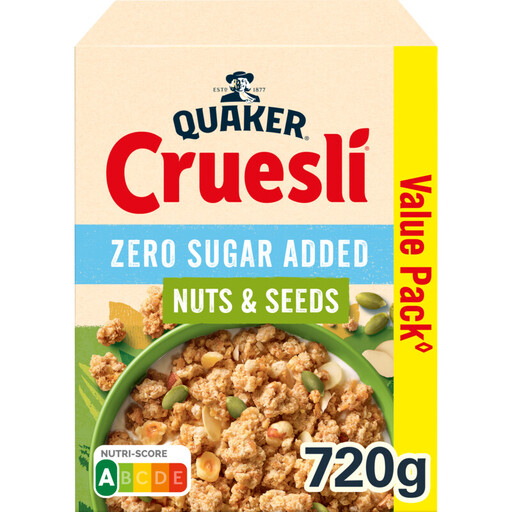 Image unavailable
Quaker Zs Cruesli Nuts & Seeds – 720 g
For anyone who’d like a crunchy bowl with nuts and seeds rather than plain flakes. Check the pack to see what quantity the fibre value refers to, so you can compare it with your serving; also read the allergen information.
View on Joybuy
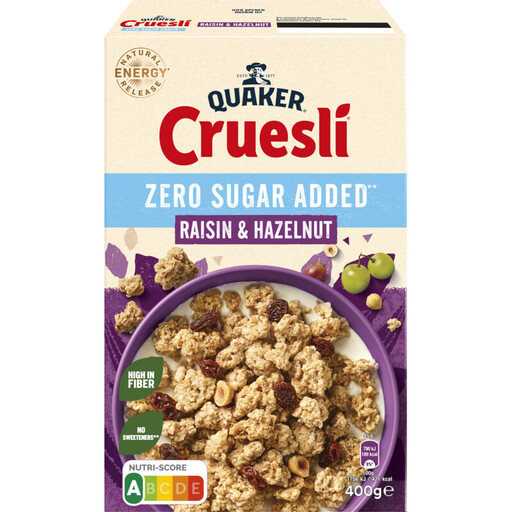 Image unavailable
Quaker Zs Cruesli Raisin & Hazelnut – 400 g
For anyone looking for crunchy granola with raisins and hazelnuts. Check what quantity the fibre value is based on before comparing products, and read the current ingredients information if you have allergies.
View on Joybuy
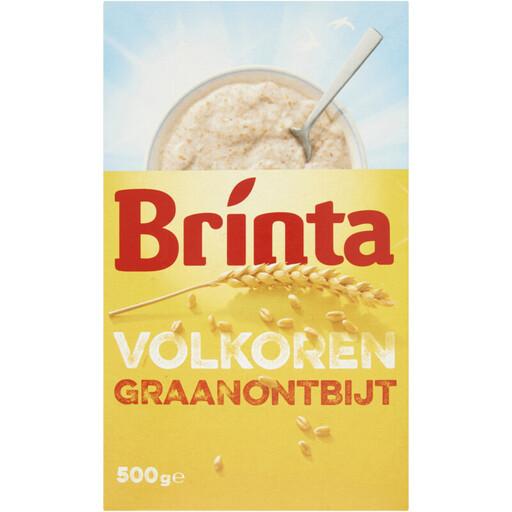 Image unavailable
Brinta Whole Wheat Cereal Breakfast – 500 g
For anyone who prefers a warm bowl of wholegrain wheat to cold flakes. Compare sugars and ingredients separately, and check whether this product suits your diet, as it contains wheat.
View on Joybuy
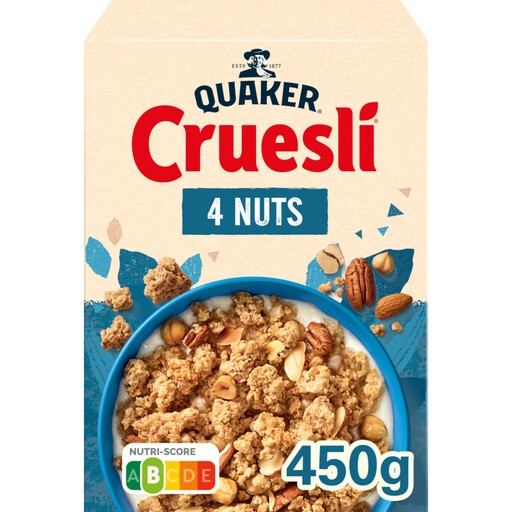 Image unavailable
Quaker Cruesli 4 Nuts – 450 g
For anyone who’d like crunchy granola with nuts. Compare sugars per 100 g with other products, and check the ingredients and allergen information on the current packaging.
View on Joybuy
Frequently asked questions
Are high-fibre flakes automatically a good choice for Sunday breakfast?
No. A fibre claim alone doesn’t tell you enough about the whole bowl. Compare the grain base, sugars and serving size; the Netherlands Nutrition Centre recommends choosing a wholegrain breakfast cereal without too much added sugar.
What’s the difference between flakes and hot cereal?
Flakes are usually eaten cold and crunchy, while porridge oats or hot cereal are prepared as a warm bowl. If texture is your deciding factor, choose the type of product first, then compare the nutritional information for the different varieties.
How much fibre does the Netherlands Nutrition Centre recommend each day?
The Netherlands Nutrition Centre recommends at least 24 g of fibre a day for adult women and at least 30 g for adult men. Breakfast cereal can contribute to this, but consider the portion you eat and the rest of your diet.
Should I choose gluten-free bran flakes?
A gluten-free variety is relevant if you need to avoid gluten; it doesn’t mean bran flakes as a category are gluten-free. Albert Heijn sells a product called AH Gluten-Free High-Fibre bran flakes; check the current packaging and allergen information before use.


