
Fibre is your top priority
If you’re mainly looking for breakfast cereals with a high fibre content, bran products are worth considering. Compare sugars and salt too, and check whether wheat and gluten suit your dietary needs.


When comparing breakfast cereals for your weekly shop, start with the fibre per 100 g, then check the sugars, salt, ingredients and allergens. For example, Kellogg's All-Bran Plus lists 26 g of fibre per 100 g, but also 15 g of sugars and 0.9 g of salt; wholegrain porridge or muesli may fit your daily routine better. A high fibre content on its own does not prove that a cereal will keep you energised for longer.
If you’re mainly looking for breakfast cereals with a high fibre content, bran products are worth considering. Compare sugars and salt too, and check whether wheat and gluten suit your dietary needs.
For several mornings a week, you could choose between hot porridge and muesli with yoghurt, milk or a plant-based alternative. Think about which preparation method suits your routine, and read the ingredients list for the variety you choose.
If you mainly want a crunchy texture, compare Cruesli varieties per 100 g for fibre and total sugars. The phrase ‘no added sugar’ does not mean a product contains no sugars.
Start with the nutritional information per 100 g, so different serving sizes don’t skew the comparison. Then choose the type of product you’d like to have on weekday mornings.
| What to consider | What to check when buying | Who it matters to |
|---|---|---|
| Fibre content | Compare fibre per 100 g, then check the sugars and salt too. | When stocking up for the week, I mainly want to know how much fibre the breakfast cereal contains, without overlooking the rest of the nutritional information. For around 42% of consumers, fibre content comes first. |
| Wholegrains and sugars | Check which grains appear first in the ingredients list and compare total sugars per 100 g. | For a breakfast I eat regularly, I want to know which wholegrain ingredients it contains and how much sugar there is. Around 33% of consumers give this combination top priority. |
| Morning routine | Check the preparation method, pack size and storage instructions. | If my mornings leave little time for preparation, breakfast also needs to be practical enough to use throughout the week. For around 25% of consumers, this matters most. |
A fibre claim doesn’t tell you how much sugar or salt a product contains. Breakfast cereals with no added sugar can still contain naturally occurring sugars, for example from dried fruit.
The Netherlands Nutrition Centre recommends comparing the nutritional information per 100 g and checking the ingredients list too.
Figures per serving are difficult to compare when the stated serving sizes are different.
Use the figures per 100 g to compare products, and the serving information to plan your own breakfast.
Some of the wholegrain and bran products discussed contain cereals with gluten; some muesli also contains nuts.
Check the ingredients and allergen information for the exact flavour and pack you choose.
The fibre content describes what a breakfast cereal contains, not how long you’ll feel energised after eating that particular product.
Choose based on the nutritional information you can check and what you want to eat for breakfast, rather than attributing an effect to a single nutrient.
All-Bran Plus is a wheat bran product, while Oaties Original Crunch is a different, crunchy cereal. The nutritional values for these two products do not represent the whole brand.
Brinta Volkoren graanontbijt is an option if you want to make hot porridge with wholegrain wheat.
Cruesli is Quaker’s crunchy muesli range, available in different flavours and pack sizes.
AH Biologisch Volkoren muesli fruit & noten is a wholegrain muesli for anyone who wants fruit and nuts in a cold breakfast.
These products offer two ways to put together breakfasts for the week: crunchy Quaker Cruesli in several varieties, or Quaker Oatmeal if you prefer to make hot porridge. Check the exact pack and nutritional information before you choose.
 No image available
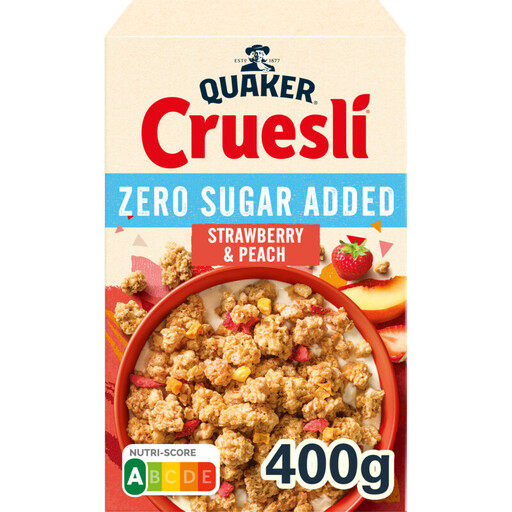
For anyone who wants to add crunchy strawberry and peach Cruesli to their weekly shop. The pack contains 400 g; check the nutritional information per 100 g and the allergens for this flavour.
 No image available
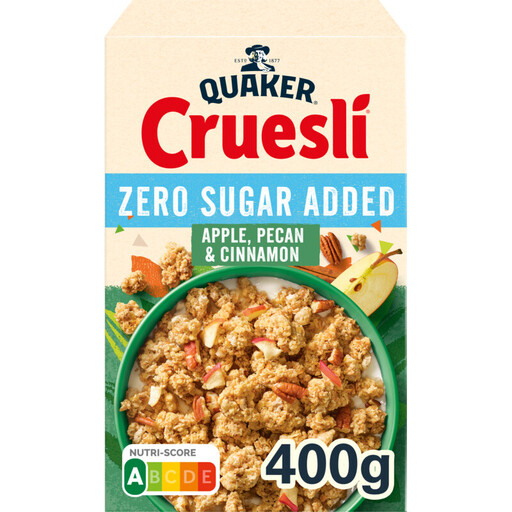
For anyone looking for crunchy Cruesli with apple, pecan and cinnamon. The pack contains 400 g; check the allergen information if nuts or gluten are relevant to your choices.
 No image available
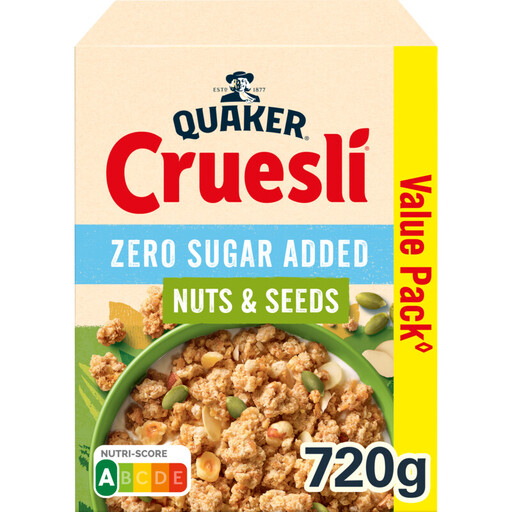
For anyone looking for a crunchy variety with nuts and seeds in a larger pack. This variety contains 720 g; check the pack’s allergen information if nuts or gluten are relevant to you.
 No image available
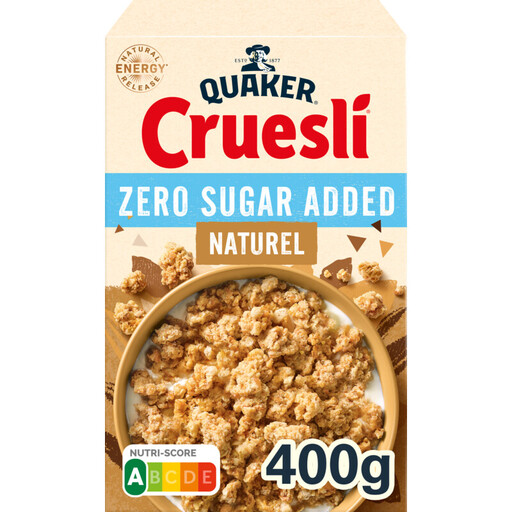
For anyone who wants to compare a plain variety of crunchy Cruesli with the fruit flavours. The pack contains 400 g; assess the nutritional information and allergens for this variety separately.
 No image available
For anyone who prefers hot porridge to crunchy Cruesli. The pack contains 600 g; check the nutritional information and preparation instructions on the pack you choose.
The phrase refers to the fibre content, not the product’s overall nutritional profile. The Netherlands Nutrition Centre also recommends comparing sugars and salt per 100 g and checking the ingredients list.
Choose a type of product you’ll want to eat regularly, then compare similar products per 100 g for fibre, sugars and salt. Next, check the pack size, preparation method and storage instructions to help plan your week.
Not necessarily: the Brinta and Kellogg's varieties discussed contain cereals with gluten, while AH Biologisch Volkoren muesli fruit & noten also contains nuts. Always check the allergen information for the exact variety you’re buying.