
Vandaag of morgen in huis

Kwaliteit gegarandeerd

Welkomstaanbiedingen ontgrendelen: GRATIS bezorging | Tot 80% korting | Gratis 30 dagen JoyPlus-proefperiode
Download de app
Buying a high-end gaming PC often feels like navigating a minefield of technical jargon and marketing promises. You're looking for raw power for the latest games at 1440p or 4K, but you don't want to waste money on unnecessary extras. As a Joybuy Product Recommendation Officer, I see the challenges buyers face every day. Let's go over the most common pitfalls so you can make an informed decision.
Before we look at specifications, it's important to avoid two common missteps that can ruin your gaming experience and drive up costs unnecessarily.
1. The "Bottlenecked" Powerhouse A common mistake is to focus on one spectacular component, like the latest graphics card, while neglecting the rest. A top-tier graphics card combined with a mediocre processor, slow RAM, or a sluggish SSD leads to a "bottleneck." The PC can't reach its full potential, meaning you're paying for performance you'll never experience. A balanced system is crucial.
2. The Forgotten Fundamentals: Cooling and Power Supply Marketing often focuses on the CPU and GPU, but the stability of a powerful gaming computer depends on its cooling and power supply unit (PSU). An underpowered PSU can lead to instability and crashes under heavy load. Poor cooling causes the processor and graphics card to reduce their clock speeds (thermal throttling) to prevent overheating, resulting in lower framerates. Good airflow and a reliable power supply are not a luxury, but a necessity.
To avoid these pitfalls, you need to focus on the balance between a few core components. These are the specifications that will make the difference between a good and a great pre-built gaming pc in 2026.
For smooth performance, especially with a PC for 4K gaming or gaming at high refresh rates (144Hz+), the CPU and GPU must work in harmony. A system with an NVIDIA GeForce RTX 5070 Ti desktop graphics card requires a processor that can keep up, such as an AMD Ryzen 7 9800X3D PC. This combination ensures the processor can prepare frames fast enough for the graphics card, which prevents stuttering and guarantees smooth gameplay.
For high-end gaming and content creation, 32 GB of DDR5 RAM is the new standard. This provides ample headroom for demanding games, streaming software, and other applications running simultaneously. Just as important is a fast PCIe NVMe SSD. It drastically reduces game and application loading times, getting you into the action faster. A capacity of 1 TB is a good starting point for your game library.
Based on balanced configurations and practical usability, we have selected a few systems that suit different types of serious gamers.
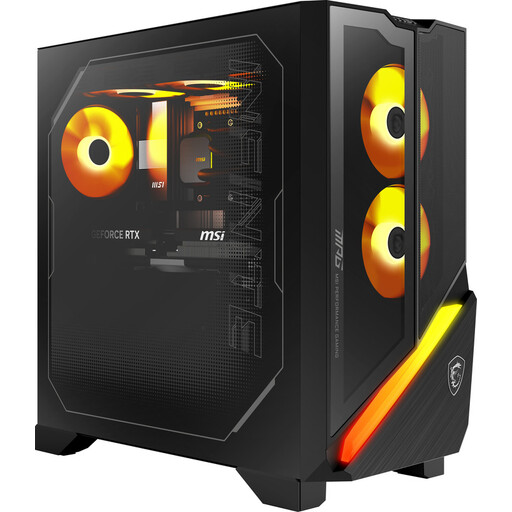
Why This Fits Their Persona: For the gamer who accepts no compromises. This system is built for maximum performance in 4K gaming and heavy content creation, with components that are ready for the years to come. Ideal if you want to order an `MSI gaming pc` that delivers top-tier performance out of the box.
This system is perfectly balanced. The Ryzen 7 9800X3D is an excellent partner for the RTX 5070 Ti, preventing bottlenecks. The combination of liquid and air cooling and an 850W power supply ensures stable performance.
The combination of an RTX 5070 Ti with 16 GB of VRAM and 32 GB of DDR5 RAM makes this a powerhouse for both 4K gaming and demanding creative software. The 1 TB M.2 SSD provides lightning-fast load times.
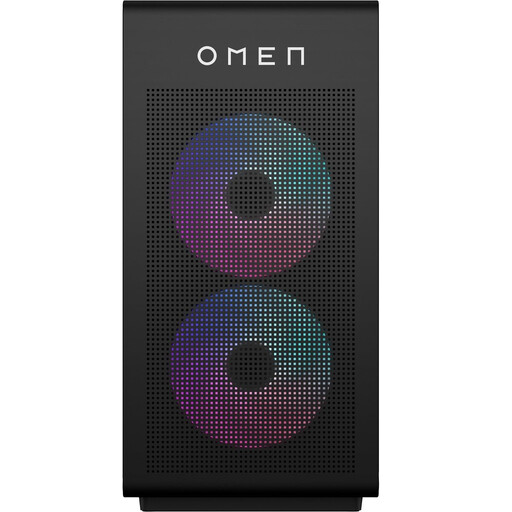
Why This Fits Their Persona: Perfect for those who want to game and stream smoothly at 1080p or 1440p. This system offers a strong price-to-performance ratio with modern components, without the premium price of absolute top-tier models.
This system combines a powerful Intel Core i7-14700F processor with an NVIDIA GeForce RTX 5060. These components are well-matched for 1440p gaming, ensuring you don't leave performance on the table.
The spacious 35L chassis offers excellent air cooling and is easy to upgrade. With 16 GB of DDR5 RAM (expandable to 128 GB) and a fast 1 TB SSD, you're ready for most modern games and multitasking.
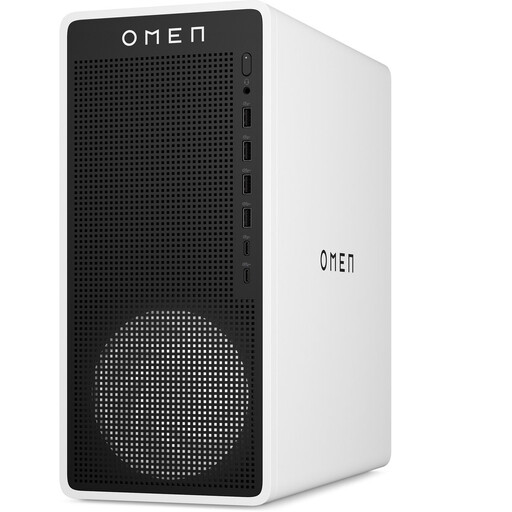
Why This Fits Their Persona: For gamers with limited space who still want a powerful and stylish setup. This PC fits easily on a smaller desk but still delivers the performance needed for modern games.
Despite its compact size, the cooling is efficiently designed to minimize thermal throttling. The components, like the Intel Core Ultra 7 265F and RTX 5050, are chosen for a good balance between performance and heat generation.
The biggest advantage is the compact 16L chassis in a stylish white design. The combination of 16 GB of DDR5 RAM and a 1 TB SSD ensures a responsive experience in a space-saving form factor.
We have compiled a complete, real-time list of products that fully satisfy these strict selection criteria and UK safety regulations.
Yes, for most users. While building your own can be fun, a pre-built gaming pc from a reputable brand offers convenience, a single warranty for all parts, and the assurance that the components are matched and tested. In 2026, the quality and balance of pre-built systems are often excellent.
For most high-end games and multitasking, 16 GB of DDR5 is the minimum. However, if you also stream, edit videos, or simply want to future-proof your system, 32 GB of DDR5 is a wise choice that ensures you won't need to upgrade for years to come.
A high-end gaming PC you buy today can typically last 4 to 6 years. For the first 2-3 years, you can play most new games on high to maximum settings. After that, you might need to lower the graphics settings slightly for the very latest titles, but the PC will remain very capable for most games and other tasks.
