
Making small batches of herb oil
You mainly want to finely chop herbs and add oil in a controlled way, without buying an appliance for lots of other kitchen jobs.


If you’re mainly making a small amount of herb oil, start with a mini chopper that has a chopping blade and a way to add oil gradually. A food processor is a better fit if you also want to chop or grate ingredients for your dinner party. If so, compare the stated liquid capacity and included attachments, not just the total bowl capacity. This is a feature- and manufacturer-specification-based choice, not an independent comparison of preparation results.
You mainly want to finely chop herbs and add oil in a controlled way, without buying an appliance for lots of other kitchen jobs.
You want to use the same appliance to chop, slice or grate ingredients for several dishes too.
You want to estimate how much you’ll need, clean the parts between preparations and store homemade herb oil safely until it’s time to serve.
A good fit if: you mainly prepare a small portion of herbs, oil or dressing.
The trade-off: the models mentioned have chopping or emulsifying blades, but no slicing or grating discs. Bowl capacity doesn’t tell you how much herb oil you can realistically make.
A good fit if: you also want to slice or grate vegetables for your dinner party, as well as make herb oil.
The trade-off: extra features and attachments can take up more space and mean more washing up. Check the liquid capacity for each model.
| What to consider | What to look for | Who is this important for? |
|---|---|---|
| Processing small portions | Check the blade, bowl and instructions for small quantities for the exact model. | If I mainly make a small portion of herb oil, I want to know whether my recipe is suitable for the appliance. Around 36% of consumers mainly need an appliance for small portions. |
| Adding oil gradually | Check whether the model has a feed opening or a separate emulsifying blade. | When making a dressing, I want to be able to add oil while mixing rather than interrupting the process each time. Around 29% of consumers prioritise controlled mixing. |
| Taking on more dinner-prep jobs | Compare the included slicing and grating discs, liquid capacity and available storage space. | If I also want to slice or grate vegetables for dinner, I’m looking for one appliance that does more than just make herb oil. This is the main requirement for around 21% of consumers. |
| Cleaning and storage | Check the cleaning instructions for each part and plan to refrigerate the prepared herb oil. | Getting ahead with the prep only works for me if I know how to clean the separate parts and store the herb oil. Around 14% of consumers say this is their main requirement. |
A bowl’s total capacity is not the same as its stated liquid capacity. For example, Kenwood lists a 1.3-litre bowl and a liquid capacity of 0.75 litres for the FDP23.380GR.
Compare the amount in your recipe with the liquid limit and the instructions for the exact model.
The 5KFC3516EOB is a small chopper for herbs, sauces and dressings, not a food processor with slicing discs.
The Micro 18114EB is a mini chopper worth comparing if you want to chop herbs and mix dressings too.
The MultiPro Go Blend FDP23.380GR is a compact food processor worth comparing if you want to slice or grate as well as make herb oil.
The MultiTalent 3 MCM3501M is a larger food processor worth comparing if your dinner party prep includes slicing and grating.
This selection includes mini choppers for small preparations and food processors for anyone who also wants to prep other ingredients for dinner.
 Image unavailable
The two bowls give you a choice of sizes for different chopping jobs; the product description also mentions blending and puréeing.
The product description lists two speeds and separate blade sets. It states that the bowls and lid are not heat-resistant; avoid temperature differences of more than 50 °C and do not use them in the microwave.
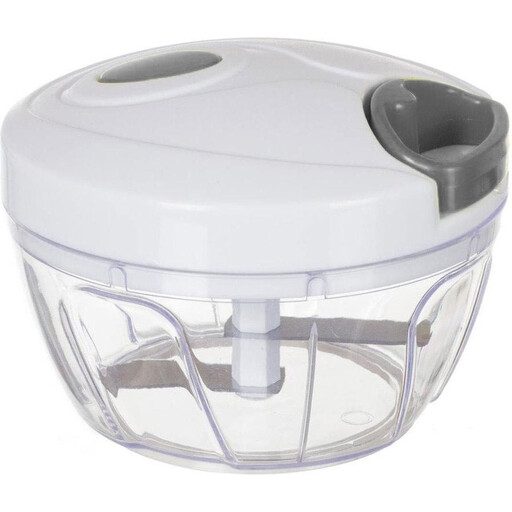 Image unavailable
This manual mini chopper is designed for herbs and small batches of sauce.
The product description lists a 400 ml capacity and a stainless steel blade. It’s operated by hand; according to the description, clean it with a damp cloth.
 Image unavailable
This food processor is an option if you want to slice or grate ingredients for dinner as well as chop herbs.
The product description lists a 1.3-litre bowl and a separate 600 ml blender. Chopping, puréeing, slicing and grating are listed as functions; the bowl capacity is not the same as the liquid capacity for herb oil.
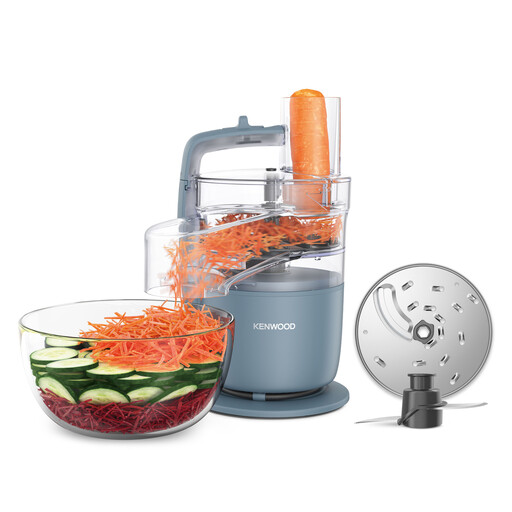 Image unavailable
This food processor is a good fit if you want to slice or grate vegetables for your dinner party as well as chop herbs.
The product description lists a 1.3-litre bowl, a 650 W motor and a slicing and grating disc.
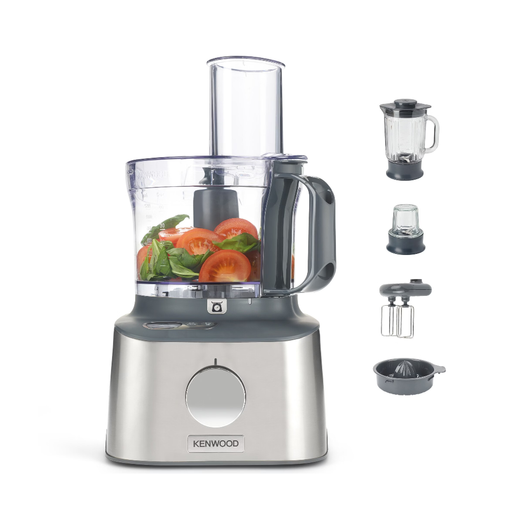 Image unavailable
This food processor is designed for anyone who wants to combine chopping herbs with other kitchen jobs.
The product description lists a 2.1-litre bowl, a separate 1.2-litre blender and a mill for chopping herbs. Slicing, grating and chopping functions are also mentioned.
Start with the quantity your recipe calls for, then compare it with the manual and, where stated, the liquid capacity of the exact model. Kenwood lists a liquid capacity of 0.75 litres for the FDP23.380GR, which has a 1.3-litre bowl. Don’t assume another model’s maximum oil quantity from its total bowl capacity alone.
Follow the manual for each part individually. Kenwood lists the removable parts for the FDP23.380GR, including the bowl, lid and blade, as dishwasher-safe; this guidance doesn’t automatically apply to the motor base.
Keep herb oil refrigerated rather than leaving it out for a long time. The Netherlands Nutrition Centre warns that homemade products containing herbs in oil can pose a risk of botulism, especially if they’re stored outside the fridge for a long time. This is food-safety advice, not a legally specified storage period.
If you’ve used it normally, you can claim under the statutory guarantee in the Netherlands by contacting the seller. According to the ACM, there’s no fixed time limit for this guarantee: what matters is what you could reasonably expect from the product. A separate manufacturer’s guarantee doesn’t replace this right.
Food-contact materials placed on the European market must comply with EU food-safety rules; the European Commission also includes food-processing equipment and kitchen utensils in this category. According to the Dutch government, products that must carry a CE marking need to meet the applicable requirements. These general rules don’t confirm that a specific item has been individually checked for compliance.