
Small portions of herb oil
You want participants to make a modest portion each, and are mainly looking for a suitably sized small bowl or blending beaker.


For small portions, a machine with a suitably sized small bowl or blending beaker is practical. For larger batches and extra chopping, a food processor with the right attachments may be a better fit. If you only want to blend herbs and oil, Albert Heijn Allerhande also suggests using a blender or hand blender with a tall beaker. It’s best to make the oil just before serving and treat storage as a separate food-safety question.
You want participants to make a modest portion each, and are mainly looking for a suitably sized small bowl or blending beaker.
You’re preparing larger quantities or also processing vegetables and herbs along the way, so usable capacity and extra functions matter.
You want to clean and reuse parts between workshop sessions, so check what’s included and how each part should be cleaned.
Start by choosing for the quantity you’ll make in each batch, then consider extra functions, cleaning and safe storage.
| What to consider | What to look for | Who should prioritise this |
|---|---|---|
| Small portions | Compare the small bowl or beaker, the suitable blade and the stated liquid limit. | If I’m making a small portion for each participant, I want the herbs and oil to fit the bowl and stay within its permitted fill level. Around 33% of consumers give small portions their highest priority. |
| Several batches | Work out the quantity per batch, then check the liquid limit and which slicing or grating attachments are included. | If I’m catering for several participants, I need enough room for each batch and functions for extra chopping or grating. Around 27% of consumers put batch capacity first. |
| Cleaning | Check whether each part is dishwasher-safe; follow the machine’s own cleaning instructions for the motor unit. | Between workshop sessions, I want to clean the parts quickly and according to the instructions. Around 20% of consumers give easy cleaning their highest priority. |
| Serving and storing safely | Match the quantity to how you’ll serve it, and follow appropriate food-safety advice for clean equipment and refrigeration. | If the oil won’t be served straight away, I want to plan the portions and know how to store them safely. Around 20% of consumers put safe serving first. |
A bowl may have a lower liquid limit than its stated capacity. Kenwood lists a 1.3-litre bowl and a liquid capacity of 0.75 litres for the FDP23.380GR.
Compare the liquid limit of the bowl or beaker you’ll actually use with the quantity you need for each workshop session.
A lower liquid limit may mean making more batches and cleaning the parts more often.
Philips describes the HR1393/00 as suitable for chopping solid ingredients, including parsley. This doesn’t confirm that the model can blend herb oil until smooth.
Check the manual to see whether your chosen model is suitable for your preparation. For blending, Albert Heijn Allerhande suggests a blender or a hand blender with a tall beaker.
If the manual doesn’t allow for this preparation, you may need a different machine that’s suitable for the job.
Voedingscentrum warns of risks associated with homemade herb oil, especially if it’s stored outside the fridge for a long time. A storage period given in one recipe doesn’t automatically apply to other preparation methods or workshop conditions.
It’s best to make an amount for immediate use and follow appropriate food-safety advice if you want to store the oil.
The Mini Plus may suit you if you want a small bowl as well as a wider range of food processor functions.
According to Kenwood, the MultiPro Go Blend FDP23.380GR combines a compact food processor with a personal blender.
The MultiTalent 3 MCM3501M is worth a look if your workshop also involves chopping, slicing or grating.
The HR1393/00 is a small chopper to consider for chopping herbs, but it isn’t necessarily a substitute for a blender.
These product picks focus on blenders, hand blenders and food processor combinations for making herb oil and other workshop preparations.
 No image available
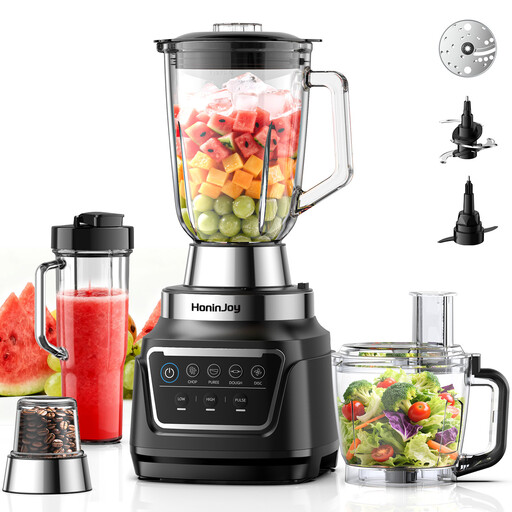
An option if you want to blend herbs and oil, as well as prepare other workshop recipes.
The product title lists a 600 ml measuring bottle, a 1500 ml blending jug and a 300 ml chopper cup.
 No image available
This blender is a good fit if you want to blend herbs and oil and also use a separate chopper cup.
The product title lists a 1.5 l blending jug and three speed settings. The product description says not to use it continuously for more than one minute, and to allow it to rest for two minutes between heavy blending cycles.
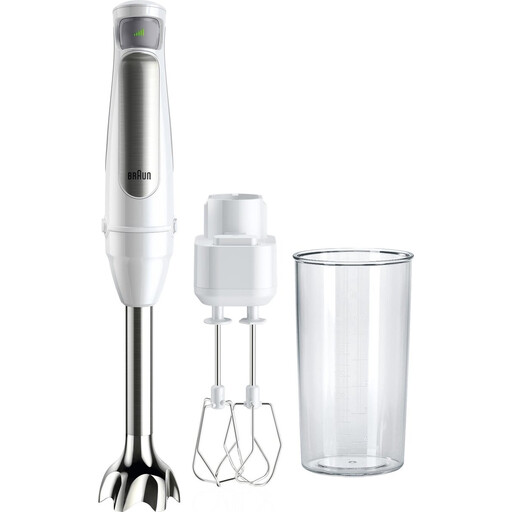 No image available
A hand blender to consider if you want to blend herbs and oil and make sauces too.
 No image available
This combination may suit you if you want to blend herbs and oil and use the machine for other preparations too.
The product title says the parts are dishwasher-safe; check the cleaning instructions for each individual part. The product description states that the appliance is for household use only.
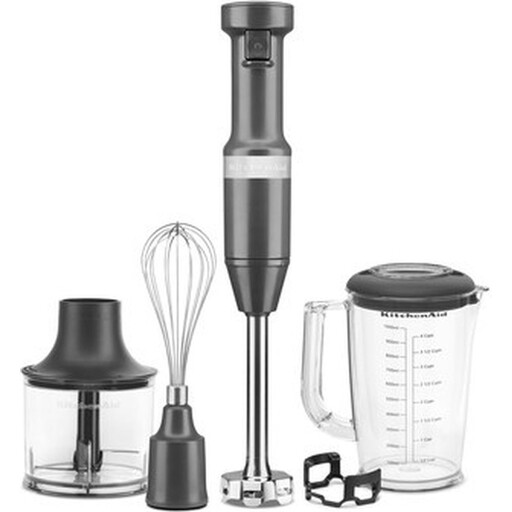 No image available
An immersion blender to consider if you want to blend herbs and oil and mix sauces too.
The product description states that it shouldn’t be used continuously for more than one minute and warns against immersing the motor unit in water.
No, not if you only want to blend herbs and oil. Albert Heijn Allerhande suggests using a blender or a hand blender with a tall beaker. A food processor may be useful if you’ll also use a suitable bowl or its slicing and chopping functions.
Don’t assume so. Kenwood lists a 1.3-litre bowl and a liquid capacity of 0.75 litres in that bowl for the MultiPro Go Blend FDP23.380GR. For each model, check the limit for the part you’ll actually be using.
Follow the instructions for each part. Kenwood specifies which parts are dishwasher-safe, while Philips warns that the HR1393/00 motor unit must not be rinsed under the tap or put in the dishwasher.
Don’t plan on it. Voedingscentrum warns of a botulism risk with homemade herb oil, especially if it’s stored outside the fridge for a long time. Voedingscentrum recommends setting your fridge to 4 °C; this alone doesn’t establish a shelf life for your particular recipe.
It depends on the organisation and activity. The Netherlands Food and Consumer Product Safety Authority says that businesses which prepare, process or sell food must work with an HACCP food-safety plan; an applicable hygiene code can be used for this. This isn’t a product specification that applies to every individual buyer.