
Vandaag of morgen in huis

Kwaliteit gegarandeerd

Welkomstaanbiedingen ontgrendelen: GRATIS bezorging | Tot 80% korting | Gratis 30 dagen JoyPlus-proefperiode
Download de app
You shouldn’t choose a smoke alarm based solely on price or its compact design. For houses, flats and rented homes, the most important factors are sensor type, battery life, alarm volume and installation options. If you rely only on terms such as “smart”, “wireless” or “10-year battery”, you could still end up with a model that isn’t right for the room or the number of alarms you need.
When comparing a Heiman smoke alarm, you’ll find several options: an optical model with a built-in lithium battery, wirelessly interlinkable alarms, a Wi-Fi smoke alarm with an app and mini models. The right choice depends on the layout of your home and how you want to maintain your alarms.
A smoke alarm with a 10-year battery needs less frequent battery replacement, but that doesn’t mean you can skip checks. You still need to test the alarm regularly and keep it free from dust, steam and paint. Some models have a built-in lithium battery. Once the alarm reaches the end of its service life, you’ll generally need to replace the whole unit.
A wireless smoke alarm can run on batteries without communicating with other alarms. An interlinkable smoke alarm, on the other hand, uses a radio connection to make multiple units respond together. This is especially useful in a multi-storey home. Check whether the product listing specifically mentions radio networking and how many alarms can be linked at most.
A smoke alarm with an 85 dB alarm produces a clearly audible signal, according to the product specifications. That doesn’t, in itself, tell you where to place it. For example, an alarm in the hallway might be harder to hear in a bedroom with the door closed. That’s why several alarms in strategic locations may make more sense than a single unit with a high stated alarm volume.
An optical smoke alarm detects smoke particles using a light sensor. The Heiman models in this guide are described in their product listings as photoelectric or optical. Also check whether EN 14604 is explicitly mentioned. This European standard covers smoke alarms for household use.
A reference to EN 14604 is something to check, not a reason to skip correct placement and maintenance. Always read the installation instructions and make sure the model is suitable for the intended indoor space.
A smoke alarm with a lithium battery may be a good option for bedrooms, hallways and rented homes where you want to keep maintenance to a minimum. Note the difference between:
The stated battery life is a product specification. Actual battery life can depend on factors including temperature, alarm alerts and maintenance.
A radio network can be useful in a larger home or a multi-storey property. Several Heiman models state that they support up to 40 linked smoke alarms. When buying, check whether you need a pack of one, two, three, four or five. A single alarm may seem cheaper, but protecting several rooms with individual purchases isn’t always better value.

Why it suits this type of buyer: A single unit is handy for a studio flat, student room or as an addition to an existing installation.
The product listing specifies both an optical sensor and EN 14604, helping you avoid choosing based on appearance or price alone.
10-year lithium battery according to the product specifications, 85 dB alarm and sold individually.
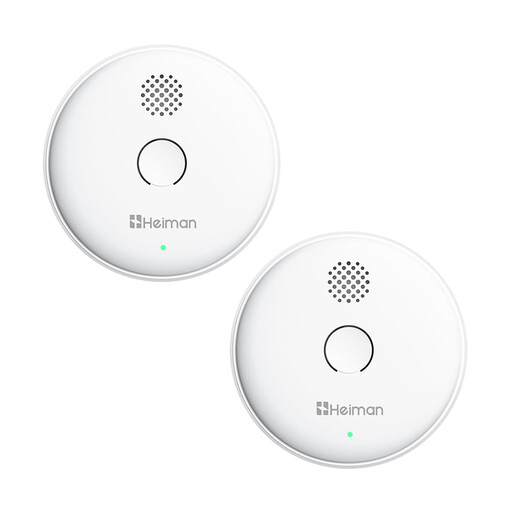
Why it suits this type of buyer: A good choice for families or homes with several rooms where you want the alarms to sound together.
The listing specifies radio networking for up to 40 alarms, rather than simply describing the product as wireless.
Pack of two, 85 dB alarm, 10-year battery according to the product listing and a mute switch.
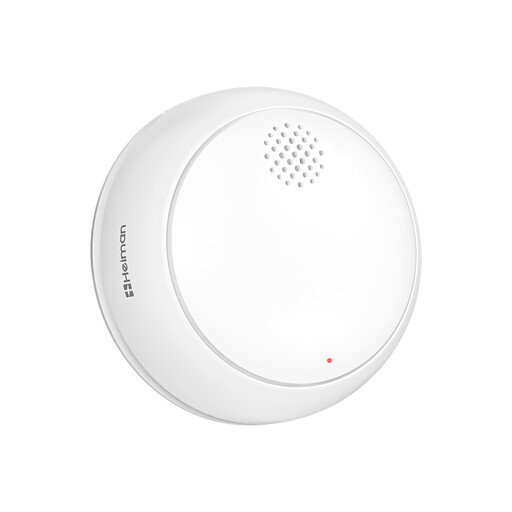
Why it suits this type of buyer: A good fit if you’re looking for a Wi-Fi smoke alarm with an app and a replaceable battery.
The product title clearly specifies Wi-Fi, an app, a replaceable battery and EN 14604. Before buying, check compatibility and app requirements.
Replaceable battery, Wi-Fi function, app support, 85 dB alarm and EN 14604 according to the product information.
We’ve put together a complete, up-to-date list of products that meet these strict selection criteria and current European safety regulations.
Install the smoke alarm according to the instructions, usually on the ceiling. In a house, consider placing alarms in the hallway, landing and bedrooms, as well as in rooms near potential fire hazards. Avoid areas exposed to direct steam, heavy dust or extreme temperatures. An alarm next to a hob may sound unnecessarily more often.
For a business premises, rental property or block of flats, it’s a good idea to record which type of alarm is used in each room, when it should be tested and when it needs replacing. A Heiman carbon monoxide alarm is a separate product and doesn’t replace a smoke alarm. The model in the range with CO detection is linked to EN 50291 in the product listing; use this type only for carbon monoxide detection and follow the instructions.
Several models list a service life of 10 years. This is a product specification for the particular model. Test the alarm regularly and replace it when it reaches the end of its stated service life or when the instructions say to do so.
You can with models that explicitly state they support radio networking. Some models list a maximum of 40 linked alarms. A standard wireless smoke alarm without this specification won’t necessarily communicate with other devices.
As well as the purchase price, consider battery replacement, any Wi-Fi requirements and whether the app is available. A model with a replaceable battery may have different running costs from a smoke alarm with a built-in lithium battery. Check the latest product information and choose the features you actually need.
