
Vandaag of morgen in huis

Kwaliteit gegarandeerd

Welkomstaanbiedingen ontgrendelen: GRATIS bezorging | Tot 80% korting | Gratis 30 dagen JoyPlus-proefperiode
Download de app
A Heiman smoke alarm can offer plenty of features on paper: a 10-year battery, an 85 dB alarm, wireless interconnection or Wi-Fi control. But a long list of features doesn’t automatically mean a model is right for your home. Whether you live in a flat, rented property, family home or holiday home, the most important things to consider are where you’ll install the alarm, how many you’ll need and how you’ll check them.
Look out for these three common pitfalls too:
An optical smoke alarm detects smoke particles using a light sensor. This type is widely used in homes and is listed in the product descriptions of several Heiman models. The product listings for the selected models state EN 14604 as the standard for smoke alarms.
When buying, check:
An alarm volume of 85 dB is a verifiable product specification. How clearly you hear it in practice also depends on walls, doors, where it’s installed and residents’ hearing.
A smoke alarm with a 10-year battery can be useful in rooms you don’t visit often, such as an attic, hallway or holiday home. According to their product information, some Heiman models have a built-in lithium battery designed to last 10 years. Other versions use a replaceable battery.
Here’s the difference:
Any stated lifespan is based on the product specification. Check the manual for testing frequency, battery warnings and when to replace the alarm.
An interconnected smoke alarm can be a good choice for homes with more than one floor. Certain variants of the Heiman models in this selection are listed as supporting radio interconnection for up to 40 alarms. According to the product information, when one alarm sounds, the connected units sound too.
A Wi-Fi model works differently. The Heiman WLAN Wi-Fi smoke alarm is listed as being designed for use with an app and has a replaceable battery. Before buying, check:
Install a smoke alarm on the ceiling and avoid placing it near direct steam, excessive dust or extreme temperatures. For exact distances and locations, follow the instructions supplied and the applicable Dutch regulations.

Why it suits this type of buyer: A standalone alarm is a practical choice if you want to protect one room without immediately buying a set or smart system.
The product listing specifies an optical sensor, EN 14604, a 10-year lithium battery and an 85 dB alarm. Check the exact manual and test the alarm after installation.
Standalone model; photoelectric technology according to the product description; 10-year lithium battery and 85 dB alarm according to the product specification.
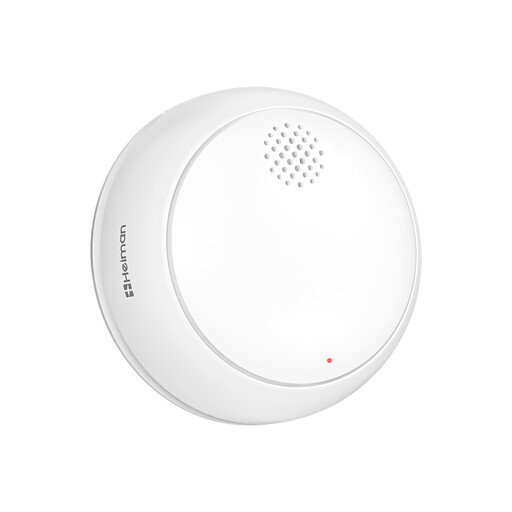
Why it suits this type of buyer: A good choice if you want an app as well as a local alarm, and prefer a replaceable battery.
The product name states that the battery is replaceable. Before buying, check the required Wi-Fi band, app compatibility and privacy settings.
Wi-Fi and app features according to the product description; 85 dB alarm and EN 14604 listing according to the product information.
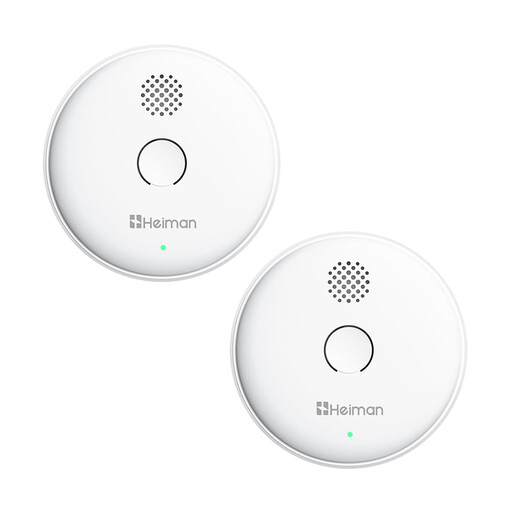
Why it suits this type of buyer: A set with wireless radio interconnection is a good fit for a home with several rooms or floors, where one alarm might not be heard straight away everywhere.
The product information states that it supports radio interconnection for up to 40 alarms and has a mute switch. Check the range and test all connected units after installation.
Set of two; 85 dB alarm; 10-year battery, EN 14604 and radio interconnection according to the product listing.
We’ve put together a complete, up-to-date list of products that meet these strict selection criteria and the applicable European safety regulations.
A smoke alarm detects smoke in the event of a fire. A Heiman carbon monoxide alarm is designed to warn you about possible carbon monoxide, so it follows a different standard. According to its product information, the Heiman WLAN carbon monoxide alarm WS-725ES lists EN 50291, a 10-year sensor life and support for Tuya and Smart Life.
According to the product description, the Heiman 723ESY has an LCD display, a 5-year battery life and a 10-year sensor life. Install a carbon monoxide alarm near bedrooms and living areas, following the instructions. A CO alarm does not replace a smoke alarm; you’ll need separate devices to protect against both risks.
Press the test button regularly, following the instructions in the manual. The product information for model 633 recommends a weekly test. Also check that dust hasn’t built up in the openings, and replace the alarm once it reaches the stated end of its life.
No. The battery may not need replacing in between, according to the product specification, but you’ll still need to test and clean the alarm and replace the whole unit when required. Also look out for warning signals and any expiry date on the device.
With a model that has a built-in 10-year battery, you’ll need to buy fewer replacement batteries in between. A system with replaceable batteries may work out differently. So don’t compare just the purchase price: consider the number of alarms, battery type, any reliance on an app and the replacement date too.
