
Vandaag of morgen in huis

Kwaliteit gegarandeerd

Welkomstaanbiedingen ontgrendelen: GRATIS bezorging | Tot 80% korting | Gratis 30 dagen JoyPlus-proefperiode
Download de app
A height-adjustable desk can make your workspace more flexible, but not every model is suited to everyday use. If you focus only on a low price or a modern look, you may find after buying that the desktop is too small, the motor has limitations or the desk wobbles at a higher setting.
This buying guide helps home workers, office professionals, students and gamers choose a suitable electric sit-stand desk. We look at dimensions, stability, controls, load capacity and practical details.
A 120 x 60 cm desk may be big enough for a laptop and a compact keyboard. Add a monitor, speakers, notebook and desk lamp, though, and space can quickly become limited. For a permanent monitor setup or gaming PC, 160 x 70 cm is often more practical, if your room has enough space.
Check the depth as well as the width. A shallow desktop leaves little space between your eyes and the screen, while a deeper one gives you more room for accessories.
A heavy desktop doesn’t automatically mean a desk is stable. Consider the combination of a steel frame, adjustable feet, leg construction and maximum static load capacity. The models in this selection, for example, have a load capacity of 70 kg. This is a product specification, not a recommendation to keep the desk loaded to its maximum at all times.
A stable home office desk should also be placed on a level surface. Adjustable feet are useful if your floor isn’t completely even.
A desk with a memory function can save your preferred sitting and standing heights, but check how many positions you can store. A USB-C port is handy for charging compatible devices, but it won’t necessarily replace a docking station or provide a complete power solution.
Electric motors also have their limits. According to the product information for the selected JOYFURNOS and Ochama models, the overheating protection may activate after around two minutes of continuous adjustment. The information advises waiting 18 minutes before using the height adjustment again.
The models below have a range of around 72 to 120 cm. This gives you the option of working seated or standing, but the right setting depends on your height, chair and screen position. Adjust the desk so your shoulders stay relaxed and your forearms can rest comfortably on the desktop.
Electric controls are especially practical if you change position several times a day. A memory function saves time by letting you recall stored positions at the touch of a button.
Choose the dimensions to suit your equipment:
Check the maximum static load capacity before adding monitor arms, a desktop computer or heavy equipment. Also consider the space behind the desk: according to the product information, electric models must not be placed directly against a wall while they are moving.
A combination of chipboard and steel is common in a modern computer desk. Steel forms the supporting frame, while the desktop mainly affects the appearance and ease of care. Cable holes, an organiser, hook or storage pouch help keep cables from your monitor, laptop and charger tidy.
Electrical components should be kept indoors and away from liquids. Before assembly, check that all the parts are included and follow the instructions provided. The built-in sensor and lock can help reduce the risk of collisions or accidental operation, but always make sure the desk has clear space to move.
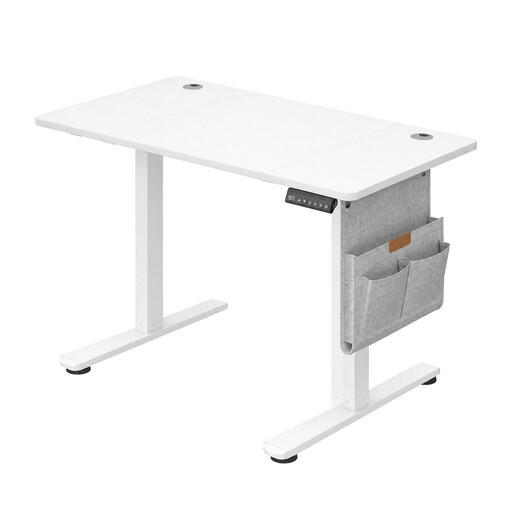
Why it suits this profile: Its compact size fits into a smaller home-working space, student room or bedroom. The four memory settings make it easy to use.
The product specifications list a steel frame, an adjustable height of 72–120 cm and a static load capacity of 70 kg. This makes the key details clear before you buy.
120 x 60 cm, four memory settings, cable holes, storage pouch and hook. According to the product description, it also has an obstacle-detection sensor.
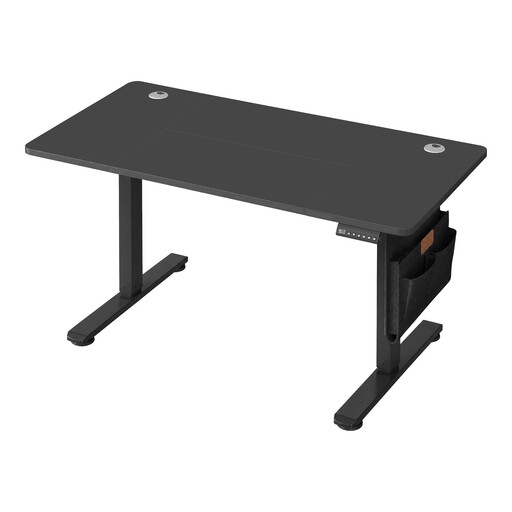
Why it suits this profile: The wide, deep desktop has room for multiple screens, documents and accessories in a permanent office setup.
The dimensions, height, material and load capacity are all clearly stated. This helps you avoid mistaking a spacious appearance for a genuinely large work surface.
160 x 70 cm, steel frame, memory function, USB-C port, cable holes and adjustable feet. The maximum static load capacity is 70 kg.
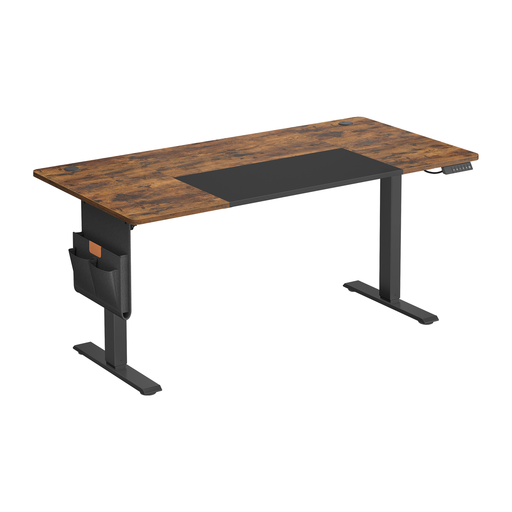
Why it suits this profile: This version combines a spacious desktop with a USB-C port, storage options and controls for regularly switching between sitting and standing heights.
The manual explains the pause needed after extended adjustment, the required distance from the wall and the maximum load. These details matter if you use the desk intensively every day.
Memory function, USB-C port, energy-saving mode, two cable holes, storage pouch and three hooks. The height range is 72 to 120 cm.
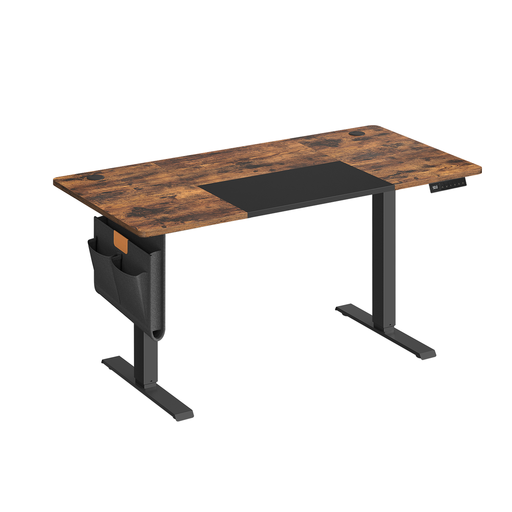
Why it suits this profile: Its mid-sized desktop offers more workspace than a compact desk without requiring as much room as a 160 cm model.
The product information lists the height range, four memory settings, maximum load and the clearance needed while adjusting the desk.
140 x 60 cm, four memory settings, USB-C port, cable management, storage pouch and three hooks. The stated load capacity is 70 kg.
We’ve put together a complete, up-to-date list of products that meet these strict selection criteria and the applicable European safety regulations.
An electric desk only uses power while adjusting and for any control functions. How often you change heights and how long the control panel stays active will affect energy use. For exact figures, check the technical specifications for your chosen model.
That depends on the setup, chair, screen and your working habits. An adjustable desk lets you switch positions, but each user needs to set it to the right height. Pay particular attention to the height range and maximum load capacity.
Its lifespan depends on assembly, load, frequency of use and maintenance. Place the desk on a level surface, don’t exceed the stated load capacity and keep liquids away from the electrical components. Follow the instructions on overheating protection too.
Power consumption is usually mainly linked to the brief periods when the motor is moving. To calculate it accurately, you’ll need the motor’s power rating, its running time and your local electricity tariff. These details vary by model and should be listed on the product page or in the manual.
