
Vandaag of morgen in huis

Kwaliteit gegarandeerd

Welkomstaanbiedingen ontgrendelen: GRATIS bezorging | Tot 80% korting | Gratis 30 dagen JoyPlus-proefperiode
Download de app
A heavy oversized T-shirt might seem simple to choose: go for a roomy fit, a neutral colour and a thicker shirt. Yet the differences often lie in details you can’t see in a product photo. A shirt might look oversized, but still come up short. Likewise, “100% cotton” on its own tells you little about the thickness, texture or how well the garment holds its shape.
For men and streetwear enthusiasts in the UK, there are three main pitfalls to watch out for:
An oversized cotton T-shirt feels comfortable for many wearers and suits everyday use. The models mentioned are made from 100% cotton according to the product information, usually in single jersey. That makes the composition straightforward: no synthetic fibre is listed in the main fabric.
When comparing, also look out for the description “premium cotton”. That’s a term from the product description and not an independent quality standard. So focus on verifiable details such as:
The weight of a fabric is expressed in grams per square metre (g/m²). The higher the number, the more material is typically used per area. That doesn’t automatically mean a shirt is more comfortable for everyone, but it does help you compare different models more fairly.
In the range you’ll find:
A heavyweight T-shirt at 240 g/m² can feel warmer and sturdier than a 180 g/m² model. If you cycle in summer or wear a shirt under a jacket, the lighter option might actually be more practical.
The term oversized fit should mean a roomier shoulder line, wider chest and often a longer body. Always check the actual measurements. Across different Heavy Oversized Tee models, the size range runs from S to 5XL. Some product tables also list chest widths of around 57 to 82.5 cm and lengths of 76 to 87 cm, depending on the size and version.
At home, lay a T-shirt that fits you well flat on a table. Compare:
If you want a distinctly roomy T-shirt, don’t automatically go for a bigger size. On a model that’s already designed to be oversized, going up a size can make it unnecessarily long or wide. For some models, the product information actually advises sizing down for a less loose look.
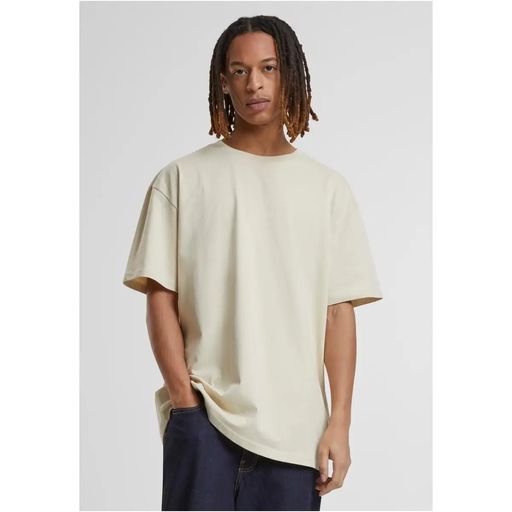
Why this fits the profile: A neutral sand colour, crew neck and oversized fit make this a simple casual T-shirt for everyday wear and a first streetwear outfit.
The product information lists both 100% cotton and a fabric weight of 240 g/m². So you don’t have to rely solely on the term “heavy”.
100% cotton, 240 g/m² chain-knit fabric and sizes from XXXS to 4XL according to the listed size chart.
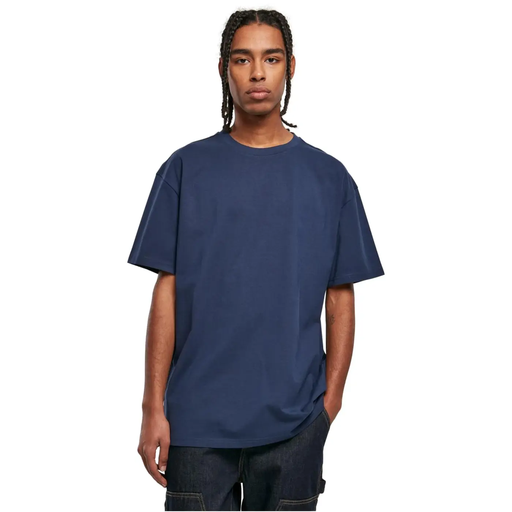
Why this fits the profile: Dark blue pairs easily with jeans, cargo trousers and jackets. The heavier fabric suits anyone looking for a clearly structured T-shirt.
The fabric thickness is clearly stated as 240 g/m². That makes the choice easier to compare than when only “premium” or “heavyweight” is used.
100% cotton single jersey, 240 g/m² and an oversized model with sizes from XXXS to 4XL according to the product details.
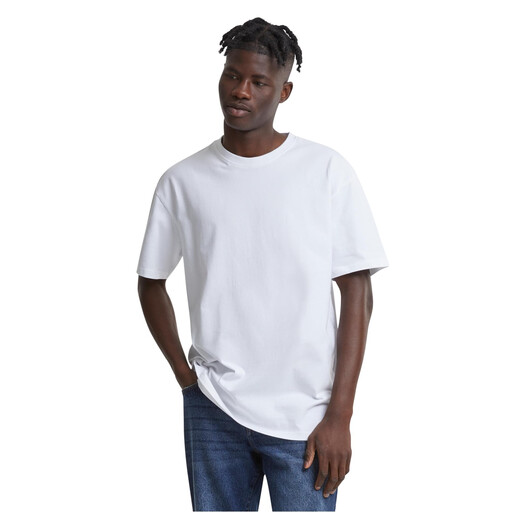
Why this fits the profile: The white colour works as a base layer under an overshirt, hoodie or jacket. The roomy sizing up to 5XL makes this interesting for larger sizes.
The product page mentions an oversized cut, dropped shoulders and a fabric weight of 180 g/m². That gives you more information about layering than a general label like “thick shirt”.
100% cotton, crew neck, short sleeves and sizes from S to 5XL; the product information states machine wash at 30 °C.
Always follow the care label on your specific T-shirt. The product information for these models recommends a cold machine wash or washing at 30 °C. Wash with similar colours and avoid bleach where advised. Some models also recommend not tumble drying and ironing on a low setting.
A practical routine:
This way you can prevent a roomy fit from changing too quickly due to incorrect care.
We’ve put together a full, up-to-date list of products that fully meet these strict selection criteria and comply with current European safety regulations.
It’s not just the fit that determines warmth. The fabric weight plays a major role. A 240 g/m² model typically contains more material than a 180 g/m² model and can therefore feel heavier. For layering, a 180 g/m² model can be more practical.
Usually not when the model is already described as oversized. Check the chest width and length in the size chart and compare them with a shirt you already wear. If you want a less roomy look, you might actually consider sizing down on some models.
That depends on the fabric, construction, how often you wear it and how you care for it. A higher g/m² number is no guarantee of a fixed lifespan. Wash according to the label, don’t use bleach if it’s advised against, and avoid high drying and ironing temperatures.
