
Vandaag of morgen in huis

Kwaliteit gegarandeerd

Welkomstaanbiedingen ontgrendelen: GRATIS bezorging | Tot 80% korting | Gratis 30 dagen JoyPlus-proefperiode
Download de app
A heavy oversized T-shirt may seem simple at first glance: a roomy cut, sturdy fabric and a neutral colour. Yet small differences in sizing, fabric weight and shoulder shape can determine whether you love wearing it or leave it at the back of your wardrobe after a few washes.
Many shoppers come up against three familiar pitfalls:
By paying attention to the specifications below, you can compare products more practically and avoid making the wrong purchase.
A 100% cotton T-shirt feels different from a shirt containing synthetic fibres. Cotton jersey is often chosen for everyday wear because, according to the product description, the material can feel soft and be suitable for warm weather. This is not a guarantee of comfort for everyone: personal preference, temperature and fit remain important.
With a heavyweight cotton T-shirt, the fabric weight is also relevant. Jersey weighing 180 g/m² is noticeably thicker and more structured than many lightweight basic T-shirts. A 240 g/m² model feels heavier still and can add more structure to an outfit. However, a higher fabric weight can also make the shirt feel warmer and less flexible.
Also check the care label. The selected models are intended to be washed at a maximum of 30 °C, without bleach and without tumble-drying. Using a low ironing temperature helps keep the fabric and print-free finish looking neat.
A relaxed-fit T-shirt should hang loosely without the sleeves or shoulders becoming excessively large. With a genuinely oversized model, these points are particularly important:
The Heavy Oversized Tee models listed are available in sizes S to 5XL. For the oversized styles, the stated chest and length measurements range from a chest width of 57 cm and a length of 76 cm in S to a chest width of 82.5 cm and a length of 87 cm in 5XL. Always check whether the table shows half-chest measurements or uses another measuring method. Ideally, compare the measurements with a T-shirt you already know fits you well.
If you want a less roomy look, the product information states that you may wish to consider going down a size. If you plan to wear an extra layer underneath, your usual size may feel more comfortable.
An oversized black, white or green shirt will suit a different wardrobe depending on the colour:
Do not rely on the product photo alone. Colours can look different from one screen to another. Also check that the selected variant has the same fabric, fit and size chart. Different product pages may show different specifications for certain colours.
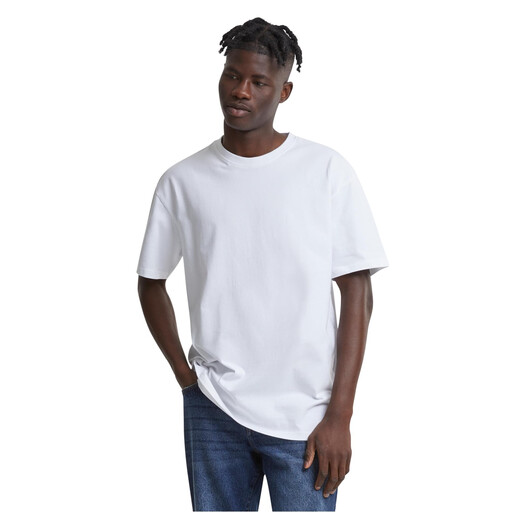
Why it suits this profile: A white model in size M is a straightforward starting point for anyone buying a heavyweight T-shirt for the first time. The neutral colour works with jeans, shorts and cargo trousers, and is also suitable as a layer under a jacket.
The product information specifies 100% cotton, an oversized silhouette and 180 g/m² jersey. This means you do not have to rely solely on the term “heavyweight”.
100% cotton jersey, a crew neck, short sleeves and sizes from S to 5XL.
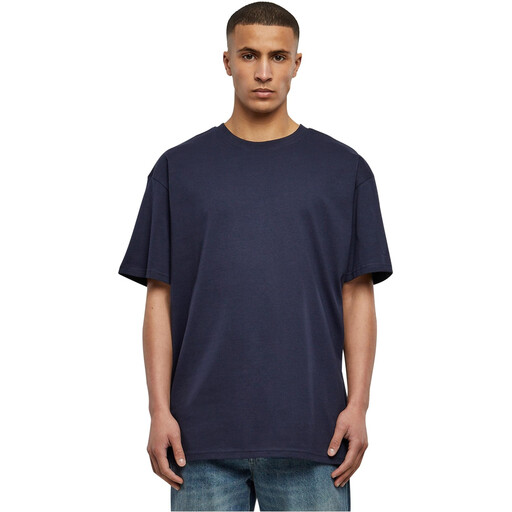
Why it suits this profile: The midnight navy colour and extra-wide cut are ideal for anyone looking for a substantial foundation for streetwear outfits. The shirt can be worn on its own or under an overshirt and jacket.
The description specifies ultra-heavyweight single jersey, 100% cotton and overcut shoulders. This makes it possible to verify the roomy shoulder line you are looking for.
Dense single jersey, a stable shape according to the product description, and a broad, relaxed fit.
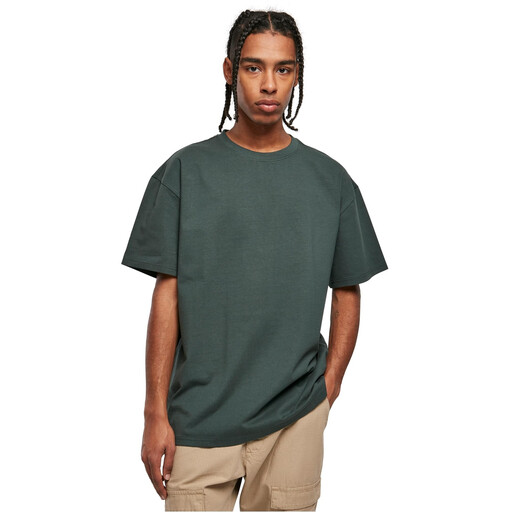
Why it suits this profile: The green colour and heavier jersey are appealing to anyone who wants a distinctive, substantial shirt for everyday wear and layering.
The product page states 240 g/m² and 100% cotton. Do bear in mind that the fit is described there as classic/slim. If you want a looser look, you may wish to consider going up a size.
Extra-thick 240 g/m² jersey, 100% cotton and available in sizes S to 5XL.
Follow these steps:
For a plus-size T-shirt, length is at least as important as chest width. A shirt that only becomes wider but barely longer may fit differently than expected. Also check whether the style has an oversized or classic/slim fit. This difference is particularly relevant with bottlegreen models.
Lifespan depends on how often the shirt is worn, washing, drying and friction. A heavier fabric may feel more resistant to losing its shape, but no product description can guarantee that a T-shirt will look perfect indefinitely. Wash at 30 °C, do not use bleach and avoid the tumble dryer when instructed on the label. Turn the shirt inside out when ironing and use a low temperature.
We have put together a complete, up-to-date list of products that fully meet these strict selection criteria and the applicable European safety regulations.
That depends on the fabric weight and your personal preference. A 180 g/m² model is lighter than a 240 g/m² shirt, but both are thicker than many standard T-shirts. The product descriptions state that the cotton jersey is suitable for warm weather; this is information from the product supplier and is not a guarantee for every wearer.
Cotton can shrink, particularly at high temperatures and when tumble-dried. For this reason, follow the stated care instructions: wash at 30 °C, do not bleach and do not tumble-dry. If in doubt, measure a shirt you already own and compare it with the size chart before ordering.
Start with your usual size if you want to maintain the roomy fit. If you prefer a more fitted look, the product information states that going down a size may work. With models featuring a classic/slim fit, you may instead need to go up a size for a clearly oversized effect. Always check the chest and length measurements for each product variant.
