What should you consider when choosing?
For a workshop using tinned beans, the main things to consider are serving temperature, quantity, timing and cleaning.
Pan on the hob
Choose this when: you want to heat the beans shortly before tasting and don’t need a separate keep-warm stage.
Trade-off: you’ll need a hob and will have to keep an eye on the pan as the beans heat; stirring helps them warm evenly.
Slow cooker
Choose this when: you want to plan the cooking in advance or use the appliance for other workshop dishes too.
Trade-off: check the usable capacity and measure the food’s temperature; a keep-warm programme doesn’t guarantee that it will be hot enough.
| What to consider |
What should you look for? |
Who is this important for? |
| Temperature when serving |
Check the food’s temperature with a digital probe thermometer. The NVWA recommends serving hot food above 60 °C. |
If participants serve themselves at different times, I want to be able to check the temperature of the beans themselves. Around 36% of consumers give top priority to being able to check that food is being kept warm. |
| Usable capacity |
Work out how much beans and sauce you need, then compare this with the usable capacity, not just the stated bowl capacity. |
When catering for a larger group, I want to be able to prepare enough beans and sauce in one go. Around 29% of consumers prioritise having enough usable capacity for their group. |
| Heating in time |
Decide when you’ll be serving, follow the instructions on the beans’ label and stir while heating a larger quantity. |
If the demonstration starts at a set time, I want to be able to heat the already-cooked beans in time. Around 21% of consumers give timing top priority. |
| Cleaning and positioning |
Check which parts can be removed or are dishwasher-safe, and follow the positioning instructions for the exact model. |
For repeated workshop use, I want to be able to clean the pan easily afterwards and position the appliance securely. Around 14% of consumers prioritise cleaning and positioning. |
Slow cookers and multicookers at Joybuy
These models have a slow-cook function and are suitable for planned cooking; some also have other cooking programmes. If you only need to heat tinned lima beans, a pan on the hob may be more practical.
 No image available
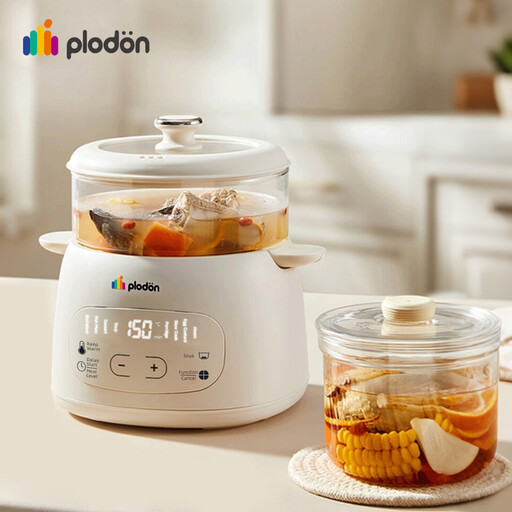
Plodon PLD-KC-DDZ01 electric slow cooker, 2 L
The slow-cook function and adjustable heat settings are suited to planned cooking; check the food’s temperature when serving.
The product name lists a 2 L capacity, 800 W, eight functions and five heat settings.
The name also specifies a glass design and a delayed-start function.
View at Joybuy
 No image available
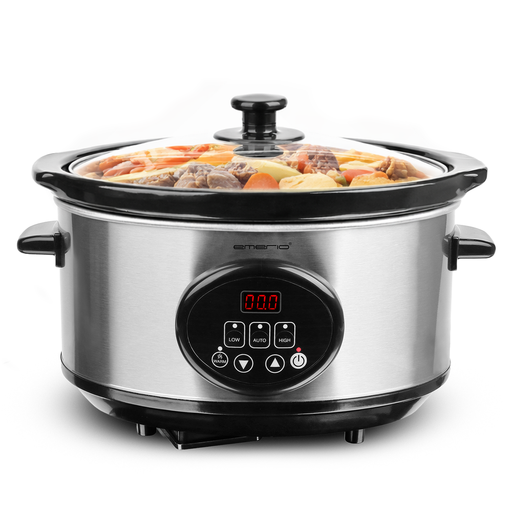
Emerio SC-129406 digital slow cooker, 3.5 L
The stated capacity may be a factor when preparing a particular quantity; measure the food’s temperature if you’re keeping it warm while serving.
The product name lists a 3.5 L capacity, a digital display and a keep-warm function.
View at Joybuy
 No image available
IAGREEA MC-XZE2066 electric slow cooker, 2.6 L
The product name lists several heat settings and a 2.6 L capacity; compare this with the quantity you need for your workshop.
The product name lists 1,000 W and three manually adjustable heat settings.
The product information states that this model is for domestic use only. Don’t choose it for a commercial workshop.
View at Joybuy
 No image available
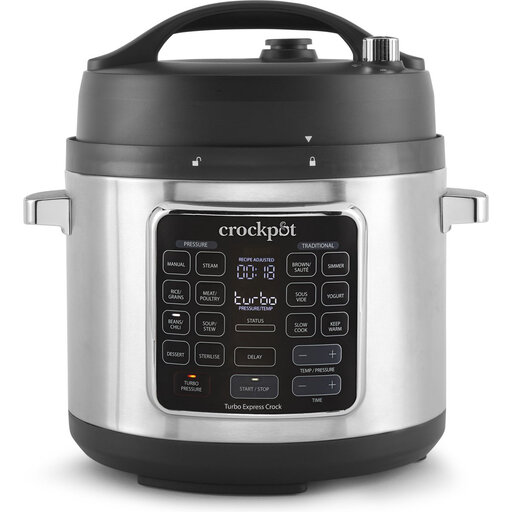
CrockPot CSC062X slow cooker, 5.6 L
The stated capacity may matter if you want to prepare a larger quantity; work out how much you need before choosing a model.
The product name lists a 5.6 L capacity and three settings.
When using the pressure function, don’t force the lid open while the float is raised, and don’t fill above the marked maximum level.
View at Joybuy
 No image available
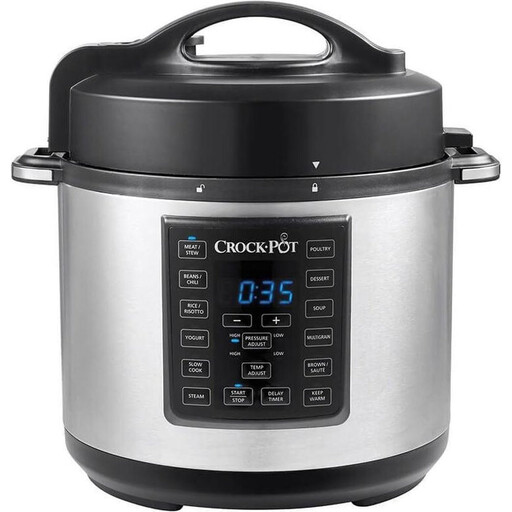
CrockPot CSC051X multicooker, 5.6 L
According to the product name, this multicooker has a slow-cook function and several programmes; keep an eye on the food’s temperature when serving it hot.
The product name lists a 5.6 L capacity, 1,000 W and 12 programmes.
When using the pressure function, don’t open the lid while the float is raised, and don’t fill above the maximum line.
View at Joybuy
Frequently asked questions
Do tinned lima beans need to cook for hours?
No. The Netherlands Nutrition Centre says that tinned pulses only need to be heated through; also follow the cooking instructions on the specific label.
Can I rely on the keep-warm button during a workshop?
Not without checking the food’s temperature. The NVWA recommends using a digital probe thermometer to check the temperature. For hot food served to customers, the NVWA recommends a temperature above 60 °C; Fritel specifies 28–48 °C for the ‘Keep warm’ setting on the SC 2090.
What requirements apply if I serve food at a commercial workshop?
If you prepare, handle or sell food as a business, the NVWA says you must follow an HACCP food safety plan or an applicable hygiene code. For food sold at markets or events, the NVWA also specifies temperature checks and allergen information. Whether these requirements apply to a particular workshop depends on how it is organised.
What should I do with leftovers after the workshop?
According to the Netherlands Nutrition Centre, cool leftovers quickly, store them in a sealed container and don’t leave them out of the fridge for more than 2 hours. The Netherlands Nutrition Centre recommends keeping them in the fridge for no more than 2 days. Reheat leftovers thoroughly later, stirring them as you do so.
What should I consider when cleaning and positioning the appliance?
Follow the manual for the exact model. Fritel says that the bowl and lid of the SC 2090 are dishwasher-safe. The manual for the Tristar VS-3915 specifies a flat, stable surface and at least 10 cm of clearance all around the appliance.


