
Housemates who change their towels frequently
You want to dry several bath towels regularly without hanging them too close together. So look at the usable rails or tiers, not just the stated drying length.


Choose a heated airer if you regularly need your towels again quickly and have a suitable spot with ventilation and a safely accessible socket. Compare the space available for hanging towels separately, the airer’s dimensions when in use and its stated power rating; that alone won’t tell you how long towels take to dry. If you have enough time, a standard airer may be all you need: it uses no electricity itself, but ventilation is still needed to remove moist air.
You want to dry several bath towels regularly without hanging them too close together. So look at the usable rails or tiers, not just the stated drying length.
You want to be able to put the airer away after use, or place it somewhere suitable without blocking a passageway. Compare its dimensions when open and folded.
When drying clothes indoors, moist air needs to be removed. A heated airer uses electricity; if your towels have enough time to dry, an unheated airer is another option.
A good fit if: you regularly need your towels again quickly and can spread them across enough usable rails or tiers.
The trade-off: the airer uses electricity and takes up space; heating does not remove moisture from your home.
A good fit if: your towels have time to dry and you need hanging space without the airer itself using electricity.
The trade-off: allow for the drying time available; ventilation is still important when drying indoors.
First, measure the space and work out how many towels need to hang at once. For electrical models, the Dutch government’s Ondernemersplein explains that CE marking and an EU Declaration of Conformity are part of the product requirements.
| What to consider | What should you check? | Who should pay particular attention? |
|---|---|---|
| Space for towels | Check the rail layout and spacing. Find out how many towels can hang separately; the stated drying length alone won’t tell you this. | If we need several bath towels at once, I want to be able to hang them with space between them. Around 22% of consumers put capacity for drying towels at the same time first. |
| Positioning and storage | Measure the space with the airer open, and the storage space it will need when folded. Also check that you can reach the socket without routing the cable in an unsuitable way. | In a small shared room, I want to be able to put the airer away after use without blocking a passageway. Around 22% of consumers prioritise positioning and storage. |
| Damp and ventilation | Choose a spot where you can ventilate, and follow your home’s ventilation guidance. Milieu Centraal recommends paying attention to ventilation when drying clothes indoors. | If I dry towels indoors, I want to be able to remove moist air. Around 22% of consumers consider moisture management the most important requirement. |
| Electricity use | Compare the stated power in watts and calculate costs using the same running time and your own electricity tariff. The power rating alone won’t tell you what a drying session costs. | If we share the electricity costs, I want to know in advance how we’ll agree on using the airer. Around 17% of consumers put electricity use and how costs are shared first. |
| Safe positioning | Check the instructions, the information for the exact model and the intended location. Keep cables and the airer out of passageways. | Before I set up an electric airer, I want to know whether the socket and location are suitable. Around 17% of consumers make safe positioning their top buying priority. |
Even with a heated airer, towels drying indoors release moisture into the air. Heated rails are no substitute for ventilation.
Choose a spot where you can ventilate and take your housemates into account. Milieu Centraal offers advice on ventilation at home.
The stated power rating doesn’t tell you the measured electricity use for drying a towel completely. The running time and your electricity tariff also matter.
Compare like for like: power, hours of use and the tariff you pay. An unheated airer doesn’t use electricity itself.
The total drying length doesn’t tell you how the rails are arranged or how many large towels can fit without touching.
Check the layout and dimensions, then count the hanging positions you can actually use.
An airer or cable could obstruct the passageway. Brandweer Nederland explains the specific rules for escape routes in communal areas of residential buildings.
Measure the clear passageway and choose another spot if the airer or cable gets in the way.
Offers, among other products, a heated Premium drying tower with a heat cover, for anyone comparing multi-tier options with a wide frame.
The Action product page describes the BK-706M-6 as a compact electric towel dryer that can be freestanding or fitted using the brackets supplied.
Makes unheated drying towers, including the Storm for larger laundry items.
Offers unheated HangOn airers and drying towers for anyone looking for a movable airer or one that can be put away.
These Joybuy products are standard airers for drying laundry naturally; compare the stated drying length and storage options with the space available and how you’ll use the airer at home.
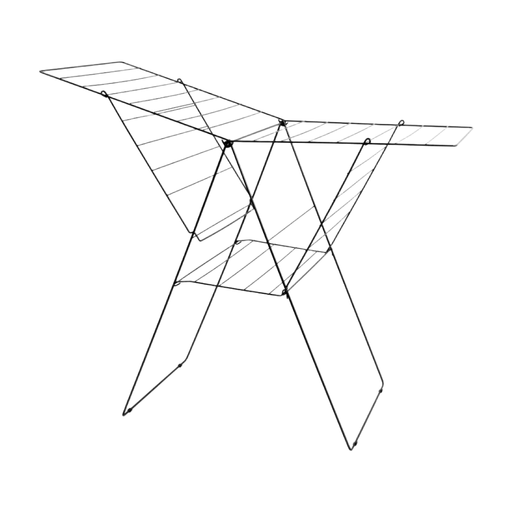 No image available
An option to compare if you’re looking for a folding airer with a stated drying length of 20 m.
Folded dimensions: 101 × 59 × 4,5 cm.
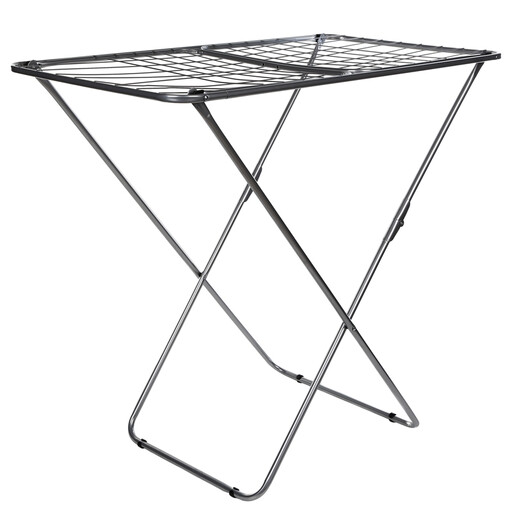 No image available
This airer is an option if you’re looking for one that, according to the description, can be used indoors and outdoors and is easy to set up and put away.
Stated drying length: 18 m.
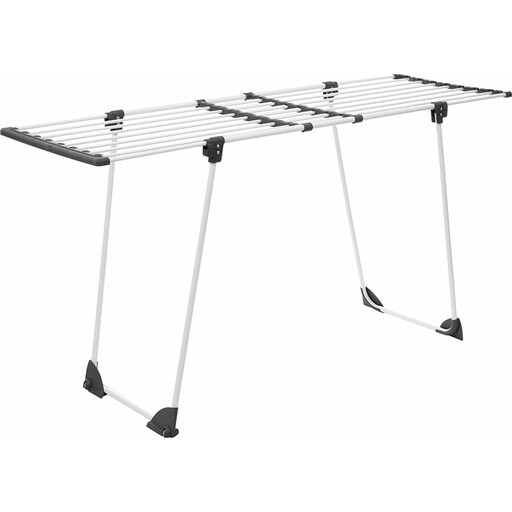 No image available
A folding airer to compare if you’re looking for a way to dry laundry indoors or on a balcony.
Stated drying length: 17 m.
Material: steel and polypropylene. Dimensions: 180 × 56 × 88 cm.
Yes. Towels drying indoors release moisture into the air; heated rails don’t remove it. Milieu Centraal recommends ventilating your home.
That depends on the exact appliance and where you plan to put it; don’t assume it’s suitable based on a general product description alone. Check the instructions and make sure the socket is suitable. The Action product page lists IP22 for the Dirt Devil BK-706M-6, but that doesn’t prove it’s suitable for every bathroom location.
For a nominal calculation, divide the stated power in watts by 1,000 and multiply the result by the number of hours it’s used. This gives you kWh if it runs continuously at that power; it isn’t a measurement of actual electricity use per drying session. Then factor in your electricity tariff and agree how you’ll share the costs at home.
Compare the usable rails and spacing with the towels you need to dry at the same time. The total drying length alone doesn’t tell you how many large towels can fit without touching; also measure the space where the airer will be set up.
At the very least, don’t position the airer or its cable where it could obstruct the passageway or escape route. Brandweer Nederland explains the specific rules for escape routes in communal areas of residential buildings; whether those rules apply to a particular corridor depends on the building.