
For homes with limited drying space
You want to hang up a few tea towels without giving up floor space permanently. Compare a small freestanding airer with a hanging or wall-mounted option, and check that it will fit where you plan to use it.


For a few tea towels, a compact, unheated airer is a sensible first choice if you can leave them to dry for long enough; the airer itself uses no electricity. Choose a small heated airer if extra warmth matters for your needs, but weigh up its power rating and the space it takes up, and keep the room ventilated. Product specifications such as power or temperature do not prove how long drying will take or guarantee a hygienic result.
You want to hang up a few tea towels without giving up floor space permanently. Compare a small freestanding airer with a hanging or wall-mounted option, and check that it will fit where you plan to use it.
You’re considering a heated airer for tea towels you use frequently, and want to weigh up its power rating, size and position against its electricity use. The stated power rating won’t tell you how quickly your tea towels will dry.
You dry clothes indoors and need to be able to remove moist air. Milieu Centraal points out that ventilation remains important when drying washing indoors.
| What to consider | What should you check? | Who should give this greater priority? |
|---|---|---|
| Extra warmth | Check which parts are heated, whether there’s a timer, where the airer can be placed and whether there’s enough room to spread out your tea towels. Weigh this against its electricity use. | If I often need a tea towel, I want to weigh extra warmth against the electricity used; around 29% of consumers prioritise extra warmth for tea towels they use frequently. |
| Space and storage | Measure the space where the airer will be used and where you plan to store it. For a hanging airer, also check the width of the door or hanging space. | If space is limited, I want to know whether the airer will fit when set up and where I can store it; around 29% of consumers prioritise the space it takes up and how easy it is to store. |
| Damp air indoors | Choose a spot where you can ventilate, and check how air circulates in your flat. Heat does not remove moist air. | If I dry clothes indoors, I want to be able to remove moist air; around 24% of consumers give managing damp the highest priority. |
| Electricity use | Compare the stated wattage with how long you’ll actually switch the airer on for. An unheated airer uses no electricity itself. | For a few tea towels, I want to keep electricity use down; around 18% of consumers prioritise low running costs. |
When drying clothes indoors, removing moist air remains important, whatever the heat source. Poor ventilation can lead to damp problems.
First choose a spot where you can ventilate, then decide whether you need the extra warmth.
A stated airer temperature doesn’t prove how quickly a tea towel will dry or that a used one has been cleaned. Voedingscentrum recommends washing used tea towels at 60 °C and hanging wet ones up to dry.
Use clean tea towels and don’t judge an airer on its temperature specification alone.
Freestanding, hanging and wall-mounted airers each need a different kind of space. An airer may get in the way when opened out or fail to fit where you planned to put it.
Measure the space with the airer set up, and check there’s enough clearance, door width or wall space.
The DO7117DR is a compact electric heated airer which, according to the manufacturer, can be used freestanding or wall-mounted.
The unheated Tilburg 12 hanging airer could suit a small drying job if you have a suitable place to hang it.
The unheated Telegant 81 Protect Plus is a wall-mounted option if you have a suitable permanent fixing point.
Vileda also offers vertical airers, including the Mixer 3, for those who want to dry more washing in the same space.
These Joybuy products include heated drying options and airers for doors, walls or floors. Compare the fitting options and how much space each airer takes up when in use. For electrical products covered by CE rules, the Netherlands Food and Consumer Product Safety Authority says that CE marking is compulsory. Check the marking on the specific item and follow the product instructions.
 No image available
Wall mounting frees up floor space; the product description mentions touch controls, a temperature display and a top shelf.
Check that the wall is suitable for mounting, and follow the fitting and use instructions for the specific appliance.
 No image available
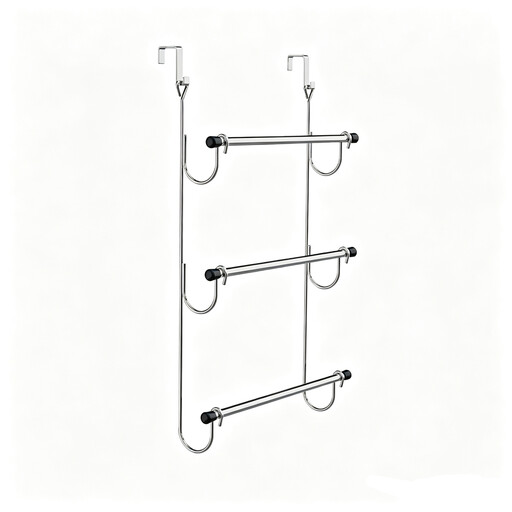
An over-the-door airer can free up floor space; the product description mentions three towel rails and air-drying delicate laundry.
According to the product description, the hanging hooks fit doors up to 4,5 cm thick. Check your door thickness and keep the room ventilated when drying clothes indoors.
 No image available
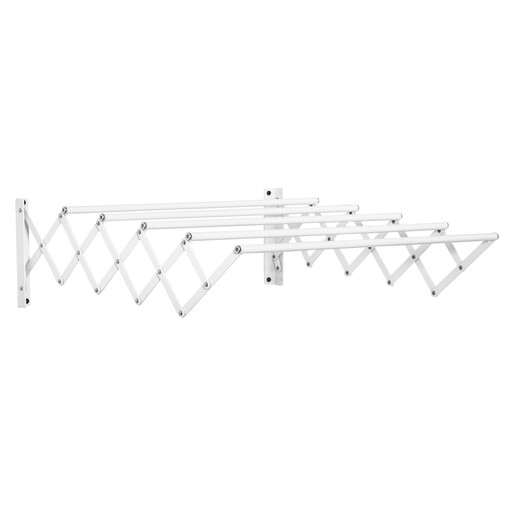
The five rails fold back against the wall when the airer is not in use.
The stated dimensions are 63,5 × 60 × 20 cm; check the fixing point and how much space the airer takes up when opened out.
 No image available
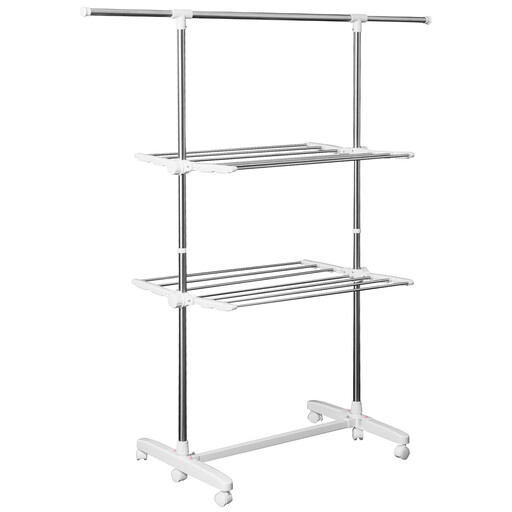
Adjustable shelves, an extendable rail and wheels give you different ways to hang washing and move the airer around.
The stated maximum size when in use is 136,5 × 55 × 154 cm; check that you have enough room for a job involving just a few tea towels.
 No image available
According to the product name, this heated airer has two side wings and a power rating of 230 W; the stated dimensions when in use are 144 × 53 × 91 cm.
The product description requires a stable, level surface, adequate ventilation, at least 31 cm of clearance from walls and an earthed socket. Check that these requirements can be met where you plan to use it.
No, a heated airer does not remove moist air. Milieu Centraal recommends ventilating when you dry washing indoors; in a flat, check how the ventilation system works.
You can’t decide this based on the product category alone. DOMO lists an IPX4 rating for the DO7117DR, but check the manual for where the specific appliance can be used, and make sure the location and electrical connection are suitable.
For electrical products covered by CE rules, the Netherlands Food and Consumer Product Safety Authority says that CE marking is compulsory. Check the marking on the item you buy; a product listing alone does not confirm it.
No, warmth during drying does not prove that a used tea towel has been cleaned. Voedingscentrum recommends washing used tea towels at 60 °C and hanging wet ones up to dry.
If a product is faulty, the seller must provide an appropriate solution under the rules set out by the Dutch government. There is no fixed two-year statutory guarantee period in the Netherlands; a manufacturer’s warranty is separate.