
Hosts with short changeover times
If several bath towels need to dry after guests check out, look at the usable hanging space. The number of bars alone doesn’t tell you how many large towels will fit at once.


Choose a foldable heated clothes airer if you need to hang several freshly washed bath towels between guest changeovers and have enough floor and storage space. Choose an electric towel rail if a permanent spot for a smaller number of towels is more important. Heating is no substitute for ventilation. Also check the usable hanging space, the instructions for the exact model and the CE marking on the appliance supplied.
If several bath towels need to dry after guests check out, look at the usable hanging space. The number of bars alone doesn’t tell you how many large towels will fit at once.
When drying clothes indoors, you also need to remove moisture from the air. Milieu Centraal advises paying attention to ventilation when drying washing indoors; a heated airer won’t do this for you.
A foldable airer can be put away after use, while a wall-mounted model needs a suitable permanent spot. Consider both the space it takes up while drying and where you’ll store it afterwards.
A good choice if: you want to hang several freshly washed towels separately between stays.
The trade-off: it takes up floor space when in use and needs space to be stored away.
A good choice if: a permanent spot for a smaller number of towels is your priority.
The trade-off: hanging space is limited; check the installation instructions for the specific model.
A good choice if: you want a permanent fitting that can also heat the bathroom.
The trade-off: the installation location and instructions for hanging textiles vary by model; the wattage won’t tell you how quickly a full load will dry.
| What to consider | What should you check? | Who should pay extra attention? |
|---|---|---|
| Hanging space for towels | Compare the size of your towels with the usable bars and the maximum permitted load for the exact model. | With a short changeover time, I need to fit several large towels and can’t rely on the number of bars alone; around 31% of consumers say towel space is their main buying concern. |
| Moisture and safe use | Check ventilation, the instruction manual, the location in relation to water and the CE marking on the product supplied. The NVWA states that CE marking is compulsory for electrical products covered by the applicable product regulations. | When I dry washing indoors, I need to be able to remove moisture and choose a suitable place for the electrical appliance; around 31% of consumers prioritise moisture control and safe use. |
| Space for use and storage | Measure the space when the airer is unfolded and, for a foldable model, the available storage space. For wall-mounted models, measure the intended permanent location. | When floor space is limited, I need to know where the airer will stand while drying and where it can be put afterwards; around 23% of consumers say space is their main concern when choosing. |
| Electricity and servicing costs | Compare the stated wattage with the expected usage time. Calculate consumption in kWh as power in kW × hours, using your own tariff. If buying for business use, ask about the service terms. | If I use the airer regularly for a holiday let, I need to assess its electricity consumption and service arrangements; around 15% of consumers prioritise running and servicing costs. |
Washing dried indoors releases moisture into the room. Heating won’t remove that moisture on its own.
Check the ventilation available in your intended drying area before choosing an airer.
The number of bars won’t tell you how many large bath towels can be spread out or when they’ll be dry.
Check the size of your towels, how they can be arranged and the maximum permitted load for the exact model.
IP ratings, installation clearances and instructions apply to the specific model and don’t automatically apply to other rails.
Follow the instructions for the exact model and assess your planned installation location separately.
The range includes the foldable Warmmat airer and electric towel rails.
The Sani-Towel 500 White is a wall-mounted electric bathroom towel radiator.
The product listing for MEQ-EL8980/002 describes an electric towel rail that can be used freestanding or wall-mounted.
These products suit a permanent wall location or indoor drying with a movable airer or portable dryer. For your holiday let, check the installation location, available space and ventilation.
 Image unavailable
For a permanent wall-mounted spot for towels; check that the location is suitable for your bathroom and installation.
The product title mentions touch controls, a digital temperature display and a top shelf.
 Image unavailable
The fold-out side wings and large central area are designed to hang several items of washing.
The product description states a maximum recommended load of 10 kg, indoor use on a stable, level surface and the need for adequate ventilation. Keep at least 31 cm away from walls.
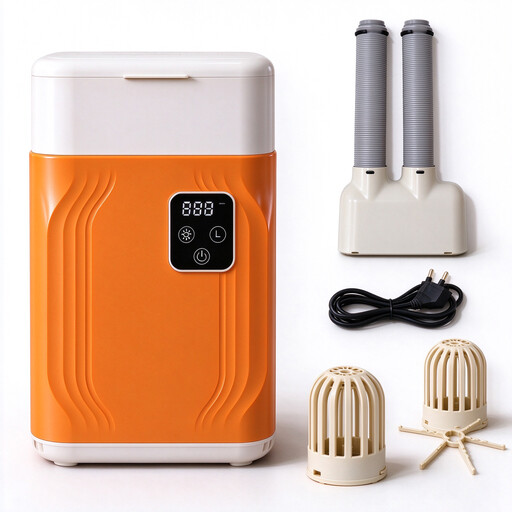 Image unavailable
For portable indoor drying of clothes and other textiles; this is a clothes dryer, not a wall-mounted towel rail.
The product description limits use to indoors and requires a clearance of at least 50 cm from flammable materials. The air outlet gets hot during use.
Yes. Washing dried indoors releases moisture into the room, and Milieu Centraal advises paying attention to ventilation when drying clothes indoors. A heated airer won’t remove that moisture by itself.
No. Check the location against the manual for the exact model and the electrical installation. The product listing for the Dirt Devil MEQ-EL8980/002 states IP22 and a model-specific installation clearance; these details aren’t general rules for other rails. NEN 1010 is relevant when making changes to a fixed electrical installation.
Follow the manual for the exact model. For the Sani-Towel 500-750, Eurom says to switch off the appliance, unplug it and let it cool before cleaning. Use only the designated brackets for towels.
Calculate consumption in kWh by multiplying the power in kW by the number of hours the appliance is switched on. Then multiply that consumption by your own price per kWh. If you’re buying for a holiday let, ask about the applicable service and warranty terms. The Dutch government’s guidance on consumer rights applies to purchases made as a private individual and doesn’t necessarily apply to business purchases.
The Netherlands Food and Consumer Product Safety Authority states that CE marking is compulsory for electrical products covered by the applicable Dutch product regulations. This general requirement doesn’t confirm that a specific item has the marking, so check the product you actually receive.