
For a few flannels
You dry small loads and want to know whether a well-ventilated spot is enough before opting for a heated airer.


For a few flannels, an unheated airer is often the obvious first choice if you can hang them separately and the room is well ventilated. If space is limited, choose a compact heated towel rail. If you want to dry flannels and seasonal clothes at the same time, a folding heated airer gives you the extra hanging space you need, but it also takes up floor space and uses electricity. For an electric model, check the CE marking and the model-specific instructions on water, clearance and electrical connection.
You dry small loads and want to know whether a well-ventilated spot is enough before opting for a heated airer.
You’re looking for a compact airer for flannels and towels. Available space and the instructions for an electrical appliance are both important considerations.
You want to dry clothes as well as flannels, so you’ll need to weigh up hanging space, floor space and how easy the airer is to store.
Start by considering how much laundry you have and where the airer can go. Then decide whether a heated model would be useful for the way you’ll use it.
| What to consider | What should you check? | Who is this important for? |
|---|---|---|
| Drying small loads | Check how many flannels you can hang separately and whether you can leave space between them. | If I’m only drying a few flannels, I want to spread them out properly without using a large airer. Around 36% of consumers want to dry small loads promptly. |
| Space for seasonal laundry | Compare the airer’s dimensions when open and folded, and check how much hanging space it provides. | When I’m changing over my wardrobe, I also want to dry clothes, so I need enough space to spread them out and somewhere to store the airer. Around 29% of consumers prioritise space for seasonal laundry. |
| Humidity and placement | Read the model-specific instructions on water, clearance and electrical connection. Also check that damp air can escape. | I only want to use the airer somewhere that meets the instructions and where I can remove damp air. Around 21% of consumers prioritise safe placement and humidity control. |
| Energy use | Check the stated wattage and running time; these alone don’t tell you how much energy it takes to dry a full load. | If flannels can dry well without heat, I’d rather not use extra electricity. Around 14% of consumers put running costs first. |
A stated temperature or manufacturer’s claim doesn’t tell you how long your flannels will take to dry, and it doesn’t replace washing them.
Choose an airer that lets you hang fabrics with space between them. Don’t treat a heating function as a proven disinfection feature.
Models can have different ratings and placement instructions, so a general assumption may not be suitable for the model you’ve chosen.
Before fitting and connecting it, read the instructions for that exact model, including the required distance from the bath, shower and washbasin.
The stated power of two different airers doesn’t tell you how much energy each needs to dry the same amount of fabric to the same level.
Compare the running time and stated power, and take your own electricity tariff into account. Don’t use wattage alone to estimate a set drying time.
DOMO describes the DO7117DR as a compact heated towel rail that can be freestanding or wall-mounted.
The MEQ-EL8980/002 is an electric towel rail for smaller amounts of fabric.
Leifheit also offers unheated airers, including Pegasus models with holders for small items of laundry.
Brabantia describes unheated HangOn airers with different hanging lengths, as well as tower airers for drying lots of laundry in a small floor space.
Vileda describes a range of vertical, unheated airers for situations where you want to spread lots of laundry across several levels.
This selection includes an unheated clothes airer, heated airers and portable drying appliances for flannels and other fabrics.
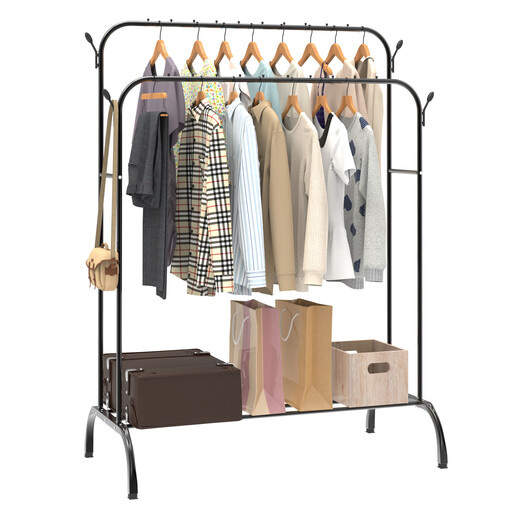 Image unavailable
An unheated airer for drying flannels and clothes naturally; spread your laundry across the available rails.
The product description lists a metal frame, a double rail and storage space at the bottom.
 Image unavailable
A wall-mounted model for anyone looking for heated space for towels or a small number of flannels.
The product description lists touch controls, a digital temperature display and dimensions of 58,5 × 55 cm. Before buying, check the CE marking and this model’s installation and bathroom instructions.
 Image unavailable
The side wings provide extra hanging space if you want to dry seasonal clothes as well as flannels.
Power: 230 W. Dimensions when open: 144 × 53 × 91 cm; maximum recommended load: 10 kg. Use indoors on a stable, level surface, with sufficient ventilation, at least 31 cm from walls and connected to an earthed socket. Check the CE marking before buying.
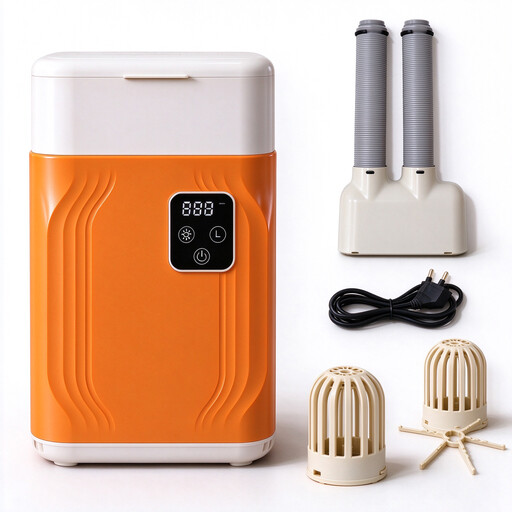 Image unavailable
This is a portable clothes dryer, not an airer; the product description says it can dry clothes, shoes and other fabrics.
Keep the appliance at least 50 cm away from flammable materials, don’t block the air vents and don’t touch the hot air outlet. Check the CE marking and instructions for use before buying.
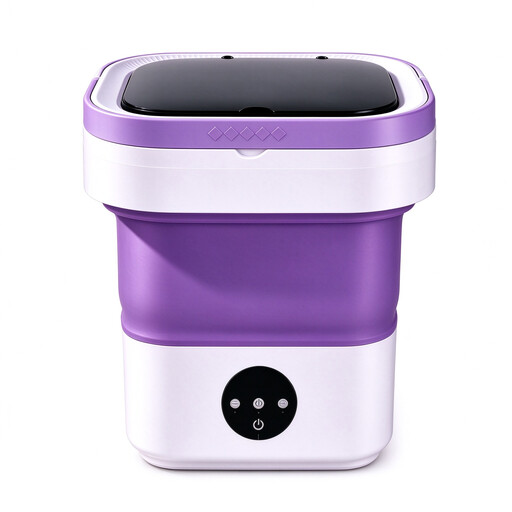 Image unavailable
A washing and drying appliance, not an airer; the description says the drying function is for clothes and small fabrics.
Capacity: 12 L. Don’t cover the hot air outlet. Check the CE marking and the washing and drying instructions before buying.
An unheated airer may be enough if you can hang a few flannels separately and ventilate the room well. When drying indoors, it’s still important to remove damp air; Milieu Centraal recommends drying laundry on a line where possible.
No. Follow the instructions for the exact model and check the required distance from water and the type of electrical connection needed. DOMO lists IPX4 for the DO7117DR; this isn’t a general placement rule for other airers.
Estimate energy use by multiplying the power in kilowatts by the running time in hours. For example, 150 W for one hour works out at 0,15 kWh; DOMO lists 150 W for the DO7117DR. This doesn’t tell you how much energy it takes to dry a full load.
According to the Netherlands Food and Consumer Product Safety Authority, CE marking is compulsory for electrical products sold in the Netherlands. Check the marking and the accompanying information for the specific model on offer.
Hang flannels with space between them and remove damp air through suitable ventilation. Heated rails are no substitute for ventilation; GGD Living Environment stresses that good ventilation needs ongoing attention.