
Taking care of your swimwear
You mainly dry swimwear and let the care label determine whether heat is suitable. For the swimwear model reviewed, arena recommends drying it away from heat sources.


A heated clothes airer isn’t automatically suitable for swimwear: follow the care label and choose unheated drying if it says to keep the garment away from heat. If you also want to dry other laundry, compare the dimensions, any temperature controls and the ventilation in your utility room. For an electric model, also check the documentation for the exact version.
You mainly dry swimwear and let the care label determine whether heat is suitable. For the swimwear model reviewed, arena recommends drying it away from heat sources.
You dry laundry indoors and want to be able to remove the damp air. Milieu Centraal emphasises the importance of ventilation when drying clothes indoors.
You’re looking for one airer for swimwear and other laundry, and comparing the space available, storage options and any heat settings. The product features mentioned are information from manufacturers, not independent drying tests.
Suitable when: the care label rules out heat while drying, or you’re mainly hanging up a few swimwear items; spread them out and remove the damp air.
Trade-off: the airer itself uses no electricity, but drying time depends partly on ventilation and humidity. An airer doesn’t remove moisture from the room.
Suitable when: you also have laundry that can be dried with heat according to its care label, and you have enough floor space. Compare the settings and dimensions of the exact version.
Trade-off: heating uses electricity and doesn’t make swimwear suitable for heat if its care instructions advise against it. Follow the garment’s instructions about contact with heated bars.
Suitable when: you want to make use of the height in your utility room for other laundry; check the temperature controls on the specific version.
Trade-off: a tower is also a heat source. Silvergear lists temperature control for its premium tower, but that doesn’t prove that every type of swimwear can be dried on it.
| What to consider | What to look for | Who is this important for? |
|---|---|---|
| Suitability for swimwear | Read the care label and the clothing manufacturer’s instructions first; then decide whether heated bars are needed. | When I dry swimwear, I want to avoid using heat against the care instructions. Around 33% of consumers put fabric suitability first. |
| Removing moisture | Check the air supply and extraction in the utility room, and follow the airer’s placement instructions. | When I dry clothes indoors, I want to be able to remove damp air. Around 27% of consumers give moisture removal top priority; Milieu Centraal recommends extra ventilation when drying laundry indoors. |
| Size and storage | Measure the floor space, height and storage space, and compare these with the dimensions of the exact version. | In a small utility room, I want to know whether the airer will fit when open and where I can store it afterwards. Around 20% of consumers put space and storage first. |
| Electricity use | Compare the stated power rating with the expected usage time; wattage alone doesn’t tell you how much a drying session will cost. | If I’m considering heated drying, I want to weigh up the electricity use against unheated drying. Around 20% of consumers give electricity use top priority. |
Swimwear care instructions may say to dry it away from heat sources. A general product description doesn’t replace the care label on your garment.
Let the care label guide you and, for garments that shouldn’t be exposed to heat, choose an unheated place to dry them.
Drying laundry indoors adds moisture to the air; heating the airer won’t remove that moisture by itself.
Assess the air supply and extraction separately from the airer, and follow the manufacturer’s placement instructions. Milieu Centraal recommends extra ventilation when drying clothes indoors.
The stated power rating alone doesn’t tell you how long the airer will be used or how much electricity a drying session will require.
Use the power rating for the exact version and your expected usage time to assess electricity use. Also compare unheated drying if it’s suitable for your laundry.
The range described includes heated winged airers and a tower airer; the features apply to the specific products mentioned.
The heated, foldable 21 m airer reviewed is designed for more laundry than just a few items of swimwear.
The HangOn airer reviewed is an unheated alternative for air-drying.
These Joybuy products are clothes airers for hanging laundry, with no heating mentioned in their product names. Check the dimensions and product information for your chosen version to make sure it’s right for your utility room.
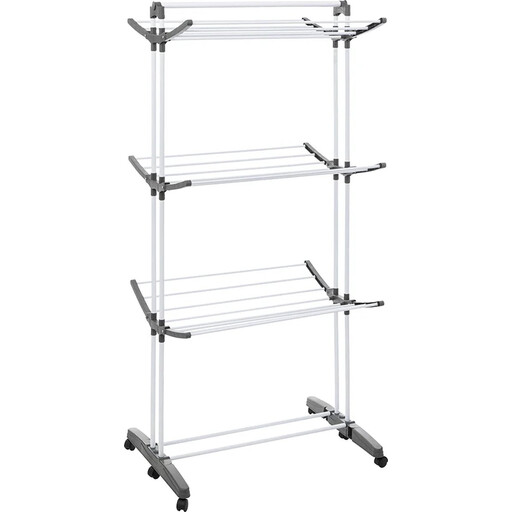 No image available
For anyone who wants to air-dry swimwear and is looking for a freestanding indoor airer.
The product name lists 24 m of drying space and dimensions of 125 × 62 × 172 cm.
Compare the stated dimensions with the space available in your utility room.
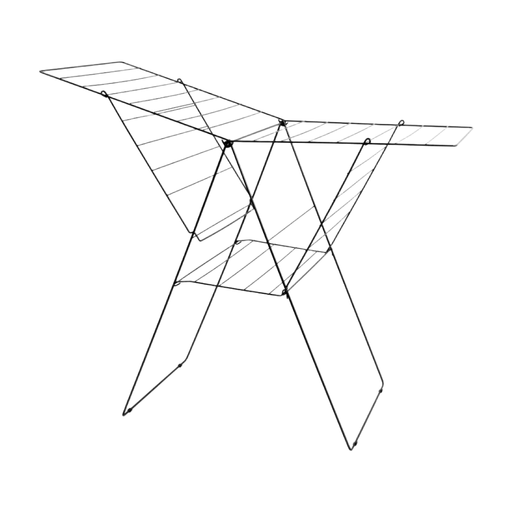 No image available
An option if you’re looking for an airer to dry swimwear and other laundry naturally.
The product name lists 20 m of drying space and dimensions of 95 × 128,5 × 59 cm.
Check that the dimensions suit the space where you plan to use the airer.
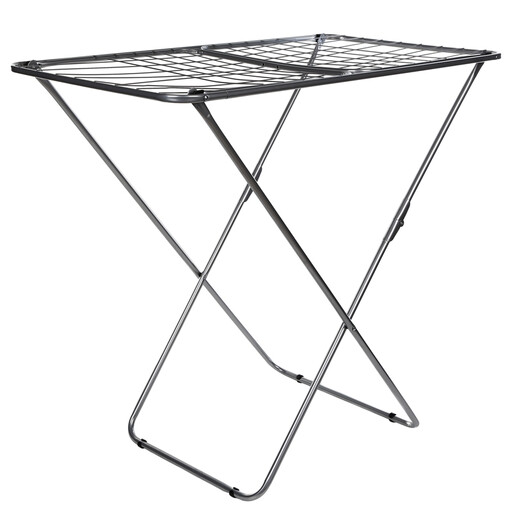 No image available
For anyone looking for an airer to dry swimwear indoors.
The product name lists 18 m of drying space.
Compare the space the airer takes up with the room available and the storage space you need.
Follow the care label on your garment. For the swimwear model reviewed, arena recommends air-drying it away from heat sources, so don’t put this type of swimwear on a heated bar.
Make sure fresh air can enter and damp air can escape. Milieu Centraal recommends extra ventilation when drying clothes indoors; use any mechanical extraction available according to the room’s instructions.
Multiply the power rating in kilowatts by the usage time in hours to calculate consumption in kWh at that power. For example, a 230 W airer used for four hours at that power uses 0,92 kWh; actual consumption depends on how the model operates and how long you use it.
Contact the seller if the product doesn’t perform as you could reasonably expect under normal use. ACM ConsuWijzer explains the seller’s legal responsibility to provide an appropriate solution. Online purchases generally also come with a 14-day cooling-off period after receipt; check which exceptions apply.
Check which European requirements apply to the specific electric model. Business.gov.nl and EUR-Lex explain that equipment within the scope of the Low Voltage Directive — 50–1.000 V AC or 75–1.500 V DC — must, among other things, have a CE marking and an EU Declaration of Conformity. A product listing alone doesn’t show that a specific version meets the applicable requirements.