
Student with delicate summer dresses
Wants to choose a drying method that suits the garment’s care label and fabric. Milieu Centraal advises checking the care instructions on clothing labels.


An unheated clothes airer may be enough if the care label allows air-drying and you have plenty of time and room for ventilation; you don’t necessarily need heat. If you do want heated bars, check they’re suitable for your dress and compare the airer’s dimensions when open, its adjustability and its stated power. Before buying an electrical appliance, also check the relevant documentation, including the CE marking and EU Declaration of Conformity.
Wants to choose a drying method that suits the garment’s care label and fabric. Milieu Centraal advises checking the care instructions on clothing labels.
Needs an airer that can be put away between washes and leaves enough room for laundry and ventilation when in use. Milieu Centraal stresses the importance of extra ventilation when drying laundry indoors.
Is considering heat when air-drying doesn’t fit their schedule, but also wants to take power and running time into account.
Start with the care label and where you’ll put the airer. Then decide whether heated bars are really necessary for your needs.
| What to consider | What should you look for? | Who is this important for? |
|---|---|---|
| Suitability for the dress | Check the care label and the airer’s instructions before choosing a heat setting or hanging method. Milieu Centraal advises following the garment’s care label. | When drying summer dresses, I want the heat and hanging method to suit the fabric. Around 33% of consumers prioritise suitability for the dress. |
| Space for use and storage | Compare the dimensions when the airer is open and folded, and allow for the space taken up by hanging clothes. | With limited floor and storage space, I want an airer that fits while drying without blocking the walkway. Around 27% of consumers give space the highest priority. |
| Electricity use and drying time | Consider the stated power alongside how long you’ll use it; wattage alone doesn’t tell you how much electricity a drying session will use. | If I’m considering a heated airer, I want to weigh its electricity use against the time I have available for drying. Around 20% of consumers prioritise electricity use. |
| Moisture and safe use | Choose a well-ventilated spot and follow the instructions for setting up and using the airer. Milieu Centraal advises extra ventilation when drying laundry indoors. | In a shared room, I want to be able to clear moisture and use the airer according to the instructions. Around 20% of consumers prioritise a well-ventilated spot and safe use. |
The stated power alone doesn’t tell you how much electricity the airer uses during a full drying session; how long you use it matters too.
Compare the power and running time, and don’t treat any claims about drying time as independent measurements for your laundry.
An airer may take up little space when folded, but be too wide or awkward when open with dresses hanging on it.
Measure the space available with the airer fully open, and take the drying method on the garment’s care label into account.
Moisture from your laundry still gets into the room when you use a cover. The Dutch government and Milieu Centraal highlight the importance of ventilation indoors.
Choose a spot where moisture can escape, whether the airer is heated or has a cover.
DreamGoods describes the PRO 2025 as a heated clothes airer with adjustable settings and a cover.
Silvergear describes both a heated clothes airer and a premium drying tower with a cover; the design is a key difference between the models.
The Pegasus Ultra Mobile 23 m is a non-electric option for clothes that can be air-dried according to their care labels.
This selection includes both heated and unheated clothes airers. Before choosing a model, compare the space available, the drying method on your care label and whether you need heat.
 Image unavailable
A heated model to compare if your dress is suitable for heat and the airer fits in the space available.
Dimensions when open: 144 × 53 × 91 cm. The product information specifies indoor use on a stable, level surface with adequate ventilation, at least 31 cm away from walls. Use an earthed socket, and switch off and unplug the airer after use.
Check the relevant electrical documentation for this model before buying.
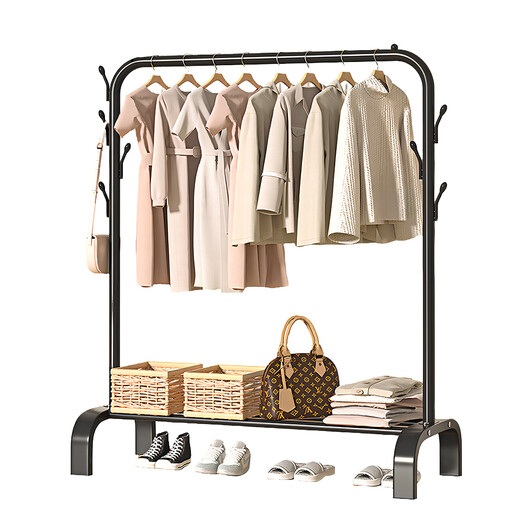 Image unavailable
A simple drying rail to consider if you want to air-dry your laundry and have a suitable spot for a freestanding airer.
The rail is 105 cm long. The product description says it can be used indoors or outdoors.
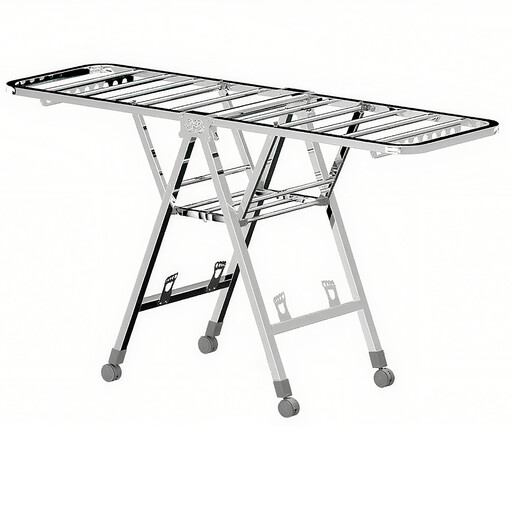 Image unavailable
An unheated option to compare if you want to air-dry clothes and put the airer away after use.
The product name describes a folding design made from stainless steel. Check that the dimensions and drying method suit your space and clothes.
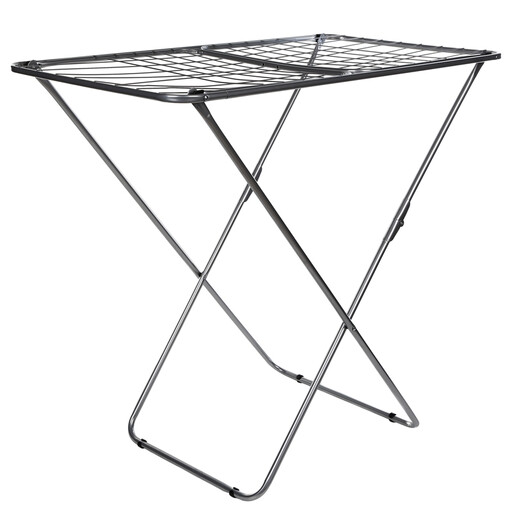 Image unavailable
An unheated clothes airer to consider if its drying capacity and storage options suit the space available.
The product name lists 18 m of drying space. The product description says it can be set up without tools.
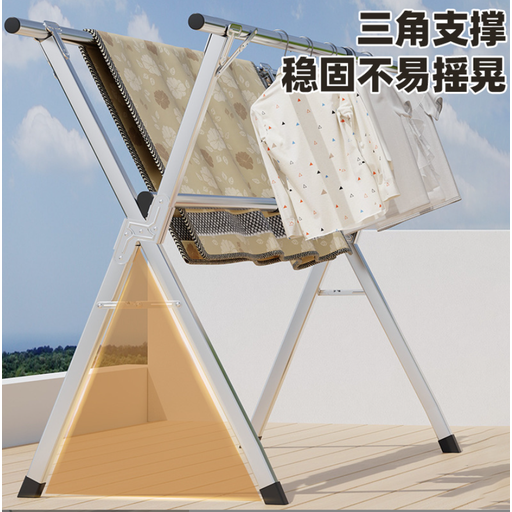 Image unavailable
An unheated airer to compare if you’re looking for multiple rails and have enough width for it.
The product name lists three rails and a width of 200 cm. Check that it will fit before choosing a spot.
No, you can’t tell from the type of garment alone. Check the care label and the airer’s instructions; if in doubt, don’t automatically choose a higher temperature.
Yes. Milieu Centraal advises extra ventilation when drying laundry indoors; heat doesn’t automatically remove moisture from the room.
Divide the stated power in watts by 1,000, then multiply it by the number of hours you use the airer to calculate kWh. A 230 W airer running at that power for four hours uses 0.92 kWh; multiply this by your own price per kWh to work out the cost. This is a calculation based on power and running time, not a measurement of a drying session.
For electrical appliances placed on the market in the Netherlands, the government outlines the applicable European safety requirements, including CE marking and an EU Declaration of Conformity. According to the Netherlands Authority for Consumers and Markets, the seller is responsible for the statutory guarantee; this doesn’t mean that every product has a fixed two-year guarantee period. These general rules don’t confirm that a specific clothes airer meets the requirements.