What should you look for when choosing?
Standard folding clothes airer
Choose this if: you can leave your shirts to dry at their own pace in a suitable, well-ventilated spot.
Bear in mind: the airer takes up space while clothes are drying, and ventilation is still needed.
Folding heated clothes airer
Choose this if: you regularly want to hang up shirts and put the airer away after use.
Bear in mind: heating uses electricity and does not remove moisture. Also check the conformity information for the product on offer.
Heated airer tower with cover
Choose this if: a tower fits your shared space better than a wide airer.
Bear in mind: check there is enough room between the tiers for shirts on hangers, and follow the instructions for using the cover.
Compact heated airer
Choose this if: you mainly dry a small amount of laundry or towels and the size suits the space available.
Bear in mind: check separately how many shirts it can hold and whether wall mounting is permitted in that spot.
For people drying cotton shirts indoors in shared student accommodation, the choice largely depends on the space available, ventilation, how long the airer will be in use and how often you need shirts dry quickly.
| What to consider |
What should you check? |
Who should pay particular attention? |
| Space and shared use |
Measure the space with the airer fully open. Check that shirts can hang separately and that walkways remain clear. |
If I want to put the airer away after use and avoid inconveniencing housemates, its full footprint matters. Around 33% of consumers prioritise space and shared use. |
| Moisture and ventilation |
Check whether the drying area can be ventilated and whether the location and connection comply with the instructions. |
If you dry clothes indoors, you will want to clear the moisture and consider your housemates. Around 27% of consumers prioritise moisture control. |
| Electricity use |
Compare the stated power in W with the expected hours of use. Also consider whether a standard airer would be enough for you. |
If I am considering a heated airer, I want to know how long it will be switched on before weighing up the running costs. Around 20% of consumers prioritise electricity costs. |
| Drying time and hanging space |
Check how many shirts can hang separately and which bars are heated. Do not estimate drying time from the power rating alone. |
If you regularly need shirts ready on time, you will want to know whether the layout suits your laundry. Around 20% of consumers prioritise how quickly shirts dry. |
Clothes airers on Joybuy
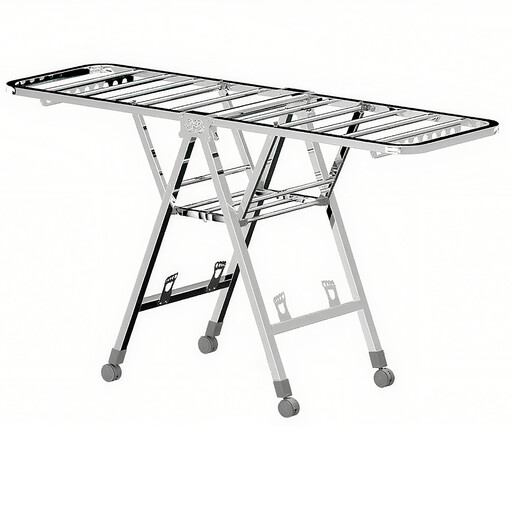
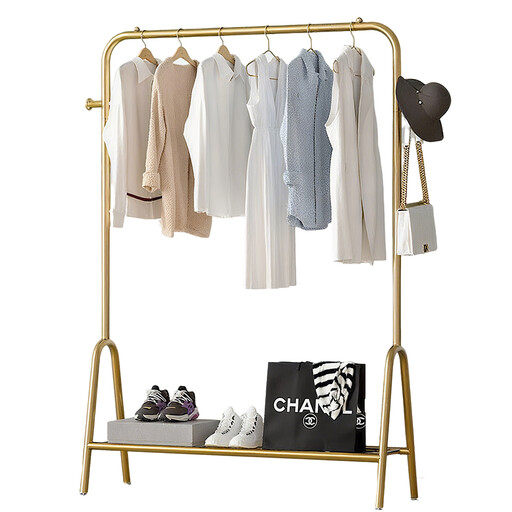
This selection of Joybuy products is aimed at cotton shirts dried on hangers, with a folding multi-tier airer and a freestanding single-bar airer.
 No image available
SNSP folding floor clothes airer
An option if you want to dry shirts on hangers and be able to fold the airer away after use.
The product name describes a folding stainless-steel floor airer.
View on Joybuy
 No image available
Leli freestanding single-bar clothes airer, 100 cm
A freestanding airer for anyone who wants to dry clothes on a single bar.
The product name specifies one bar and a width of 100 cm.
View on Joybuy
Frequently asked questions
Do I need extra ventilation when using a heated clothes airer?
Yes, ventilation is still important when drying clothes indoors. A heated airer does not remove moisture from shirts, so choose a spot you can ventilate. Milieu Centraal recommends extra ventilation when drying clothes indoors.
Can I put the clothes airer in the hallway of my student accommodation?
Do not place it where it could obstruct an escape route or access to firefighting equipment. The Netherlands Fire Service stresses the importance of keeping escape routes clear in student accommodation.
How do I work out the electricity used for a drying session?
Multiply the power in W by the number of hours the airer is switched on, then divide by 1,000 to get theoretical consumption in kWh. Adler lists a power rating of 220 W for the AD 7821; running it continuously for four hours works out at 0,88 kWh. This is a calculation example, not a measurement of a drying session.
What can I do if the airer breaks too soon during normal use?
In the Netherlands, you can contact the seller about your statutory guarantee rights if a product does not meet what you could reasonably expect during normal use. ACM ConsuWijzer explains that the seller must then provide an appropriate solution; a manufacturer’s guarantee does not replace this right.
Does a CE marking mean I can use the airer safely anywhere?
No. A CE marking is not an independent quality mark and does not mean that every set-up is suitable. Business.gov.nl explains the applicable requirements for electrical equipment; you should also follow the product information and instructions for your chosen location and connection.


