
Shared laundry room user
You want to be able to put the airer away after use and keep the walkway clear. Compare its dimensions when open with the available floor space and storage space.


A heated clothes airer isn’t essential: choose one only if you want the extra warmth, as it won’t remove damp air from a shared room. An unheated airer uses no electricity; with either option, make sure there’s enough room for hanging shirts, a clear walkway and good ventilation. For an electric model, check which requirements apply and make sure the marking and product details relate to that exact model.
You want to be able to put the airer away after use and keep the walkway clear. Compare its dimensions when open with the available floor space and storage space.
You want to hang cotton shirts with space between them. Don’t just look at the number of rails: check how many hangers it can accommodate too, and follow the care label on your clothes.
You dry laundry indoors and want damp air to be able to escape from the room. Milieu Centraal points out that excess moisture can cause mould, so ventilation matters even when using a heated airer.
A good fit if: you want extra warmth and have room to open the airer fully.
Bear in mind: it uses electricity, and heating won’t remove moisture from the room.
A good fit if: you need to dry shirts on hangers and want to be able to put the airer away after use.
Bear in mind: this type doesn’t provide electric heating.
A good fit if: moisture in the shared room is your main concern. Milieu Centraal advises paying attention to ventilation when drying clothes indoors.
Bear in mind: a dehumidifier is a separate appliance and won’t replace a clothes airer.
| Buying concern | What to look for | Who does this matter to? |
|---|---|---|
| Space and walkway | Measure the airer when fully open, including any shirts that stick out; also check where you’ll store it. | If I need to put the airer away after use, I want to know whether it will fit while drying clothes without blocking the walkway. Around 31% of consumers put space and a clear walkway first. |
| Hanging shirts | Check how many hangers it can accommodate and whether clothes can hang with space between them. | I want to dry cotton shirts on hangers without them touching each other or the floor. Around 25% of consumers say having enough suitable hanging space is their main buying concern. |
| Removing moisture | Check what ventilation is available in the room and whether you can leave space between garments. | When I dry clothes indoors, I want to stop damp air lingering in the shared room. Around 25% of consumers put moisture control first. |
| Electricity and controls | For heated models, compare the stated power, timer and instructions for use. | I want to weigh up whether the heat settings are worth the electricity for my needs; an unheated airer uses no electricity. Around 19% of consumers say this is their main buying concern. |
A large number of rails doesn’t tell you how many shirts you can dry on hangers with enough space between them.
Check how many hangers it can accommodate, its dimensions when open and the clearance around the airer.
Heating won’t automatically remove damp air from a shared room.
Check the ventilation before choosing extra heat.
If ventilation is inadequate, you may need additional ventilation or a separate appliance.
The Joybuy listing gives the electric airer a recommended load of 10 kg; InnovaGoods specifies a maximum of 15 kg for the Warmmat. This doesn’t confirm that they’re the same model.
Compare the brand, model and specifications, and check the details for the specific electric model.
The Warmmat is a heated, folding winged airer for anyone looking for adjustable heat and a timer.
The HangOn 15 m is an unheated alternative with hanger spaces for anyone who wants to hang shirts and put the airer away after use.
The Pegasus Ultra Mobile 23 m is an unheated, wheeled alternative for anyone looking for more hanging space.
These Joybuy products are designed for drying clothes indoors and storing laundry, with both heated and unheated airers available.
 No image available
A heated model for anyone looking for extra warmth and an airer that folds away after use. Before buying, check which requirements apply and the marking for this model.
Specifications: 45–55 °C, dimensions of 144 × 53 × 91 cm and a recommended maximum load of 10 kg.
The product description calls for a stable, level surface, adequate ventilation and a minimum distance of 31 cm from walls.
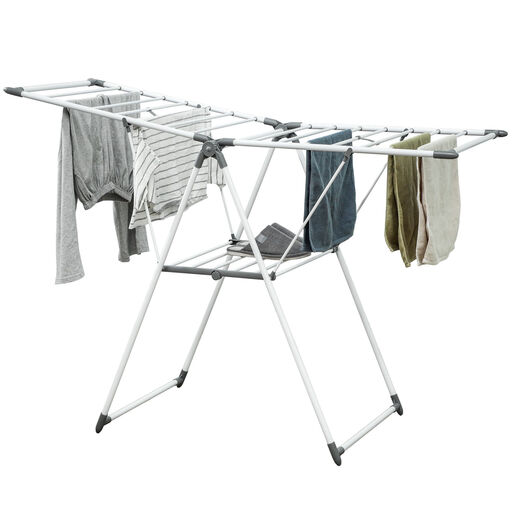 No image available
An unheated indoor clothes airer for anyone who wants to store it compactly after use.
Stated dimensions: 156,5 × 61,5 × 97 cm; maximum load of 15 kg and folded depth of 8 cm.
The description mentions two adjustable levels and wings that can be set to four different heights.
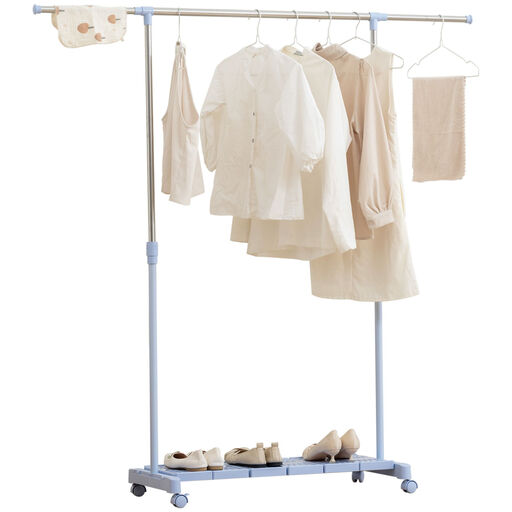 No image available
A wheeled airer for anyone who wants to move it between locations. Check that it can stand securely and without obstruction where you plan to use it.
The stated width is 94–159 cm, the height is 93–168 cm and the maximum load is 15 kg.
The description mentions four castors, two of which have brakes.
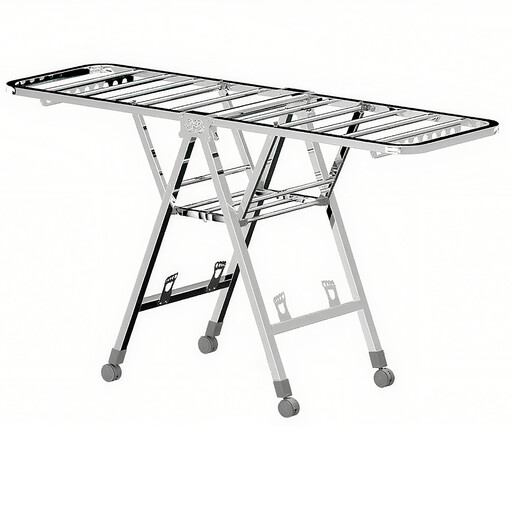 No image available
A folding airer for anyone who wants to store it compactly after use.
The product description mentions a stainless steel frame, multiple levels and adjustable angles.
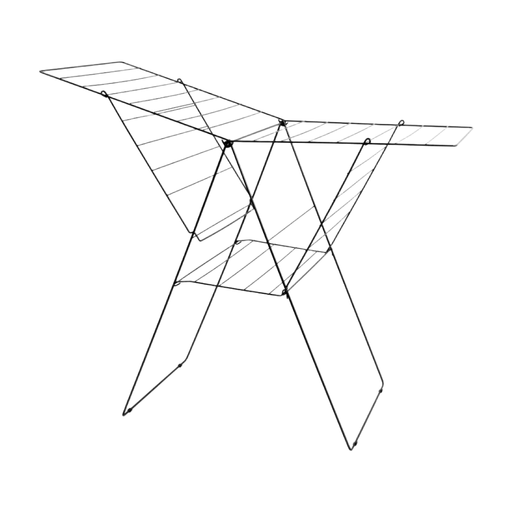 No image available
A folding clothes airer for anyone who wants to store it flat after use.
Stated dimensions when open: 95 × 128,5 × 59 cm; when folded: 101 × 59 × 4,5 cm. The maximum load is 10 kg.
The description says to open the airer fully, place it on a level surface and distribute the load evenly.
Yes, if the airer falls under the Dutch Commodities Act Decree on Electrical Equipment. For the relevant low-voltage rules, the Netherlands Food and Consumer Product Safety Authority describes a range of 50 V to 1000 V nominal AC voltage. Check whether those rules apply to the specific model and whether the marking and product details relate to it.
This depends, among other things, on whether the area is a shared access route or an escape route. The Dutch Fire Service explains that separate rules apply to these areas; the shared laundry room described here isn’t automatically one of them. Check how the space is classified in your building before putting the airer there.
Heating doesn’t replace the removal of damp air. Milieu Centraal advises ensuring adequate ventilation when drying clothes indoors, so check this even when using a heated airer.
Follow the instructions for the model you buy for setting it up, connecting it, switching it off and cleaning it. Also check the specified clearances, surface and ventilation requirements for that model.
According to the Dutch government, the seller must provide a solution if a product is faulty. There’s no fixed statutory guarantee period in the Netherlands; what you can reasonably expect depends partly on the product and the information provided at the time of sale.