
Parent with a uniform needed for the next school day
If the uniform needs to be ready again after an evening wash, both the drying time available and the space to hang garments separately matter.


Choose a folding heated airer if you regularly need a uniform dried quickly and have room to open it out. If you have more time, an unheated airer may be enough and won’t use any electricity itself. Either way, clothes need enough space to hang freely, and damp air must be removed. Also check the care label, controls and safety information for the exact model.
If the uniform needs to be ready again after an evening wash, both the drying time available and the space to hang garments separately matter.
You may use the airer in one place while clothes are drying and store it somewhere else afterwards. So compare its size when open with the storage space available.
When drying laundry indoors, damp air needs to be removed. Milieu Centraal highlights the importance of ventilation to help prevent damp and mould.
A good fit if: you’re often short of time and want to put the airer away after use; DreamGoods describes its 12 m model as foldable and says it has a timer.
Trade-off: the airer uses electricity and takes up space when opened out; heat does not remove moisture from your home.
A good fit if: you want to hang several items of laundry at once and have enough vertical space. For its 21 m model, DreamGoods lists 34 heated bars and a cover included.
Trade-off: the stated drying length doesn’t tell you how quickly your uniform will dry; follow the instructions for using the cover and keep the room ventilated.
A good fit if: you’re drying a small amount of laundry and the available bars are enough for the separate uniform items. DOMO describes the DO7117DR as suitable for either freestanding or wall-mounted use.
Trade-off: the product description doesn’t confirm that it can hold a complete school uniform; check the dimensions and instructions for your chosen set-up.
A good fit if: drying time is less urgent and you don’t want the airer itself to use electricity.
Trade-off: there’s no extra heat to help with drying; damp air still needs to be removed.
Ventilation matters with all types of airer if you dry clothes indoors. Milieu Centraal recommends turning mechanical ventilation up to a higher setting when laundry is drying inside.
| What to consider | What to look for | Who is this important for? |
|---|---|---|
| Uniform dry in time | Check the care label, the time available and whether the controls include a timer or temperature setting. | If the uniform needs to be ready for the next school day, you’ll want to plan the drying time carefully. Around 33% of consumers in this buying context prioritise having clothes ready on time. |
| Fit and storage | Measure the space for the airer when open and the space available to store it afterwards. | When floor space is limited in an upstairs flat, an airer that can be put away after use is important. Around 27% of consumers give space and storage top priority. |
| Removing moisture | Check that ventilation grilles and any mechanical extraction can operate while clothes are drying. | If you dry clothes indoors, you’ll want to be able to remove damp air from your home. Around 20% of consumers prioritise moisture control. |
| Electricity use | Check the power rating for the exact model and consider how long you’ll use it for; an unheated airer doesn’t use electricity itself. | If you’re weighing up heat against drying without using extra electricity for the airer, its energy use per drying session matters. Around 20% of consumers focus mainly on electricity use. |
Heat can help fabrics dry, but it doesn’t remove the moisture released into your home.
Before buying, decide where the airer can go and how you’ll ventilate the space. If you have mechanical ventilation, Milieu Centraal recommends using a higher setting when laundry is drying indoors.
A stated number of metres doesn’t necessarily tell you whether a blouse, trousers and other garments will fit separately. The airer may also take up more space when open than you have available for drying.
Measure the space and compare the shape of the bars with the individual garments you want to hang.
The stated power rating alone doesn’t tell you how long a full load will take to dry or how much electricity a drying session will use.
Compare the power rating of the exact model with the length of time that suits your needs. Consider an unheated airer if you have more time available.
DreamGoods product specifications list separate heated folding airers with stated drying lengths of 12 m and 21 m.
DOMO describes the DO7117DR as a compact heated airer for items including towels and clothes, with freestanding or wall-mounted installation.
Brabantia also offers unheated clothes airers, including a drying tower, according to its product information.
Leifheit’s range includes unheated Pegasus clothes airers.
This product selection includes a folding heated winged airer and unheated airers to suit different ways of drying clothes indoors. For an electric model, check the information and instructions for the exact version.
 No image available
A heated option for hanging a uniform indoors and putting the airer away after use.
Open dimensions: 144 × 53 × 91 cm. The stated power rating is 230 W and the recommended maximum load is 10 kg. The description says to keep the airer at least 31 cm from walls while in use and ensure there is enough ventilation.
 No image available
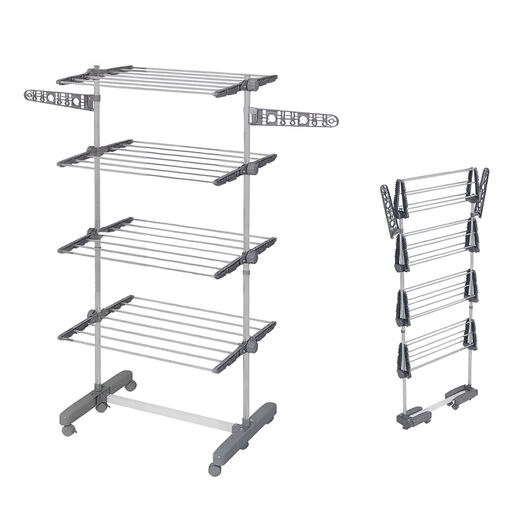
An unheated airer for hanging several items of clothing and storing it compactly after use.
The description lists four adjustable tiers, side wings and wheels, two of which can be locked. According to the product information, the airer is 13 cm deep when folded.
 No image available
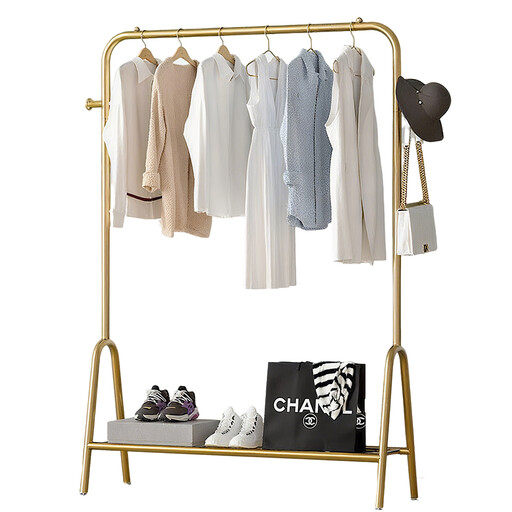
A simple place to hang a garment on a hanger, if one rail is all you need.
The product title gives a width of 100 cm, and the description says delicate clothes can be air-dried on the single rail. The rail is freestanding.
 No image available
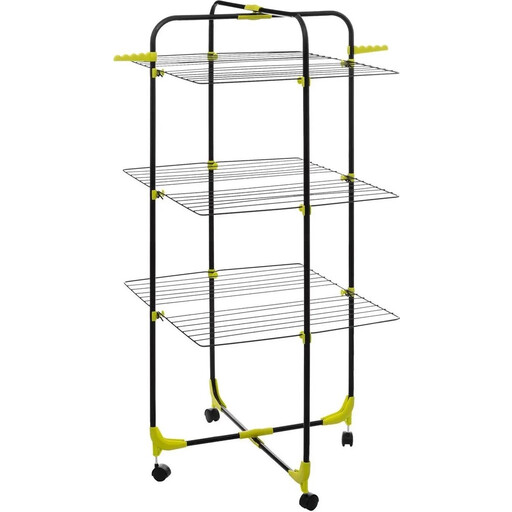
An unheated tower for hanging several items of laundry across different drying levels.
The product information lists three overlapping drying levels, a drying length of 30 m and dimensions of 65 × 70 × 137 cm. The maximum load is 15 kg according to the information, and the design folds away.
 No image available
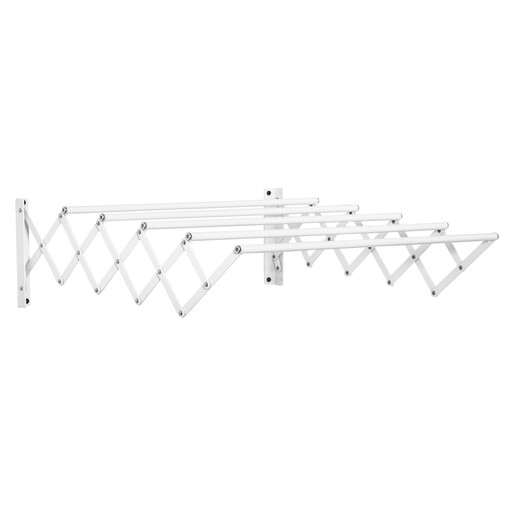
An unheated option if wall mounting is possible and you want an airer that folds away after use.
The dimensions are 63.5 × 60 × 20 cm, and the product information gives a maximum total load of 10 kg. Wall mounting is required; this is not a freestanding airer.
Yes. Damp air needs to be removed when drying clothes indoors. For mechanical ventilation, Milieu Centraal recommends using a higher setting when laundry is drying inside; also make sure any required air inlets are left open.
No. First follow the garment’s care and drying label, then the instructions for the exact airer. On its own product page, DreamGoods recommends a lower setting for delicate fabrics.
For an estimate based on the stated power rating, multiply the power in kilowatts by the number of hours of use. For its 21 m model, DreamGoods lists a power rating of 230 W; one hour at that power works out to 0.23 kWh. This isn’t a measurement for a complete drying session and doesn’t tell you how long your uniform will take to dry.
Check the information, markings and instructions for the exact model. For electrical equipment covered by the Commodities Act Decree on Electrical Equipment, the NVWA lists electrical safety requirements and mandatory CE marking; the Dutch Government explains that the manufacturer must determine whether a product needs to carry a CE mark. A CE mark by itself isn’t an independent safety test.
According to the Dutch Government, the seller must provide a solution if a product isn’t working properly. The Netherlands doesn’t have one fixed statutory guarantee period that applies to all products; a manufacturer’s guarantee is separate from your right to a product that works properly.