Who is a clothes airer suitable for?

Families with long summer dresses

Need enough clear height to hang dresses properly, as well as space for other laundry. Check the airer’s usable height and dimensions when open. For example, Leifheit product information describes arms that can reach up to 130 cm high.

Families who often dry clothes indoors

Weigh the extra heat and space against ventilation and electricity use. Milieu Centraal recommends ventilating when drying clothes indoors; heat from an airer does not remove moisture from your home by itself.

Families with limited storage space

Benefit from an airer that fits the space available and can be put away after use. Measure both the space you’ll need while drying and the place where the airer will be stored afterwards.

What should you consider when choosing one?

Heated winged airer

Suitable for: regularly drying several dresses and family laundry indoors, if you have room to open the airer.

Keep in mind: electricity use and ventilation; check the care label for each dress. The Dutch Warmmat product listing mentions temperature settings and a timer.

Compact heated airer

Suitable for: smaller loads when you want a compact freestanding or wall-mounted model.

Keep in mind: the Dutch product listing for the DOMO DO7117DR gives a drying length of 2,80 m, so check whether a dress can hang freely.

Unheated clothes airer

Suitable for: drying without extra heat, if the dress and the space available are suitable.

Keep in mind: indoor drying conditions and good ventilation. The airer itself uses no electricity, but it does not add heat.

What to consider What to look for Who is this important for?
Drying dresses properly with enough clearance Read the care label and measure the dress; compare its length with the usable hanging height and check whether it can be hung up or needs to be dried flat. When I’m drying a long or delicate summer dress, I want to make sure the hem doesn’t touch the floor and that the drying method follows the care label. This is the main concern for around 33% of consumers making this choice.
Room for family laundry Compare the layout of the rails, any maximum load and the dimensions when open; allow space between garments. I want to fit dresses alongside the rest of the family laundry without judging capacity by the number of rails alone. Around 27% of consumers make this their top priority.
Positioning and storage Measure the available floor or wall space and check the dimensions when open, the cable length and the folded size. If I’m short on space, I want to know whether the airer will block a walkway when in use and where I can store it afterwards. Space and storage are the biggest considerations for around 20% of consumers.
Ventilation and running costs Ventilate when drying clothes indoors and follow the instructions for use. Calculate electricity costs using the stated power, how long you use it for and your own tariff. When drying clothes indoors regularly, I want to consider moisture, safe use and electricity costs. Milieu Centraal recommends ventilation. This is the main purchasing question for around 20% of consumers.

Which mistakes can you avoid when choosing?

  • Assuming the number of rails tells you how many dresses will fit

    The number of rails doesn’t tell you whether long dresses will hang freely or how much space there’ll be between garments.

    Measure your longest dress and the space available; compare the usable height, rail layout and dimensions when open.

  • Assuming heated drying keeps your home free of moisture

    Clothes dried indoors still release moisture into your home. Heat from the airer won’t remove that moisture by itself.

    Ventilate while drying, and consider an unheated airer if you don’t need the extra heat.

  • Treating the wattage or timer as proof of a set drying time

    The stated power and a timer are product specifications, not comparable drying-time test results.

    Compare the usable space and features. To estimate costs, use the stated power, how long you use the airer for and your own electricity tariff.

Which brands are worth comparing?

InnovaGoods

Dutch product listings describe heated winged airers for clothes and family laundry.

  • The Warmmat listing mentions temperature control, a timer and a stated maximum load of 15 kg; the Drywing listing gives a maximum of 12 kg.
  • Both listings state 230 W, but this does not prove they have the same drying time. Check the full model number and dimensions.

DOMO

According to the manufacturer, the DO7117DR is a compact heated airer that can be used freestanding or mounted on a wall.

  • DOMO lists a timer, IPX4 and 150 W for this model; the Dutch product listing gives a drying length of 2,80 m.
  • That stated drying length doesn’t automatically make the model suitable for long dresses or several dresses. Follow the instructions and check the usable space.

Leifheit

An unheated alternative if clear hanging height and space for family laundry matter more than extra heat.

  • Leifheit gives the Pegasus RockSolid Maxx a drying length of 21 m and says its arms can reach up to 130 cm high.
  • The airer has no heating function and needs space when open.

Brabantia

The Brabantia product information referred to here covers unheated freestanding clothes airers and tower airers.

  • Brabantia describes adjustable wings on freestanding airers and shelves for drying laundry flat.
  • Check these features for each model; the product information referred to here is not for a heated product range.

Clothes airers at Joybuy for dresses and family laundry

The products below are clothes rails and clothes airers for hanging or spreading out laundry. Check that each model’s shape and dimensions suit long dresses and the space available.
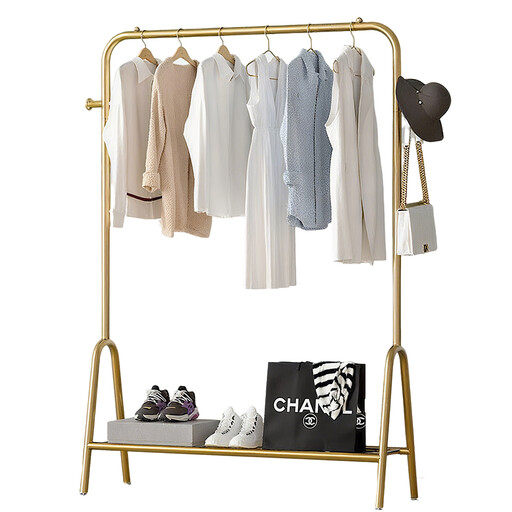
Leli freestanding clothes rail with single hanging rail, 100 cm, light gold

Leli freestanding clothes rail with single hanging rail, 100 cm, light gold

The single rail gives you somewhere to hang clothes on hangers.

Single rail; 100 cm wide; light gold.

Joybuy
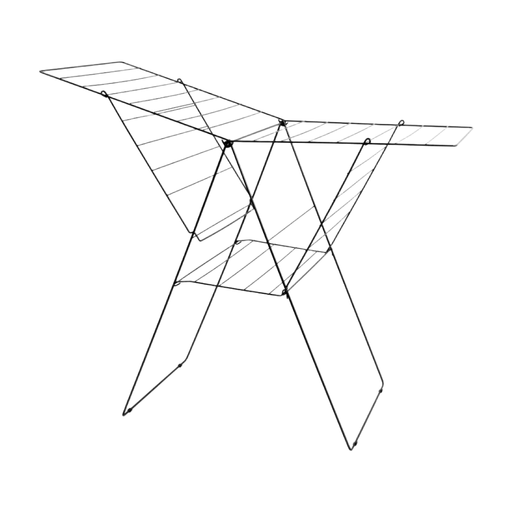
Practo Jeanne clothes airer with 20 m drying length

Practo Jeanne clothes airer, 20 m

The stated drying length is designed to spread laundry across several lines; measure the space and check whether long dresses can hang freely.

Drying length: 20 m.

Joybuy
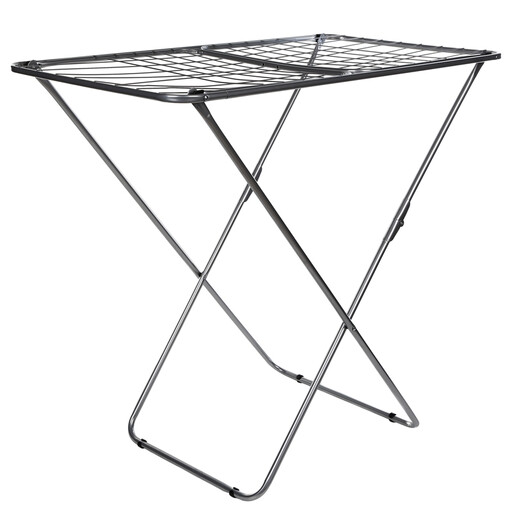
5five clothes airer with 18 m drying length

5five clothes airer, 18 m

The stated drying length provides several lines for spreading out laundry; check the dimensions when open against the space where you plan to use the airer.

Drying length: 18 m.

Joybuy
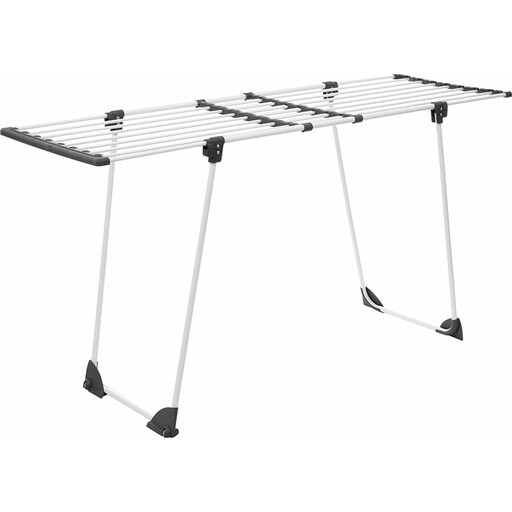
5five steel and polypropylene clothes airer with 17 m drying length

5five clothes airer, 17 m, steel and polypropylene

The stated drying length provides space to spread laundry across several lines; check where the airer will fit and how you can store it.

Drying length: 17 m; materials according to the product name: steel and polypropylene.

Joybuy

Frequently asked questions about clothes airers for summer dresses

Can every summer dress go on a heated rail?

No. Don’t assume every dress is suitable for a heated rail. Check the dress’s care label and the airer’s instructions; lay the dress flat if the care label says to.

Do I need to ventilate if the clothes airer gives off heat?

Yes, ventilate when drying clothes indoors. Milieu Centraal recommends extra ventilation, because heat from a clothes airer does not remove moisture from your home.

How can I estimate the electricity costs of a heated clothes airer?

Divide the stated power in watts by 1,000, then multiply it by the number of hours you use the airer and your price per kWh. This calculation is based on the stated power; it is not a measurement of actual energy use or drying time.

What consumer rights apply to an online purchase in the Netherlands?

According to the Dutch government, when you buy from a business at a distance, you usually have a 14-day cooling-off period. You’re also entitled to a product that works as it should; if there’s a fault, contact the seller about your statutory guarantee.

Is a CE mark on an electric clothes airer an independent safety certificate?

No. The European Commission describes the CE mark as a declaration by the manufacturer, not a certificate issued by a central EU body. Check the product information and follow the safety instructions.
