For cotton shirts in a utility room, start by choosing an airer with enough hanging space. Heating is only a useful extra if it suits your drying needs. An unheated airer uses no electricity, while a heated airer does use electricity but does not replace ventilation. Milieu Centraal recommends paying attention to ventilation when drying clothes indoors. If you choose an electrically heated model, also check that the specific version carries the applicable CE marking, as required by the NVWA for electrical products for which it is mandatory.
Which airer is right for you?
Drying shirts on hangers
If you want to dry several cotton shirts at once, compare the available hanger holders and hanging space with the space you have in your utility room. Leifheit lists hanger holders for certain Pegasus models; Lakeland says its UK Dry:Soon Drying Pod can hold up to 12 hangers.
Drying laundry in a damp utility room
When drying clothes indoors, it’s important to let moist air leave the room. Milieu Centraal recommends paying attention to ventilation; the extra heat from an airer does not remove that air by itself.
Only use heating when you need it
If you want to keep electricity use down, compare a heated airer with an unheated one. Milieu Centraal recommends drying clothes on a washing line where possible, preferably outdoors or indoors in an unheated room.
What should you look for in an airer?
First, work out how much hanging space you need and how much room the airer takes up. Then consider ventilation and the extra electricity used for heating.
| What to consider |
What should you check? |
Which shoppers is this for? |
| Hanging space for shirts |
Check the hanger holders, the space between garments and the airer’s dimensions when unfolded. |
If I want to dry several cotton shirts at once, I want to be able to hang them with enough space between them. Around 33% of shoppers prioritise hanging space. |
| Removing moisture |
Check how well the utility room is ventilated and whether the airflow in and out remains unobstructed when laundry is hanging. |
When I dry laundry indoors, I want to stop moist air lingering in the utility room. Around 27% of shoppers prioritise moisture control. |
| Electricity use |
Compare the stated power rating with how long you’ll use it; an unheated airer uses no electricity itself. |
If I want to limit extra electricity use, I weigh up heating against drying on a standard airer. Around 20% of shoppers prioritise electricity use. |
| Space and storage |
Measure the space available while the airer is in use and check its folded dimensions or assembly instructions. |
In a small utility room, I want to know whether the airer will fit when I use it and where I can store it afterwards. Around 20% of shoppers prioritise the space it takes up. |
Which mistakes can you avoid?
-
Taking a claim about faster drying as a guaranteed drying time
The stated drying time doesn’t automatically tell you how long cotton shirts will take to dry in your utility room.
Assess the hanging space and ventilation separately. Use the stated power rating and how long you switch the airer on to calculate its energy use in kWh.
If the heating stays on for longer than you expect, the airer will use electricity for that extra time.
-
Looking only at the external dimensions of a compact airer
An airer’s dimensions don’t tell you how many shirts you can hang on it without them touching.
Check that the actual hanging space suits the number of shirts you want to dry at once.
If there isn’t enough space, you may need to dry another load or use a second airer.
-
Treating heating as a replacement for ventilation
Drying clothes indoors releases moisture into the air; heating alone does not extract that air.
Check the utility room’s ventilation even if you choose a heated model. Milieu Centraal highlights ventilation as something to consider when there is moist air in the home.
Brands to compare
Adler
The AD 7821 is a foldable heated airer with heated rails.
- Adler Europe specifies 18 heated elements, a power rating of 220 W, and the dimensions when unfolded and folded.
- A claim about shorter drying times does not guarantee that cotton shirts will dry in that time in your utility room. Check that the specific version is suitable for the Dutch market and carries the CE marking.
DOMO
According to DOMO, the DO7117DR can be used as a freestanding airer or mounted on the wall.
- DOMO specifies a 150 W power rating, a timer and IPX4 for this model. The manual and assembly instructions are relevant to your chosen installation method.
- The product description does not make clear how many cotton shirts you can hang with enough space between them. Also check the Dutch version and CE marking of the specific product.
Lakeland Dry:Soon
The Dry:Soon range includes heated drying towers and a drying pod for clothes on hangers.
- Lakeland says the Dry:Soon Drying Pod can hold up to 12 hangers.
- This information describes the UK product range. If you’re considering a version for the Netherlands, check its specifications, connection and suitability separately.
Leifheit
According to Leifheit, certain Pegasus airers come with hanger holders.
- An unheated airer could be an alternative if ventilation and drying times in your utility room are suitable and you don’t need extra heat.
- Hanger holders are not a feature of every Pegasus model, so check the specifications of the one you choose.
Clothes airers at Joybuy
These products are clothes airers for indoor drying. For each model, check whether it is heated and, if so, whether the specific version carries the required CE marking.
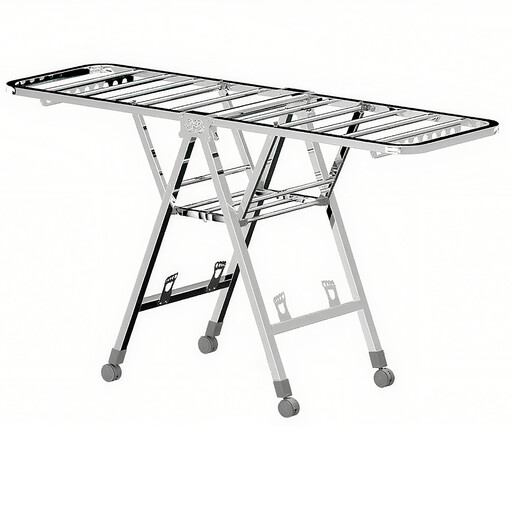 Image unavailable
SNSP foldable freestanding clothes airer
An option to consider if you want to dry shirts indoors and fold the airer away after use.
Freestanding model; foldable design; stainless steel wing airer.
View at Joybuy
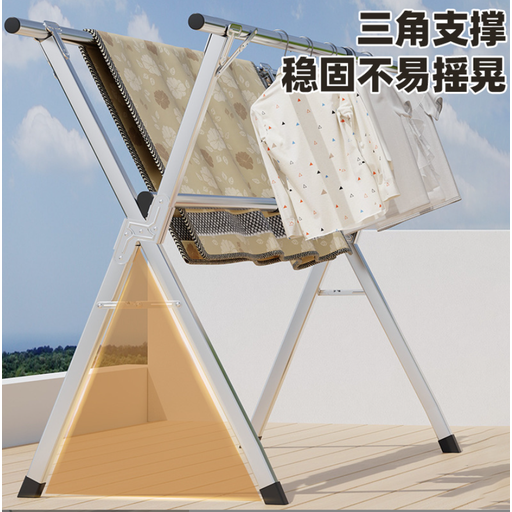 Image unavailable
SNSP foldable airer, 200 cm, 3 rails
An option if you’re looking for a foldable airer with several rails for drying laundry indoors.
Length: 200 cm; 3 rails; stainless steel.
View at Joybuy
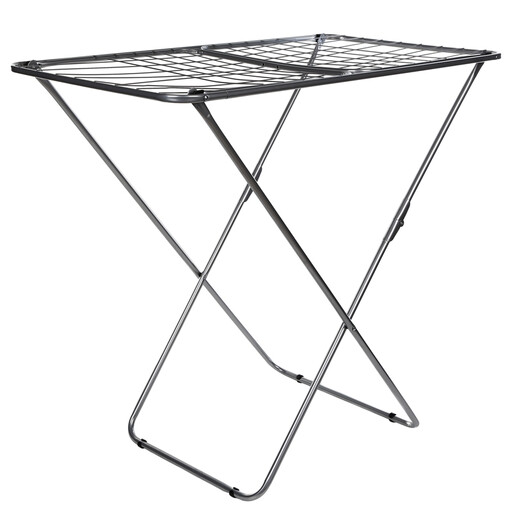 Image unavailable
5five clothes airer, 18 m
An option to consider if you dry laundry indoors and the available drying space matters to you.
Drying space: 18 m.
View at Joybuy
Frequently asked questions
Does a heated clothes airer replace ventilation in the utility room?
No, a heated airer does not remove moist air by itself. Milieu Centraal highlights ventilation as something to consider when drying laundry indoors, so keep the room’s air inlets and outlets clear.
Can any heated clothes airer be wall-mounted?
No, only mount an airer on the wall if the instructions for that specific model allow it. DOMO says the DO7117DR can be used freestanding or wall-mounted; this does not automatically apply to other airers.
How much electricity does a heated airer use per hour?
It depends on the power rating and how long the heater draws electricity. Based on the stated power ratings, one hour at 220 W uses 0.22 kWh for the Adler AD 7821, while one hour at 150 W uses 0.15 kWh for the DOMO DO7117DR; these are the power ratings specified by the manufacturers.
Is CE marking mandatory for an electric clothes airer sold in the Netherlands?
The NVWA states that CE marking is mandatory for electrical products where this requirement applies. Check the marking on the specific version; general product information alone does not confirm whether a particular item carries it. The European Commission explains that the manufacturer is responsible for complying with the applicable requirements and affixing the CE marking.
Can any cotton shirt be dried on heated rails?
Check both the shirt’s care label and the airer’s instructions. Don’t rely on the fact that it’s made of cotton alone; the care instructions for the specific garment also matter.


