What should you look for?
First, check whether the dress can hang freely or needs to lie flat, as stated on its care label. Then compare the space the airer takes up, how easily you can ventilate the room and what heating means for the way you’ll use it.
| What to consider |
What to look for when buying |
Who is it most important for? |
| Will the airer fit, and can the dress hang freely? |
Compare the dimensions when the airer is fully open, the available hanging height and its folded size with your floor space and the length of your dresses. |
If I have limited room to move around, I want to know whether a dress can hang freely without touching the floor. Around 31% of consumers prioritise suitable floor and hanging space. |
| Is the drying method suitable for the fabric? |
Read the care label on each dress and check whether you can hang it or lay it flat without unwanted contact with heat. |
If you wear delicate dresses, you’ll want to match the drying method to the care label; around 25% of consumers prioritise looking after the fabric. |
| Where will the moisture go? |
Choose a spot where you can use your home’s ventilation and where the airer won’t block the airflow. |
When drying laundry indoors, I want to be able to clear the damp air, not just heat the laundry. Around 25% of consumers prioritise ventilation and moisture control. |
| Is the extra electricity use worth the heat? |
Check the power rating of the exact model and work out its consumption as kW × the number of hours it’s switched on. To estimate the cost, multiply the result by your own tariff. |
If I’m mainly concerned about electricity use, I want to know how long the heater will be on and how much electricity it will use. Around 19% of consumers prioritise running costs. |
Silvergear lists a power rating of 300 W for the electric drying tower reviewed. At one hour of continuous use, that rated power is mathematically equivalent to 0.300 kWh; it doesn’t tell you how much energy it will take to dry a particular dress. Milieu Centraal recommends line-drying laundry where possible, outdoors or indoors in an unheated room.
Joybuy products
This Joybuy selection features freestanding airers for indoor air-drying. For summer dresses, check individually whether the hanging height and drying method suit the garment’s care label.
 No image available
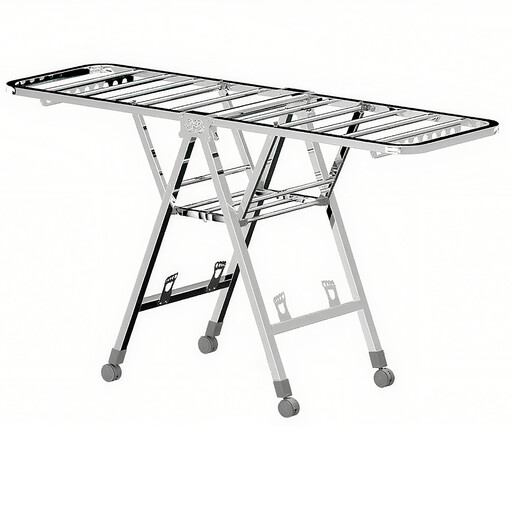
SNSP Floor Folding Clothes Hanger
A freestanding, foldable airer for drying clothes indoors; worth considering if you want to put the airer away after use.
View at Joybuy
 No image available
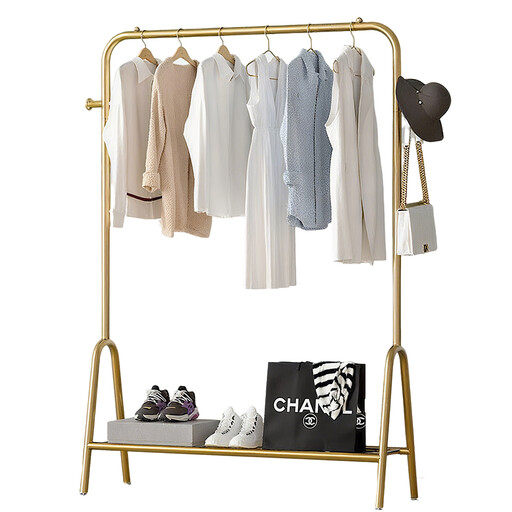
Leli freestanding single-bar clothes airer, 100 cm
A freestanding airer for hanging clothes to dry indoors; worth considering if you’re looking for a single hanging rail.
Width: 100 cm.
View at Joybuy
Frequently asked questions
Can every summer dress be dried on heated bars?
No, follow the care instructions for each dress. GINETEX explains symbols for methods including hanging and flat drying; Clevercare recommends drying silk on a hanger or flat, away from heat and direct sunlight.
Do you need to ventilate when using a heated airer?
Yes. Heating won’t remove the moisture from wet laundry. Use your home’s ventilation; GGD Leefomgeving warns that inadequate ventilation allows moisture to build up indoors.
How do you calculate the electricity use of a heated clothes airer?
Multiply the power rating in kilowatts by the number of hours the appliance actually uses electricity to estimate consumption in kWh. Silvergear lists 300 W for the tower reviewed, but that isn’t a measurement of the electricity used to dry each dress.
Which electrical product rules apply to a clothes airer in the Netherlands?
Electric appliances sold on the Dutch market must comply with the relevant European product safety rules. Ondernemersplein, the Dutch government, states that CE marking and an EU declaration of conformity are required; according to the European Commission, the Low Voltage Directive applies to equipment within 50–1000 V AC. Check the documentation required for the specific model.
What can you do if a new electric clothes airer is faulty?
For a consumer purchase in the Netherlands, the product must meet the standard you’re entitled to expect. According to the Dutch government, you can contact the seller if there’s a problem; the Netherlands doesn’t have a fixed statutory warranty period of two years.


