Start with the layout: shirts need room to hang freely, with enough space for the rest of your weekly wash. A heated airer could work if you want active heat indoors; a standard airer uses no electricity, while a heat pump tumble dryer means less hanging up. Whatever type of indoor airer you choose, ventilation is still essential. Before buying, check the positioning instructions and conformity information for the exact electrical model.
Who is this option right for?
If you dry shirts on hangers
You want to hang cotton shirts with enough space between them, as well as dry smaller items. Look at the hanger hooks and the usable rail layout, not just the number of rails. Brabantia describes hanger hooks on its HangOn airers.
If you spread your weekly wash across drying sessions
You want to know whether the airer’s open footprint can accommodate a changing load. Compare the layout with the items you want to dry at the same time; Leifheit describes adjustable drying levels on the Classic 250 Flex.
If you dry clothes indoors with limited space
You need room for the airer while it’s in use and when it’s stored, with space for ventilation and to follow the positioning instructions. Milieu Centraal emphasises the importance of ventilation when the air in your home is damp.
Which buying concerns should you consider?
First compare the space available for shirts and the full load, then factor in the room you have and electricity use.
Folding heated airer
Right for you if: you want to hang different types of washing indoors and have room for the airer while it’s in use.
Trade-off: the heater uses electricity and doesn’t remove moisture from your home by itself.
Smaller heated airer
Right for you if: you mainly dry a few items at a time and want a narrower freestanding or wall-mounted model.
Trade-off: a narrower layout won’t necessarily suit a full mixed weekly wash.
Unheated airer
Right for you if: drying time is less important and you want hanging space without active heat.
Trade-off: ventilation is still essential when drying washing indoors.
Heat pump tumble dryer
Right for you if: you want to hang up less washing and the care labels allow tumble drying.
Trade-off: you’ll be tumble drying rather than air-drying, so check the care label for each item.
| Buying concern |
What should you look for? |
Who is this important for? |
| Space for shirts |
Check the hanger hooks, rail layout and dimensions when open; Brabantia lists hanger hooks for the HangOn range. |
If you want to hang cotton shirts freely alongside smaller items, prioritise a layout that allows this. Around 36% of consumers rank space for shirts as their main buying concern. |
| Mixed weekly wash |
Compare the levels and dimensions of the exact model with what you want to hang up at the same time. Leifheit lists adjustable levels for the Classic 250 Flex. |
If you want to spread a changing load across usable drying spaces, the capacity for your particular mix of items matters. Around 29% of consumers put mixed loads first. |
| Space and ventilation |
Measure the space available both when the airer is in use and when it’s stored. Make sure you can ventilate the room and follow the instructions for your chosen model. |
If you dry clothes indoors and have limited space, the airer needs to fit without compromising ventilation. Around 21% of consumers make space and positioning their top priority. |
| Electricity use |
Compare the wattage, how long you’ll use it, whether it has a timer and your own electricity tariff. Power in kW multiplied by hours gives electricity use in kWh. |
If you want to weigh the benefits of heating against electricity use, consider how long you’ll use it and your own tariff. Around 14% of consumers put this cost comparison first. |
Common mistakes when choosing a heated airer
-
Judging capacity only by the number of heated rails
The number of rails and the stated dimensions don’t tell you how many shirts will fit with space between them alongside the rest of your washing.
Check the layout against the items you want to dry at the same time, and measure the space where the airer will stand when open.
If the layout is too cramped, you may need to split the washing across extra drying sessions or use a second place to hang it.
-
Confusing heating with moisture removal
A heated airer won’t remove moisture from clothes drying indoors and carry it outside by itself. Milieu Centraal highlights the importance of ventilating your home.
Choose a spot where you can still ventilate the room, and take your home’s ventilation into account.
-
Assuming wattage tells you the drying time or running cost
Adler lists 300 W for the AD 7829, while DOMO lists 150 W for the DO7117DR. These power ratings aren’t a comparative drying test using the same load, and on their own they don’t tell you how much a drying session costs.
To work it out, multiply the power in kW by the hours of use, then multiply the kWh by your own tariff. Don’t treat drying-time claims as proven unless they’re based on comparable tests.
Electricity use also depends on how long you use the airer for.
-
Taking a bathroom claim or IP code as general permission
The permitted position must comply with the instructions for the exact appliance and the intended location. IPX4 on its own doesn’t confirm that every spot in a bathroom is suitable.
Before buying, read the model’s manual and check the positioning and electrical conformity information for the specific product.
Brands to consider as a guide
Adler
According to the manufacturer, Adler offers folding heated airers in a range of layouts.
- The manufacturer lists 30 heated rails and 300 W for the AD 7829; for the AD 7821, Adler lists 18 rails and 220 W.
- These features don’t provide an independent drying-time measurement for cotton shirts alongside a mixed weekly wash. Check the version and the positioning and safety information for the exact model.
DOMO
According to DOMO, the DO7117DR is a heated airer for standing on the floor or mounting on a wall, intended for smaller amounts of washing.
- DOMO lists 150 W, a timer and IPX4 for this model.
- The stated width is 52.5 cm; consider whether this layout suits your shirts and your load. Follow the manual for the exact appliance when positioning it.
Brabantia
The HangOn range is an unheated alternative with a layout that includes space for clothes hangers.
- Brabantia lists hanger hooks for blouses and shirts on the HangOn.
- This range doesn’t heat; drying conditions and ventilation still matter when drying clothes indoors. The hooks mentioned aren’t necessarily included on every airer from the brand.
Leifheit
The Classic 250 Flex is an unheated airer with adjustable drying levels and wings.
- Leifheit describes adjustable levels and height-adjustable wings on this model.
- There’s no active heating, so consider the space available and ventilation where you plan to dry your washing.
Joybuy products for air-drying or tumble drying
These product picks include a folding heated airer for hanging clothes and a separate heat pump tumble dryer as a machine-drying alternative. The right option for you depends, among other things, on the space you have for hanging clothes and the care labels on your garments.
 No image available
Folding electric heated clothes airer with 2 side wings, 230 W
The side wings and central drying area could work well if you want to spread out mixed washing; check that the layout gives your shirts enough room.
Stated dimensions: 144 × 53 × 91 cm. The description lists a recommended maximum load of 10 kg.
Use indoors on a stable, level surface with adequate ventilation, and keep at least 31 cm away from walls. The description specifies an earthed socket.
Before buying, check the CE marking and applicable conformity information for this exact electrical model; a product listing alone doesn’t confirm this.
View at Joybuy
 No image available
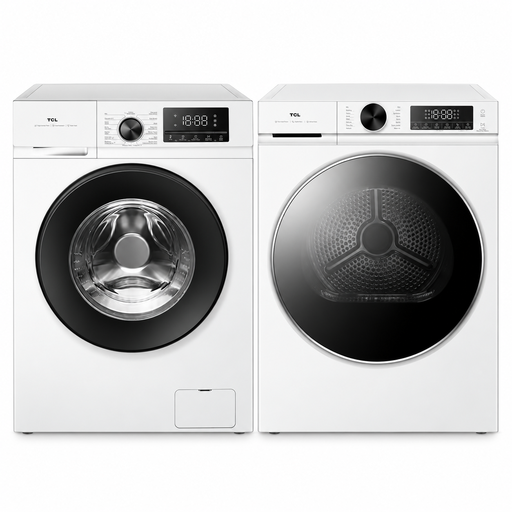
TCL washing machine and heat pump tumble dryer set, 8 kg + 8 kg, 1400 rpm, steam function
A separate heat pump tumble dryer is an alternative if you want to hang up less washing and the care labels allow tumble drying.
According to the product description, the set includes an 8 kg washing machine and a separate 8 kg heat pump tumble dryer. The product name lists 1400 rpm and a steam function.
Check the care labels on cotton shirts and other garments before putting them in the dryer.
View at Joybuy
Frequently asked questions
Can I dry cotton shirts on the same airer as other clothes?
It depends on the available hanging space and the care labels on all the items. Check that shirts can hang freely and use the remaining space for smaller items; the label specifies how each garment should be dried.
Does a heated airer mean I don’t need to ventilate?
No. Drying clothes indoors adds moisture to the air, and Milieu Centraal recommends good ventilation to remove damp air.
Can any electric clothes airer be used in a bathroom?
No, don’t assume so just because it’s an electric airer. DOMO lists IPX4 for the DO7117DR, but where you can position it depends on the instructions for the exact appliance and the intended location; IPX4 alone doesn’t confirm that every spot in a bathroom is suitable.
How do I calculate electricity use, and what should I do if the product is faulty?
Multiply the power in kW by the number of hours used to calculate kWh, then multiply that by your own tariff. In the Netherlands, report a faulty product to the seller; according to the Dutch government, there is no fixed statutory two-year warranty period.
Does a mains-powered heated airer need a CE marking?
Electrical equipment covered by EU low-voltage rules must carry a CE marking before it is placed on the market. EUR-Lex and Business.gov.nl explain these rules; check the applicable information for the exact product, as a shop listing or IP rating doesn’t prove that all requirements have been met.


