
Anyone setting up a small laundry area
You need space for the airer while your washing dries, as well as somewhere to put it away afterwards. So measure both the space where you’ll use it and the storage space.


First, choose an airer that fits in your laundry area both when open and when put away, and consider how damp air can escape. A compact, unheated airer may be enough for a few tea towels. Heated bars are worth considering if you regularly dry clothes indoors and the extra electricity use and space suit your needs.
You need space for the airer while your washing dries, as well as somewhere to put it away afterwards. So measure both the space where you’ll use it and the storage space.
You often dry small items of washing and want to know whether heated bars would make a difference to your routine. Compare this option with a compact, unheated airer too.
Even with a heated airer, damp air needs to escape from the room. Milieu Centraal points out that drying clothes indoors adds moisture to the air.
First measure the space you have for using and storing the airer. Then decide whether heating is worth the extra electricity and space for the way you dry your washing.
| What to consider | What to look for when buying | Who is this important for? |
|---|---|---|
| Fitting and storage | Measure the space available when the airer is in use and the storage space, then compare both with the dimensions of the exact model. | If I have limited floor space, I want to know whether the airer can be left open without blocking the way and whether it will fit away afterwards. Around 33% of consumers prioritise fit and storage. |
| Small, regular loads | Check how many tea towels you can hang out with space between them, and whether you think you need heating for these loads. | When I often dry just a few tea towels, I want enough useful hanging space without choosing a larger airer than my washing requires. Around 27% of consumers prioritise practicality for small, regular loads. |
| Damp and safe positioning | Check how well the laundry area is ventilated and follow the positioning and usage instructions for the exact appliance. | If I dry clothes indoors, I want to make sure the area is well ventilated and connect the appliance in line with the instructions. Around 20% of consumers prioritise damp control and safe positioning. |
| Electricity use | Compare the stated wattage of the model with how many hours you expect to use it and your own electricity tariff. | When I’m considering heated bars, I want to factor in the electricity used for my own loads rather than looking at the wattage alone. Around 20% of consumers prioritise the overall running costs. |
The stated dimensions in use and when stored vary between the Adler airers we looked at. An airer that fits when stored flat may still take up too much floor or walkway space when open.
Measure both areas and compare them with the dimensions of the model you’re considering.
The cost of each drying session also depends on how long you use the airer and how much washing you dry. So comparing wattage alone won’t tell you what a full drying session costs.
Work out the electricity use using the wattage of the exact model and your own hours of use. Only compare costs for similar amounts of washing.
A heated airer doesn’t remove moisture from the indoor air. Milieu Centraal points out that drying clothes indoors adds moisture to your home.
Assess how well the laundry area can be ventilated separately from your choice between a heated and an unheated airer.
These brands offer different types of airer. Compare the exact model and how you’ll use it rather than treating the brand name as proof of quality.
Adler makes foldable electric heated airers, including the AD 7821 and AD 7829.
Silvergear describes its premium electric drying tower as a model with a thermal cover and multiple levels.
Brabantia also offers an unheated hanging airer for a suitable door or wall.
The products below are airers for passive drying. They may be an unheated alternative if you’re hanging out a few tea towels and don’t need heated bars.
 No image available
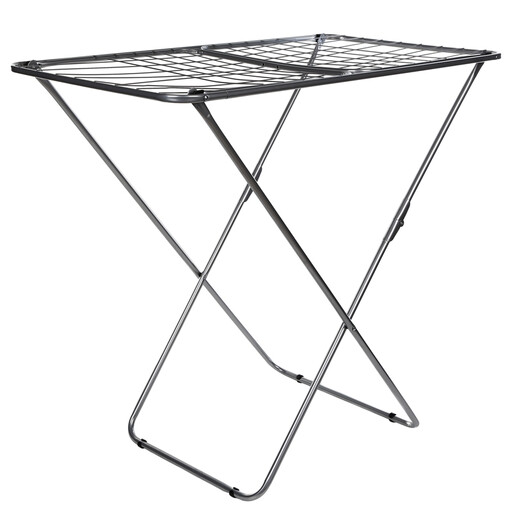
An option for anyone who wants to dry clothes without heat and put the airer away after use.
The product name states a drying length of 18 m.
 No image available
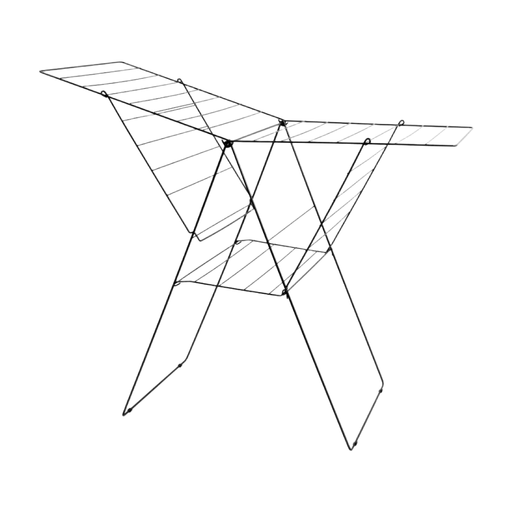
A freestanding airer for anyone who wants to store it flat after use. Check that it fits in your laundry area when open.
Drying length: 20 m. Dimensions when open: 95 × 128,5 × 59 cm; when folded: 101 × 59 × 4,5 cm.
Open the airer fully and place its legs on a flat, level surface before loading it.
 No image available
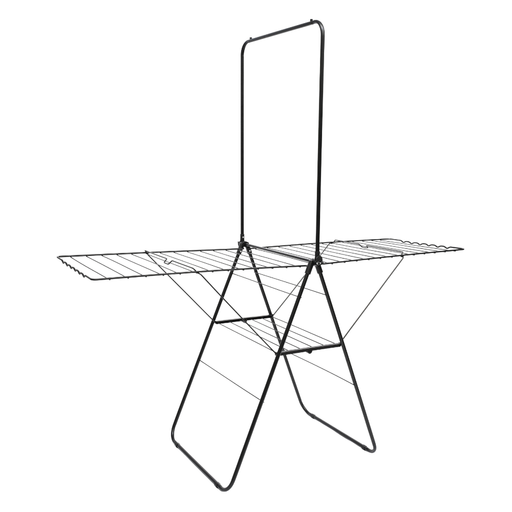
The generous drying length could be useful if you hang out larger loads as well as tea towels. Measure the available space before choosing.
The product name states a drying length of 26 m. The description also mentions 12 hooks and a foldable design.
Open the airer fully and place its legs on a flat, level surface before loading it.
Measure the free space available while you’re drying clothes, as well as the space where you plan to store the airer. Compare those measurements with the exact model: for the AD 7821, Adler gives dimensions of 148 × 52,5 × 90 cm when open and 113 × 52,5 × 8 cm when folded.
No, heating doesn’t remove moisture from the room. Milieu Centraal points out that drying clothes indoors adds moisture to the air, so remember to consider air circulation and ventilation too.
Multiply the wattage of the exact model, in kilowatts, by the number of hours you use it. The research information gives the Adler AD 7821 a rating of 220 W: running it continuously at that rated power for four hours gives a calculation of 0,220 kW × 4 hours = 0,88 kWh. This is a calculation, not a measured amount of electricity used or a confirmed drying time for tea towels.
An unheated airer may be enough if you’re drying a few tea towels, aren’t in a hurry and have a suitable place to hang them. If you often dry clothes indoors and are considering a heated airer, factor in the space available and electricity use too.
Electrical equipment placed on the market in the Netherlands must meet the applicable European requirements. Business.gov.nl states that, after assessing the applicable requirements, the manufacturer must apply a CE marking and draw up an EU declaration of conformity. Check the information for the exact model when considering a specific product.