
Student short on floor space
You dry T-shirts in your room or a shared space and want to put the airer away after use. Compare its dimensions when set up with its folded size for storage.


A folding heated airer could be right for you if you dry clothes indoors, want extra warmth or a timer, and have enough room for it. An unheated airer uses no electricity, but may take longer to dry your clothes; either way, damp air needs to be able to escape. Before buying an electric heated airer, check the CE marking on the specific product, read the instructions and make sure there is enough space around it.
You dry T-shirts in your room or a shared space and want to put the airer away after use. Compare its dimensions when set up with its folded size for storage.
You’re considering heat or a timer because you regularly dry washing indoors. Weigh these features against the electricity use, and don’t assume there’s a set drying time.
You want to know where damp air can go when washing is drying in a shared room. Milieu Centraal points out that poor ventilation can contribute to damp and mould problems.
A good fit if: you dry clothes indoors and want adjustable heat or a timer, as well as an airer you can put away.
Bear in mind: it uses electricity, and damp air still needs to be able to escape from the room.
A good fit if: you’re happy to allow extra drying time and don’t want to use electricity for the airer.
Bear in mind: an unheated airer still takes up floor and storage space, and ventilation is still needed.
A good fit if: permanent installation is allowed and the setup suits the room.
Bear in mind: an electrically operated ceiling airer doesn’t automatically have heated rails.
When drying cotton T-shirts, it’s not just how the airer works that matters. Think about where you can put it, how you’ll store it and whether the room can let damp air escape.
| What to consider | What should you check? | Who should consider this? |
|---|---|---|
| Space and storage | Compare the airer’s dimensions when open with the space available, and check that its folded size will fit where you plan to store it. | If you want to use the airer in a shared room and put it away afterwards, it needs to fit both while drying and in storage; around 28% of consumers say space is their top priority. |
| Drying time | Check whether the rails are heated and whether the temperature or timer can be adjusted; spread out the T-shirts so air can circulate between them. | If you regularly need your T-shirts again quickly, consider heat and a timer without assuming a set drying time; around 22% of consumers prioritise drying time. |
| Damp and ventilation | Choose a spot where air can circulate around the washing and damp air can escape; consider your housemates too. | If you dry washing in a shared room, you’ll want to know how damp air can escape; around 22% of consumers put damp control first. |
| Electricity use | Compare the stated wattage with the expected length of use; wattage alone doesn’t tell you how much electricity a full drying session will use. | If you’d rather not use electricity for the airer and can accept extra drying time, electricity use matters more; around 17% of consumers start with electricity use. |
| Looking after your clothes | Check the care label on each T-shirt and follow the airer’s instructions too, especially for printed designs or special finishes. | If your T-shirts have different prints or finishes, you’ll want to follow the care instructions for each item; around 11% of consumers put clothing care first. |
Washing that dries indoors releases moisture into the room. Heat won’t get rid of that moisture by itself; poor ventilation can contribute to damp and mould problems.
Before choosing a spot, work out how the room will be ventilated. Milieu Centraal recommends factoring in ventilation when drying washing indoors.
Overall electricity use also depends on how long the airer is switched on. So the stated wattage alone doesn’t tell you how much electricity a full drying session will use.
Weigh the wattage against how long you’ll need to use the airer, and compare it with an unheated airer, which uses no electricity itself.
Electric operation or an electrical feature doesn’t automatically mean the drying rails are heated.
Check the heating function on the exact model. If you’re considering a ceiling airer, ask permission before installing it permanently.
Wattage alone doesn’t confirm that two airers have the same product identity, version or other features.
Compare the full model name, brand and relevant specifications before treating products as the same version.
The Warmmat is a folding heated airer for anyone looking for adjustable temperature and timer settings.
The DD6003 is a folding heated airer with a stated drying length, for anyone who wants to spread out several T-shirts.
The Classic 100 Easy is an unheated alternative for anyone who doesn’t need extra warmth.
The TopDry Classic is a ceiling airer option for homes where permanent installation is possible.
This selection on Joybuy includes a heated airer and several air-drying options, including freestanding, folding and wall-mounted designs.
 No image available
A good fit if you want extra warmth indoors and are looking for an airer with side wings that folds away.
Stated dimensions: 144 × 53 × 91 cm. The product description calls for ventilation, an earthed socket and at least 31 cm of clearance from walls.
CE marking is mandatory for electrical consumer products in the Netherlands; check the marking on this specific product before buying. The Netherlands Food and Consumer Product Safety Authority explains this requirement.
 No image available
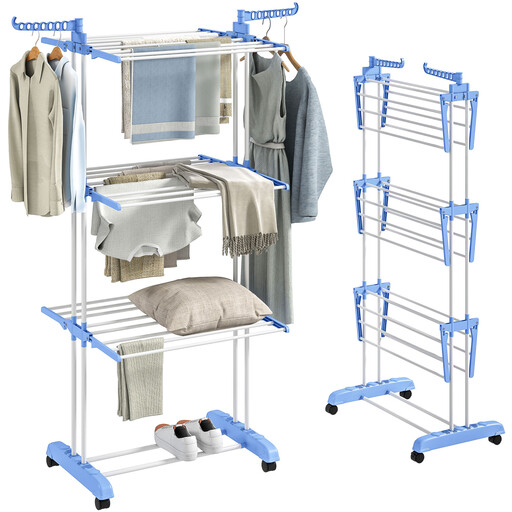
A good fit if you want to move the airer around on wheels and fold it away after use.
The product name specifies four wheels and a lower shelf. Check how much space it takes up when unfolded before choosing a spot.
 No image available
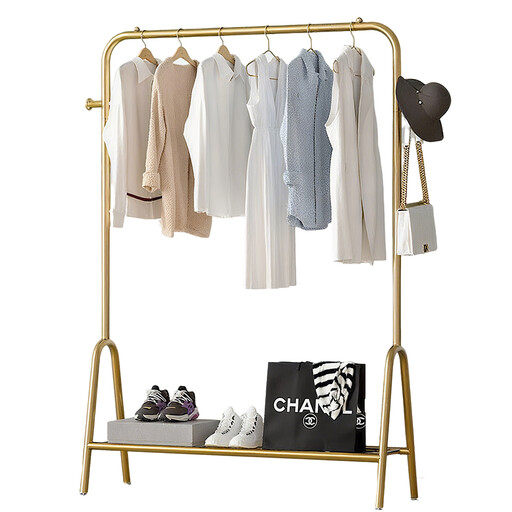
A good fit if you’d rather air-dry cotton T-shirts on hangers using a freestanding clothes rail.
The product name specifies one bar and a width of 100 cm. Bear in mind how much floor space it needs.
 No image available
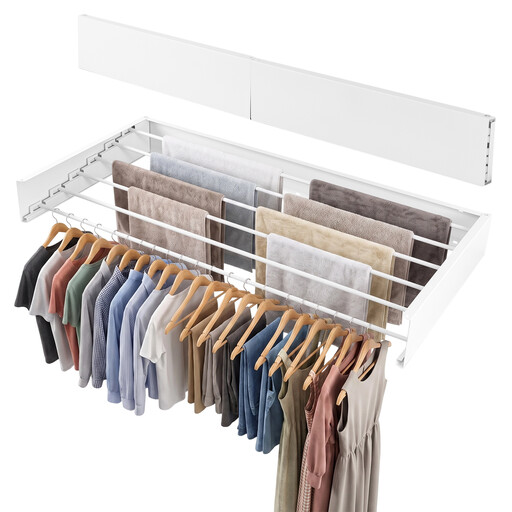
A good fit if you want to keep floor space clear and can install the airer in a fixed spot.
The product name specifies a load capacity of 15 kg. Installation involves drilling into the wall, so check whether this is allowed in your home.
 No image available
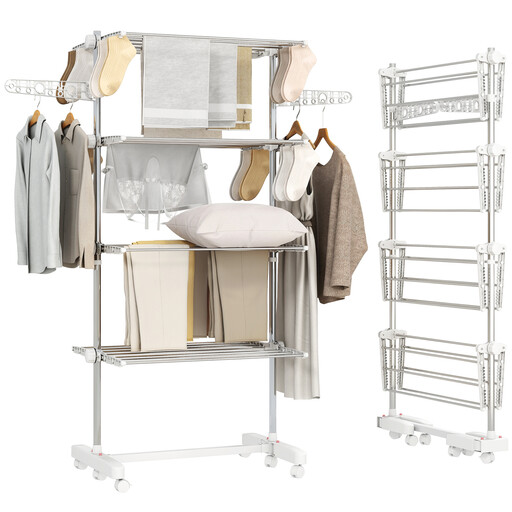
A good fit if you want to spread several T-shirts across different drying levels and fold the airer away after use.
The stated folded height is 172 cm. The description recommends a maximum of 6 kg per shelf and spreading the washing evenly.
Yes. CE marking is mandatory for electrical consumer products sold in the Netherlands. The Netherlands Food and Consumer Product Safety Authority explains this requirement; check the marking on the specific product.
Don’t assume that heat will remove moisture. Milieu Centraal recommends paying attention to ventilation when drying washing indoors, as poor ventilation can contribute to damp and mould problems.
You can’t tell from the fibre alone. Check the care label, especially for printed designs or special finishes, and follow the airer’s instructions. The care symbols apply to the whole garment.
Follow the instructions for the exact model. Brandweer Nederland warns that a coiled cable reel can get hot; don’t assume that cleaning instructions for one model will apply to a different airer.
Contact the seller about your statutory guarantee. According to ACM ConsuWijzer, the expected lifespan depends on the product; two years isn’t the general limit for this right.