
If you’re drying a few cloths
After a wet commute, you need somewhere to dry a small amount of fabric and want to know whether heating offers any benefit over simply hanging it up.


You don’t automatically need a heated airer for a few wet face cloths. Start by finding a suitable spot where moisture can escape, and see if an unheated airer does the job. Milieu Centraal recommends line-drying laundry where possible; heating doesn’t remove moisture from your home. If you do choose an electric model, consider the size and position that suit your needs, and follow the instructions for the specific appliance and textiles.
After a wet commute, you need somewhere to dry a small amount of fabric and want to know whether heating offers any benefit over simply hanging it up.
You want to dry damp cloths in a suitable spot without overlooking ventilation or safe positioning for an electrical appliance.
You want to use the airer for other laundry as well as face cloths, so hanging space and size matter more.
First, consider whether a ventilated spot and an unheated airer will be enough for your cloths. If you’re thinking about an electric model, then check how much space you need, the positioning instructions and what else you expect to use it for.
| What to consider | What to look for when buying | Who is this important for? |
|---|---|---|
| Suitable size | Compare the number of usable hanging spaces and whether the model has legs. | If I only have a few cloths after my commute, I don’t want an airer that’s bigger than necessary; around 36% of consumers prioritise this small drying task. |
| Moisture and positioning | Check the manual, where the appliance can be positioned and whether the plug and controls will stay dry. | If you’re concerned about moisture and finding a safe spot, you’ll want to consider ventilation and the appliance instructions; around 29% of consumers prioritise these points. |
| Space for other laundry | Check the dimensions and hanging options of the exact model. | If I want to use the airer for other laundry too, extra hanging space matters; around 21% of consumers say this is the main reason for their choice. |
| Electricity use | Compare the power rating in W, how many hours you’ll use it for and your electricity tariff. | If you plan to use the airer often, you’ll want to factor in electricity use beforehand; around 14% of consumers say electricity costs are the main factor in their choice. |
An airer doesn’t remove moisture from your home by itself. Milieu Centraal warns that too much moisture indoors can cause mould, so remember to consider ventilation too.
Power rating doesn’t tell you how long drying will take. Drying time depends on factors such as how wet and thick the fabric is, as well as the humidity. The Consumentenbond mentions these factors in relation to a different type of electric clothes airer; that information doesn’t tell you how long face cloths will take to dry on the models featured here.
Heated fabric still releases moisture into the indoor air. Milieu Centraal points out that too much moisture can cause mould.
Choose a suitable drying spot first and make sure there’s ventilation, whether or not the airer is heated.
The Eurom Sani-Towel manual limits use to textiles that have been washed in water and specifies which parts of the appliance textiles may touch.
Before putting cloths on it that have only been wet in the rain, check which textiles are allowed for the exact model and how they should be hung.
The rated power alone doesn’t tell you how long the same cloths will take to dry. ProfiCare lists 125 W for the PC-EHW 3115; Eurom lists 500 W for the Sani-Towel 500 White. These are different types of appliance, not a like-for-like comparison of drying performance.
To estimate your own costs, compare the same amount and type of fabric, and factor in the actual time you use the appliance and your electricity tariff.
The manufacturer describes the WARME HANDDOEK MINI as a towel holder for small and medium-sized towels.
ProfiCare describes the PC-EHW 3115 as a towel warmer that can be freestanding or wall-mounted.
The heated drying tower is worth considering if you want to hang other laundry as well as cloths.
The Sani-Towel 500 White is a wall-mounted electric bathroom towel radiator, not a small freestanding clothes airer.
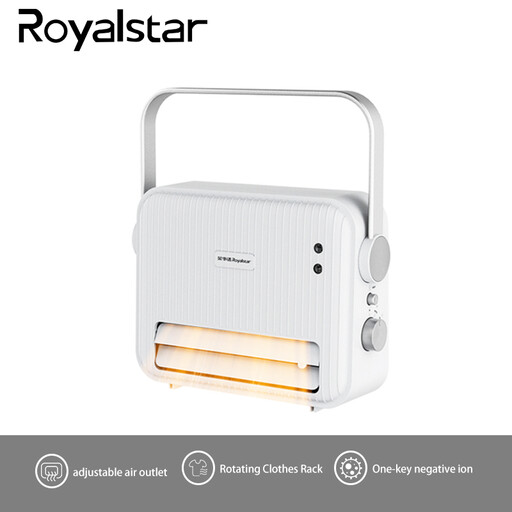
The Joybuy product featured is a portable space heater with a towel-drying function mentioned in the product title; the title doesn’t describe a specific drying rack.
 No image available
The product title mentions towel-drying, but describes the appliance as a space heater rather than a specific drying rack.
The title lists 2000W, two heat settings and a portable design for wall mounting without installation.
Keep clothing and towels away from the air inlet and outlet. Plug the appliance directly into a wall socket and don’t leave it unattended for long periods.
Before buying, check the CE marking and conformity information for the exact model. The Netherlands Food and Consumer Product Safety Authority states that CE marking is compulsory for electrical equipment within the applicable voltage range. The mark is the manufacturer’s declaration and is not, by itself, proof of an independent assessment.
Not necessarily. An unheated airer doesn’t use electricity to dry your clothes, but choose a spot where moisture can escape. How quickly the cloths dry depends on factors such as how wet they are and the conditions in the room.
No. Follow the positioning and safety instructions for the exact model. ProfiCare warns that the controls on the PC-EHW 3115 must not be reachable by someone in the bath or shower. An IP24 rating doesn’t automatically mean it can be placed anywhere in the bathroom.
That depends on the instructions for the specific appliance. The Eurom Sani-Towel manual only allows textiles that have been washed in water; also keep the control panel dry and uncovered. Cloths wet from the rain aren’t necessarily covered by the stated use.
To work out your own estimate, multiply the power in kW by the number of hours you use the appliance and your electricity rate per kWh. The stated wattage doesn’t tell you how long the same amount of cloths will take to dry; an unheated airer uses no electricity for drying.
CE marking is compulsory for electrical equipment within the 50 V to 1000 V AC range specified by the Netherlands Food and Consumer Product Safety Authority. The mark is the manufacturer’s declaration, not an independent product assessment; check the information for the exact model.