
Renter with limited floor space
You’re looking for somewhere to hang a few cloths without a fully opened airer taking over the room. Measure both the space it needs when in use and where you’ll store it.


A standard airer may be all you need if you can hang your face cloths with space between them and ventilate the damp air properly; you won’t use electricity for heating. Choose a heated airer if you specifically want to add warmth and the set-up, running time and electrical installation are suitable for your home. Milieu Centraal also recommends extra ventilation when drying laundry indoors: heating is no substitute for ventilation.
You’re looking for somewhere to hang a few cloths without a fully opened airer taking over the room. Measure both the space it needs when in use and where you’ll store it.
You regularly dry wet cloths indoors and want to work out how damp air will be removed. Milieu Centraal recommends extra ventilation when drying indoors.
You’re considering an electric airer because a standard one doesn’t suit the way you want to use it. Compare where it can go and how long you’ll use it, but don’t assume it will dry things faster without evidence.
A good fit if: you mainly want a dedicated place to hang a few cloths and a narrow rail will fit where you plan to put it.
Trade-off: it offers less hanging space than a wider clothes airer and uses electricity.
A good fit if: you regularly want to dry more than just face cloths and have enough room for the airer when it’s set up.
Trade-off: you’ll need more floor and storage space; the stated wattage alone doesn’t determine the cost per drying session.
A good fit if: you can air-dry cloths with enough space between them and don’t need an extra source of heat.
Trade-off: the actual drying time depends on the cloths and the room.
| What to consider | What to look for when buying | Who should pay particular attention? |
|---|---|---|
| Space and storage | Measure the space when the airer is in use, the room needed to move around it and where you’ll store it; check that cloths can hang separately. | If I don’t want an airer taking up the room every day just for a few cloths, I prioritise its size when in use and storage space; around 28% of consumers put space first. |
| Ventilating damp air | Check how well the area is ventilated and don’t hang wet cloths on top of one another. | If I regularly dry wet cloths indoors, I want to know how damp air can escape; around 22% of consumers prioritise removing moisture. |
| Electrical installation | Read the instructions for the specific model and check the connection, cable reach and intended location. | If I want to use a heated airer in a damp room, I want to be able to assess its location and connection in advance; around 22% of consumers put electrical installation first. |
| Electricity use | Compare the stated wattage and expected running time; wattage alone doesn’t tell you how much electricity one full drying session will use. | If I plan to use the airer often, I want to know how many hours of heating it will need and whether I’m happy to use that extra electricity; around 17% of consumers prioritise running costs. |
| Installation in a rented home | Choose a freestanding model if you don’t want to fix anything in place; for wall mounting, consider the fixings and whether they can be removed without leaving lasting changes. | If I’d rather not make a permanent change to my rented home, I look for a portable option; around 11% of consumers prioritise reversible installation. |
Damp air still needs to be removed when you dry laundry indoors. Milieu Centraal points out that too much moisture can encourage mould.
First choose a drying area with a practical way to ventilate it, then decide whether you need extra heat.
Even with heating, you still need extra ventilation if the drying area requires it.
An airer with wings may take up more floor and walking space when open than your available area allows.
Measure the full set-up and check that the cloths can hang separately.
The airer may take up useful floor or walking space while your laundry dries.
The stated wattage alone doesn’t tell you the drying time or electricity use per drying session. How long you use it also matters.
Compare models based on a similar expected running time, and don’t treat unsubstantiated claims about faster drying as test results.
An IP rating alone doesn’t determine whether the electrical connection and the specific location are suitable.
Check the model’s instructions and assess the intended location and connection separately.
The DO7117DR is worth considering if you’re looking for a relatively small heated airer that, according to DOMO, can be used freestanding or wall-mounted.
The heated clothes airer with a heat cover is an option if you want to hang other laundry as well as face cloths.
The Towarck is an electric towel rail that can be freestanding or wall-mounted, offering an alternative to an airer with wings.
The Classic 100 Easy is a useful comparison if you’re mainly looking for a foldable place to hang laundry without electric heating.
These product options include a foldable clothes airer, heated towel rails and clothes airers, and a portable fabric dryer. Compare how much space you need and how you want to dry your cloths before choosing a model.
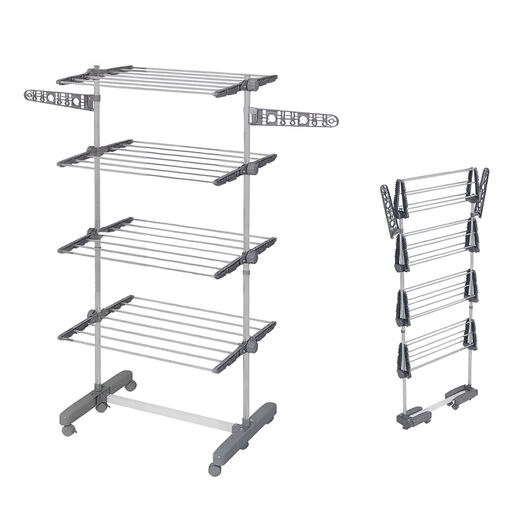 No image available
A foldable airer for hanging several items to dry across different levels.
Four adjustable levels, space for clothes hangers and wheels.
 No image available
A heated rail for anyone looking for a permanent place to hang towels on the wall.
The product information lists touch controls, a digital temperature display, a top shelf and dimensions of 58.5 × 55 cm. Wall mounting requires a suitable fixing point.
 No image available
A heated clothes airer for hanging other laundry as well as cloths, provided you have enough room for it when set up.
Stated power: 230 W. Open dimensions: 144 × 53 × 91 cm.
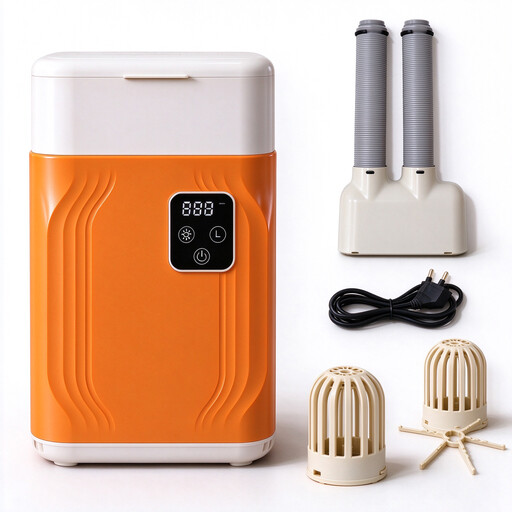 No image available
A portable heated option for anyone wanting to dry fabrics indoors.
The product description mentions a timer and use for clothes and other fabrics. Keep at least 50 cm away from flammable materials, don’t block the air vents and don’t touch the hot air outlet.
No, a heated airer doesn’t replace ventilation. Milieu Centraal recommends extra ventilation when you dry laundry indoors, so also consider how damp air will be removed from the area you choose.
The IP rating alone doesn’t tell you that. Check the model’s instructions, the intended location and the electrical connection before using the airer there.
Not always. According to the Dutch government, you don’t need permission for a small alteration that can be reversed without too much cost, such as filling holes; you do need permission for a renovation. Consider the specific work involved before installing the airer.
Compare the stated wattage alongside the expected running time. Wattage alone doesn’t tell you how much electricity each drying session will use or how long your cloths will take to dry.
Yes, a standard airer may be all you need if you can hang the cloths separately and the area is well ventilated. The actual drying time depends on the cloths and the room; a heated airer is an alternative only if you specifically want to add heat.