
For anyone who wears long summer dresses
You want to dry a wet dress without awkwardly folding it in half. Check the available hanging space and the height of any hanging rail. Brabantia recommends a tall airer for longer garments.


First, choose a drying method that suits the care label and the length of your dress. A hanging rail can be useful if the dress can be dried hanging, while instructions to dry it flat call for a suitable flat surface. A heated airer may be worth considering if you often dry clothes indoors, but it uses electricity and doesn’t replace ventilation. For an electric model, check the specifications for that exact version. Equipment designed for 50–1,000 V AC is subject to EU safety requirements and CE marking.
You want to dry a wet dress without awkwardly folding it in half. Check the available hanging space and the height of any hanging rail. Brabantia recommends a tall airer for longer garments.
You often dry damp clothes indoors and are considering a heated airer. Bear electricity use and ventilation in mind: Milieu Centraal explains that air in your home needs to be refreshed and moisture needs to be removed.
Choose a drying method based on the care label. The American Cleaning Institute distinguishes between methods such as hanging to dry and drying flat; these instructions call for different drying set-ups.
Choose this if: you regularly dry clothes indoors and the care label allows your dress to be hung, without placing it in a way that’s unsuitable for warm rails.
Bear in mind: electricity use and the need to ventilate the drying area. A stated temperature or timer doesn’t guarantee a drying time for your dress.
Choose this if: the care label says your dress can be dried hanging and you need plenty of hanging space. Brabantia describes a hanging rail and hanger hooks for its HangOn airer.
Bear in mind: the airer doesn’t use electricity, but the drying area and ventilation still matter; a set drying time isn’t guaranteed.
Choose this if: the care label says to dry the dress flat. Use a suitable flat surface rather than hanging it on a hanger.
Bear in mind: you’ll need space for the flat surface, and ventilation is important here too.
| Consideration | What to look for | Who is this most important for? |
|---|---|---|
| Drying method for the dress and fabric | Read the care label and check that the dress fits on or over the airer in the recommended position. | If I want to avoid hanging my dress incorrectly or being unable to lay it flat, the care label matters most to me. Around 33% of consumers prioritise suitability for the dress and fabric. |
| Indoor drying when needed | Check the instructions and controls for the exact model; don’t count on a guaranteed drying time. | If I regularly come home with damp clothes, I want to know whether the drying set-up suits my needs. Around 27% of consumers put being able to dry clothes indoors regularly at the top of their list. |
| Space and storage | Measure the dress, the available hanging height and the airer when it’s both open and folded away. | If my living space is limited, I want to know whether the airer will fit where I plan to use it and can be stored away afterwards. Around 20% of consumers prioritise fit and storage. |
| Electricity use and damp | Check the power rating for the exact version and assess ventilation in the drying area. | If I want to take electricity use and dampness in the home into account, I consider both how long I use the airer for and how well the air circulates. Around 20% of consumers give these factors top priority. |
The total length of the rails doesn’t tell you how much clearance a long dress will have when hung on a hanger.
Measure the dress and the available hanging height, and check whether the airer has a suitable hanging rail.
A heated airer doesn’t automatically remove the moisture released into the room by laundry drying indoors.
Choose a suitable drying area and make sure it’s ventilated, as Milieu Centraal advises.
A stated rail temperature or control setting doesn’t tell you how long a particular dress will take to dry.
Follow the care label and the instructions for the exact airer.
DreamGoods lists a heated airer called PRO 2025, with a stated drying length of 21 m.
A Dutch product listing features the Dirt Devil heated airer DD6003, with a stated drying length of 12 m.
Brabantia’s HangOn airer offers an unheated hanging option with a rail and hanger hooks.
These Joybuy picks include clothes airers and garment rails suited to different hanging space, storage and general drying needs. For an electric model, check the specifications for that exact version and always follow the care label.
 No image available
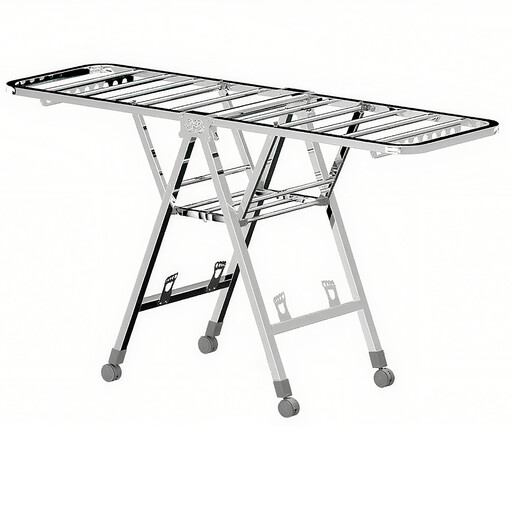
A good fit if you’re looking for a folding airer to dry clothes at home.
The product name describes a folding design with stainless steel wings.
 No image available
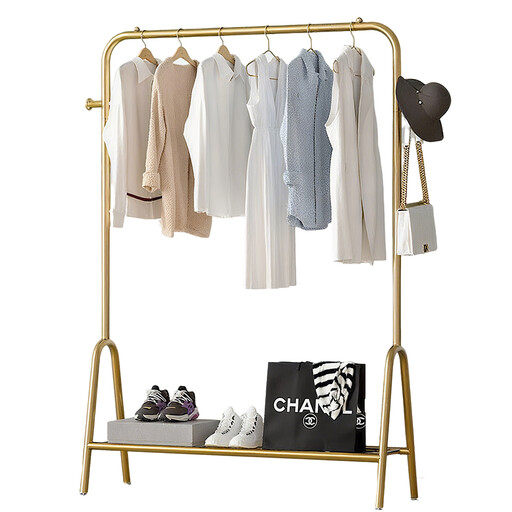
A good fit for a dress that the care label says can be dried hanging.
Single hanging rail; 100 cm wide. The product name specifies a light gold finish.
 No image available
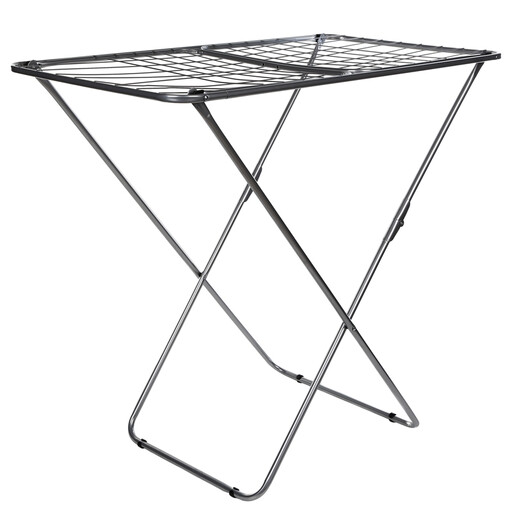
An option for general indoor or outdoor drying if the stated drying length suits your space.
The product name specifies an 18 m drying length.
 No image available
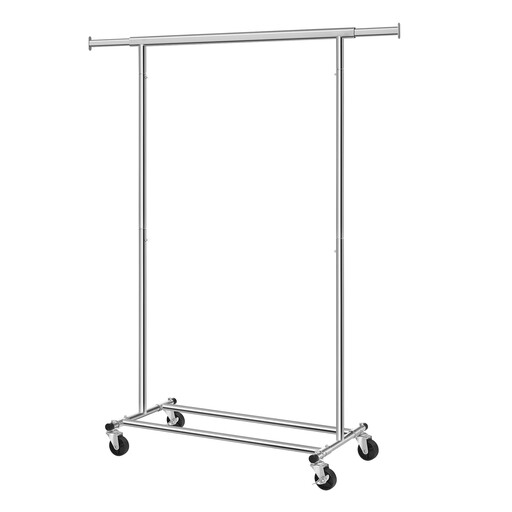
A good fit if you want to dry a dress hanging and the rail’s stated dimensions suit your space.
The product name specifies dimensions of 45 x (92-132) x 161.5 cm, wheels and an extendable hanging rail. A 100 kg load capacity is also listed.
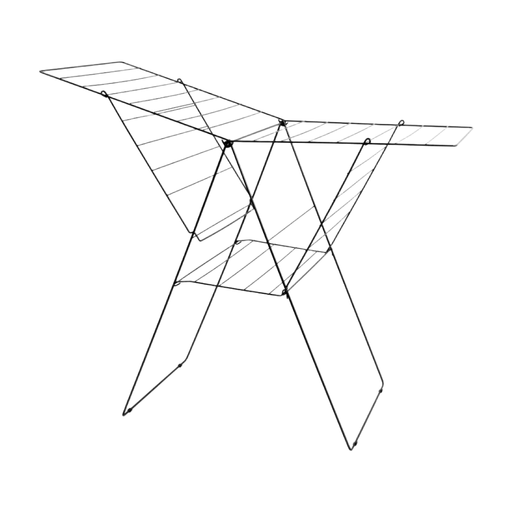 No image available
A good fit for general drying if you have room for the stated drying length and dimensions.
The product name specifies a drying length of 20 m and dimensions of 95 x 128.5 x 59 cm. For a long dress, measure the available hanging space; the stated height is 95 cm.
No. Don’t assume that it’s suitable just because of the type of airer. Read the care label first, then check the instructions for the exact electric model.
Yes. Laundry drying indoors releases moisture into the air. Milieu Centraal recommends letting air in and allowing it to escape. A heating element doesn’t replace air circulation.
Multiply the power rating of the exact version in watts by the number of hours it’s used, then divide by 1,000 to calculate consumption in kWh. Multiply this by your own price per kWh; the wattage alone won’t tell you the cost per drying session.
Contact the retailer. According to the Dutch government, you’re entitled to a product that works properly, but the Netherlands doesn’t have a fixed statutory guarantee period; any manufacturer’s guarantee is in addition to this.
The EU Low Voltage Directive applies to electrical equipment designed for 50–1,000 V AC. EUR-Lex describes the requirement for CE marking, and the European Commission explains that CE marking isn’t an independently issued quality certificate. Check the applicable details for the exact model.