What should you look for when buying?
First measure and assess the space and how moisture is removed. Then compare capacity, energy use and programme duration for your usual cotton laundry.
| What to consider |
What to look for |
Who should consider this? |
| Space and moisture |
Measure the available space and check that you can reach the appliance; compare condensation efficiency and check the options for draining water. |
If I have a small laundry space, I want the appliance to fit and to be able to reach the door and water tank easily. Around 33% of consumers prioritise fit and moisture when making this choice. |
| Electricity use |
Compare kWh per 100 eco cycles on the current energy label and choose a load capacity that suits your usual load. |
If I dry laundry regularly, I want to weigh ongoing energy use against other considerations when buying. Around 27% of consumers put electricity use first. |
| Capacity |
Compare the load capacity with the laundry you usually dry and check the dimensions of the exact model. |
If I dry towels or other larger cotton loads, I want to know whether the capacity suits my laundry. Around 20% of consumers put capacity at the top of their list. |
| Drying time and noise |
Check the programme duration and noise level on the current label, and see which programme is designed for your cotton laundry. |
If the tumble dryer is near my living space or I plan my laundry, I want to take noise and drying time into account. Around 20% of consumers prioritise drying time or noise. |
Heat pump tumble dryers at Joybuy
These heat pump tumble dryers have different capacities for households that dry cotton laundry.
 No image available
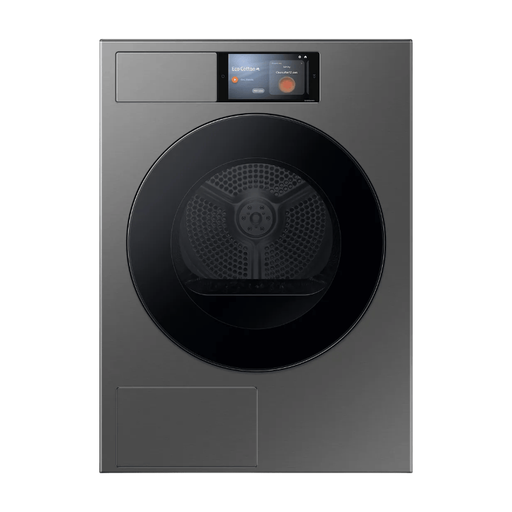
Samsung DV90F09F4SU3, 9 kg, energy label A
Compare the 9 kg capacity with your usual load; check the dimensions of the exact model to see whether it will fit in your laundry space.
Heat pump tumble dryer; 9 kg; energy label A; AI Home, AI Dry+ and Wi-Fi with SmartThings; silver.
Joybuy
 No image available
Midea MD205H80WB/W-NL, 8 kg, class C
An 8 kg capacity is worth comparing with your usual cotton load; check the dimensions of the exact model to make sure it will fit.
Heat pump tumble dryer; 8 kg; energy label C; SmartHome; white.
Joybuy
 No image available
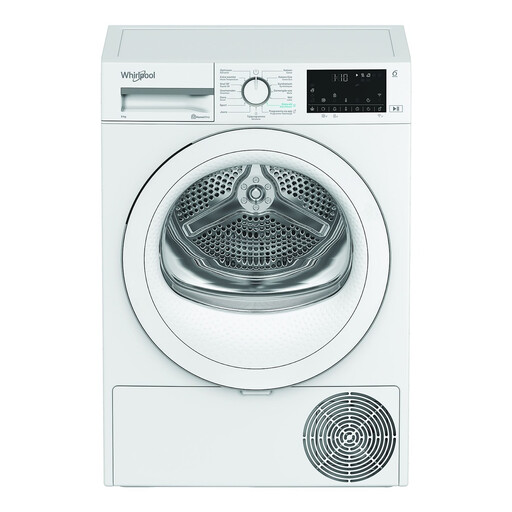
Whirlpool C WD 94M WWS BE, 9 kg, class C
Compare the 9 kg capacity with the amount of laundry you usually dry; check the dimensions and connection options for your setup.
Heat pump tumble dryer; 9 kg; energy label C.
Joybuy
 No image available
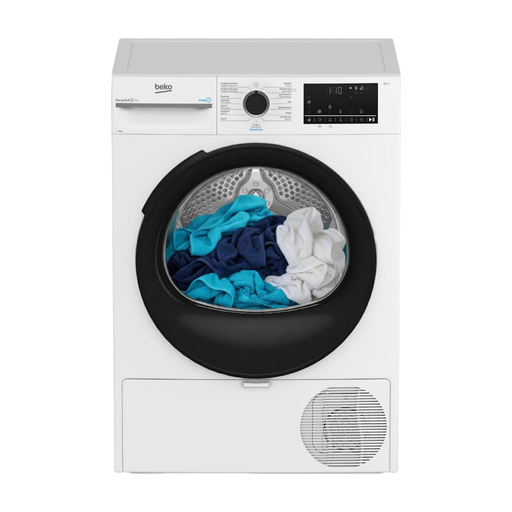
Beko BM3T3824W, 8 kg, class C
Compare the 8 kg capacity with your usual load; check the external dimensions of the exact model before choosing where to put it.
Heat pump tumble dryer; 8 kg; energy label C.
Joybuy
 No image available
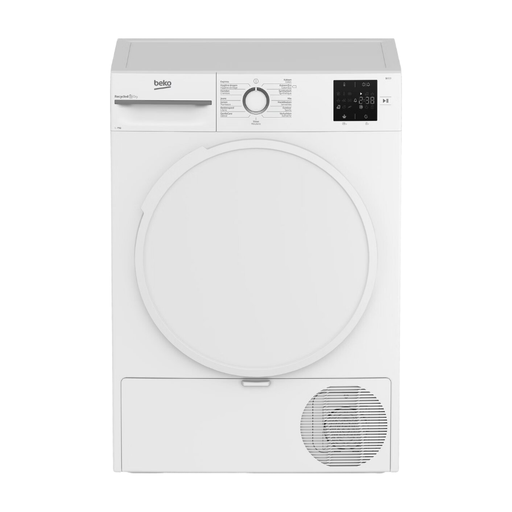
Beko BM3T3722W, 7 kg, class E
A 7 kg capacity may suit smaller loads; consider whether it’s right for the laundry you usually dry and check that you have enough room for it.
Heat pump tumble dryer; 7 kg; energy label E.
Joybuy
Frequently asked questions
What should I check before stacking a tumble dryer on a washing machine?
Check the documentation for both exact models to make sure they can be stacked and to find out which stacking kit fits. Bosch home appliances recommends using a suitable stacking kit. Also check that the door, filters and water tank will remain accessible. The tumble dryer should go on top of the washing machine, not the other way round.
How can I keep my tumble dryer and small laundry space in good working order?
Clean the lint filter as instructed in the user manual and keep the air vents clear. Empty the water tank if the model isn’t connected to a drain, and assess the room’s ventilation and condensation efficiency.
How can I compare electricity use without guessing the cost of electricity?
Divide the kWh per 100 eco cycles shown on the current label by 100, then multiply the result by the expected number of cycles and your own price per kWh. This calculation is based on the labelled eco programme; it isn’t a guarantee for every cotton load or programme.
Can I compare an old A+++ label with the current energy label?
Not directly: tumble dryers have used an A-to-G label since 1 July 2025. The European Commission describes the current scale. Compare models using this label system and check their consumption per 100 eco cycles, too.
Can I hand in my old tumble dryer when I buy a new one?
Yes. According to the Dutch Government, when a private customer buys a new appliance, the retailer must take back an old, similar appliance free of charge. This also applies to online purchases. Ask in advance how take-back or collection will be arranged when your new appliance is delivered.


