A 7 kg heat pump tumble dryer could be a good fit if you usually dry small loads; a larger drum is mainly useful if you also regularly dry more clothes at once. Then compare the programmes and load limits for small loads and different fabrics, as well as the current energy label, eco programme duration and maintenance requirements.
Who is this buying guide for?
If you mainly dry small loads
If you usually only put some of your washing in the tumble dryer, consider both its capacity and whether it has programmes or settings for small loads. The Consumentenbond recommends 7 kg as an option for people who don't put much washing in the dryer.
If you dry different fabrics during the week
When your washing varies, it's important to check which fabrics can go in the same programme and which need a separate setting. The manufacturer's programme information and the care labels on your clothes can help.
If you're keeping an eye on energy use
If you use your tumble dryer regularly, compare its current energy label class and energy use per 100 eco drying cycles. The Consumentenbond and Energielabel.nl describe these figures as useful for comparing tumble dryers.
What should you look for when buying?
Start by thinking about the loads you usually dry. Then check that the programmes, energy label information and practical requirements suit your weekly washing and the space where the tumble dryer will go.
| What to consider |
What should you check? |
Who should pay particular attention? |
| Capacity for small loads |
Compare the rated capacity with the permitted load for each programme, and check whether the model has a half-load option or a drying sensor. |
If you usually only dry some of your washing, you'll want a capacity and setting that suit that load. Around 36% of consumers in this situation prioritise this above all. |
| Programmes for different fabrics |
Check the care labels, programmes and maximum load for each programme on the exact model. |
If your weekly wash includes a range of fabrics, you'll want to know which items can go in together and which need to be dried separately. Around 29% of consumers prioritise having suitable programmes for different fabrics. |
| Energy use and drying time |
Compare the current A–G class, kWh per 100 eco drying cycles and the stated eco programme duration. |
If the tumble dryer runs often, you'll want to weigh up its ongoing energy use against how long a programme takes. Around 21% of consumers put running costs first. |
| Location and maintenance |
Measure the space and access routes; check the model's dimensions, drainage options, condensation efficiency and maintenance instructions. |
If space is limited or maintenance could be difficult, you'll want to know in advance whether installation and everyday use are practical. For around 14% of consumers, this is their main concern when buying. |
Common pitfalls
-
Comparing an old energy label directly with a new one
The energy label scale for tumble dryers changed on 1 July 2025. This means an old A+++ rating can't be compared directly with a current A–G class.
Use the latest product information and compare the A–G class and energy use in kWh per 100 eco drying cycles. The European Commission explains the rule changes that took effect on 1 July 2025.
-
Assuming a short programme is right for every load
The 40-minute programme listed by Bosch for the WQG143DANL is intended for a small load of suitable lightweight or synthetic fabrics, not a full drum or a mix of any fabrics.
For each quick programme, check which fabrics and load sizes are permitted. Also compare the eco programme duration if it matters for your schedule.
-
Always drying small loads separately
According to the Consumentenbond, running two drying cycles with a half-full drum costs almost twice as much as one cycle with a full drum. That doesn't mean you should dry fabrics together if their care labels or the programme don't allow it.
Only combine laundry that can be dried together according to the care instructions and the programme you've selected.
-
Overlooking ventilation and filter maintenance
Where you place the tumble dryer and how you maintain it can affect how practical it is to use in a small space. Maintenance instructions also vary by model.
Check the ventilation options and make sure the filters are easy to access. Follow the manual for the lint filter, condenser or heat exchanger on your exact appliance.
Brands to compare
Beko
Worth considering if you want to compare 7 kg heat pump tumble dryers for mainly smaller loads.
- Beko lists a 7 kg capacity, drying sensor and energy label E for the BM3T3722W.
- These details apply to this model and don't tell you how other Beko tumble dryers are configured. Compare label information with the latest product details for other models.
Bosch
Worth considering if you sometimes dry larger loads but also want a setting for small loads.
- Bosch lists a 9 kg capacity, a half-load option, Auto Dry and a 40-minute programme for a small load of suitable fabrics for the WQG143DANL.
- The stated programme duration and suitable fabrics depend on the model and programme; these specifications aren't an independent performance test.
Samsung
An 8 kg model offers a mid-sized option for comparing capacity and programmes.
- Samsung lists an 8 kg capacity for the DV80DG52B0AEEN.
- The manufacturer's page gives conflicting energy label information. Check the current label class on the product information sheet for this exact model.
Miele
Worth considering if you want to compare programmes for different types of laundry; the model reviewed has a 9 kg capacity.
- Miele lists a 9 kg capacity for the TWD640WP and says DryCare 40 is suitable for items washed at 40 °C.
- DryCare 40 doesn't make every item of clothing suitable for tumble drying. Follow the care label and programme instructions.
Heat pump tumble dryers at Joybuy
This selection includes heat pump tumble dryers with capacities from 7 to 9 kg, with features or programmes that may suit small loads and different fabrics. For each model, check the permitted load and conditions for the programme you want to use.
 No image available
SHARP KDNHA8S6PWEBX, 8 kg
Could be a good fit if you're looking for an 8 kg model with programmes for different fabrics.
The product information lists energy label E, 15 programmes, a drying sensor and an anti-crease function.
View at Joybuy
 No image available
TCL DP4408WE1NL, 8 kg
Could suit you if your weekly wash varies and you're looking for programmes to meet different drying needs.
The product information lists energy label E, 3D Drying, a 3-in-1 filter and features such as Auto Dry, Quick Dry, Time Dry and Gentle Dry.
View at Joybuy
 No image available
Midea MD205H80WB/W-NL, 8 kg
Could be a good fit if you're looking for an 8 kg model with programmes for different fabrics and small, slightly damp items.
The product information lists energy label C, 14 programmes, sensor drying and a 30-minute programme for small loads of slightly damp clothing.
View at Joybuy
 No image available
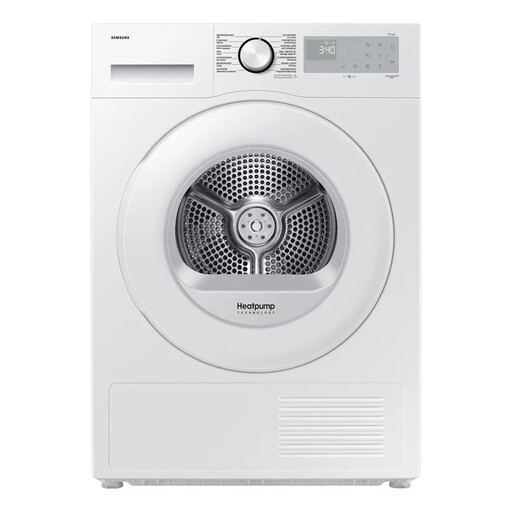
Samsung DV9UDG52A0THEN, 9 kg
Could be worth considering if you dry small loads as well as larger ones regularly, and want programmes for different fabrics.
The product information lists a 9 kg capacity and the Optimal Dry system.
View at Joybuy
 No image available
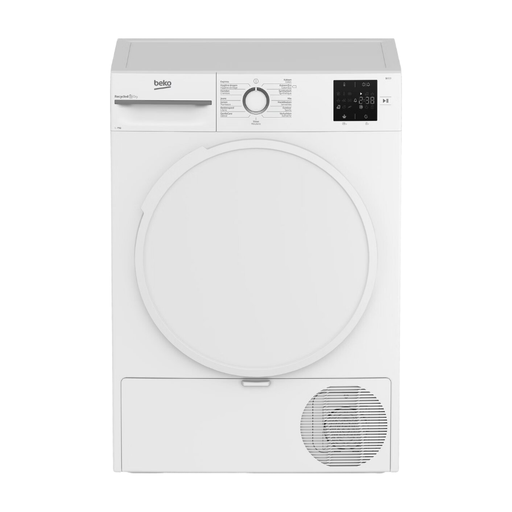
Beko BM3T3722W, 7 kg
Could be a good fit if you usually dry smaller loads and are looking for a 7 kg model.
The product information lists energy label E, a humidity sensor and 15 drying programmes.
View at Joybuy
Frequently asked questions
Is a 9 kg tumble dryer unsuitable if I usually have small loads?
Not necessarily: the capacity tells you the maximum load a suitable programme can handle, not that the drum always needs to be full. If you rarely have larger loads, compare smaller models too. For a larger tumble dryer, check its settings and requirements for small loads.
Can I dry all the fabrics in my weekly wash together?
Only if the care labels and the programme you've chosen are suitable for those items. Sort out laundry with different care instructions; a mixed-fabric programme or sensor doesn't make every item suitable for tumble drying.
What do I need to maintain after drying?
Clean the lint filter after every drying cycle. Empty the condensation tank if the appliance isn't connected to a suitable drain, and follow the manual for the condenser or heat exchanger on your model.
What extra costs or warranty details should I check before buying?
Check whether delivery, installation, a drain hose and a stacking kit are included. According to the Dutch government, products sold in the Netherlands must meet statutory requirements for quality, with no fixed statutory warranty period; a manufacturer's warranty or extended warranty is separate.
Which energy label applies to tumble dryers in the Netherlands?
For current comparisons, the A–G scale has applied since 1 July 2025. The European Commission says the new requirements apply to appliances placed on the market from that date; they don't apply retrospectively to appliances that were already on the market and still in shops' stock before then.


