What should you look for when buying?
First compare energy consumption and moisture removal for the room, then check whether the capacity and installation suit your household. The energy label includes information such as consumption per 100 eco programme cycles. energielabel.nl and Milieu Centraal explain these factors to consider when buying.
| What to consider |
What should you check? |
Who is this most important for? |
| Electricity consumption |
Compare kWh per 100 eco cycles and programme duration using the same energy label system. |
If I often dry cotton laundry in winter, I want to weigh up energy consumption alongside the purchase price. Around 28% of consumers put running costs first. |
| Moisture in the laundry room |
Check the condensation efficiency and whether the model has a condensate tank or a suitable water outlet. |
In a small, poorly ventilated laundry room, I want to know how well moisture is captured. Around 28% of consumers give moisture control top priority. |
| Installation and noise |
Check the noise level in dB, dimensions, required clearance and stacking requirements in the manual. |
If the tumble dryer is close to my living space or needs to go on top of a washing machine, I want a stable, suitable set-up. Around 22% of consumers prioritise installation and peace and quiet. |
| Cotton load and drying results |
Compare the cotton capacity with your usual load, and check the programme, dryness setting and duration. |
For regular cotton loads, I want a drum that suits my laundry routine and delivers the drying results I’m looking for. Around 22% of consumers choose mainly based on load size and drying results. |
Heat pump tumble dryers at Joybuy
These heat pump tumble dryers are options if you want to dry cotton laundry in winter; capacity, energy label and other stated features vary by model.
 No image available
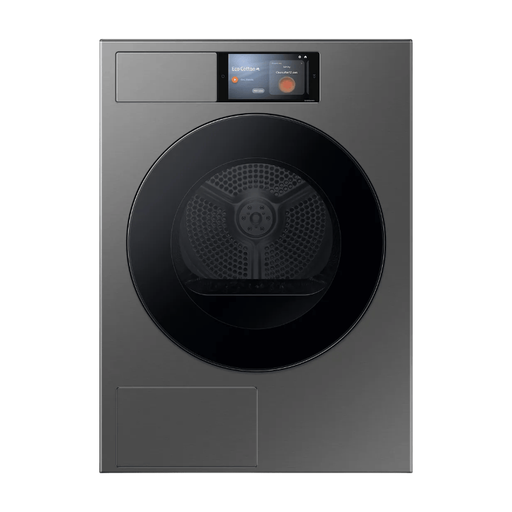
Samsung DV90F09F4SU3 heat pump tumble dryer, 9 kg, energy label A
The stated capacity of 9 kg may be useful if you regularly dry larger cotton loads.
Energy label A; 79 kWh per 100 drying cycles; condensation efficiency class B; 60 dB.
According to the product information, condensate is collected in a tank that needs to be emptied after every cycle.
View at Joybuy
 No image available
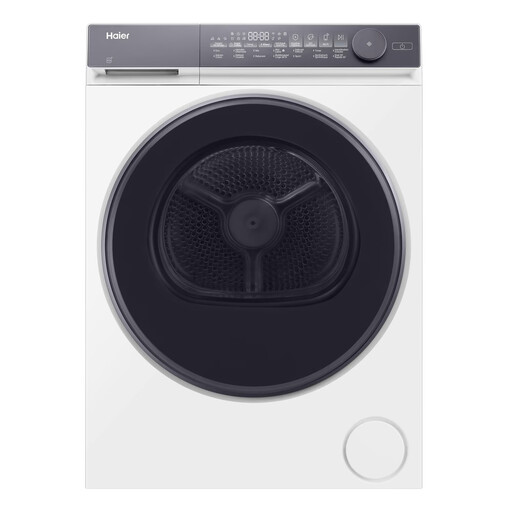
Haier HD80-C367U1-DF heat pump tumble dryer, 8 kg, energy label C
The stated cotton capacity of 8 kg gives you a useful comparison point for your usual load.
Condensation efficiency class B; 91% condensation efficiency; 62 dB. The product information lists a drain hose as included.
View at Joybuy
 No image available
Midea MD205H80WB/W-NL heat pump tumble dryer, 8 kg, energy label C
The product information lists a cotton programme and a capacity of 8 kg for cotton loads.
Energy label C; sensor drying; 14 programmes.
According to the product information, the filter and condenser need to be cleaned after every drying cycle.
View at Joybuy
 No image available
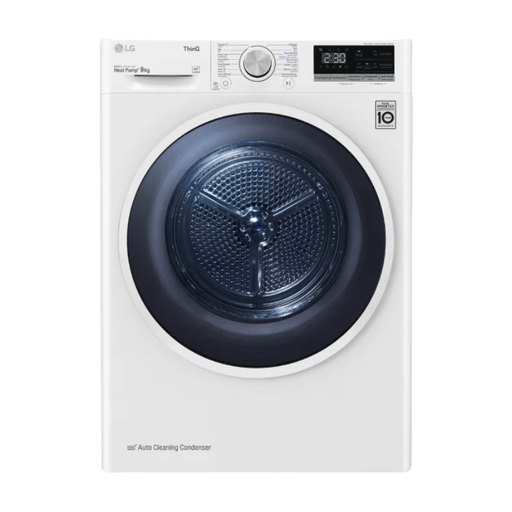
LG RH90V5AV6N heat pump tumble dryer, 9 kg, energy label D
The stated capacity of 9 kg is a useful comparison point if you dry larger loads.
124 kWh per 100 cycles; condensation efficiency class B; 64 dB.
The product information lists a self-cleaning condenser.
View at Joybuy
 No image available
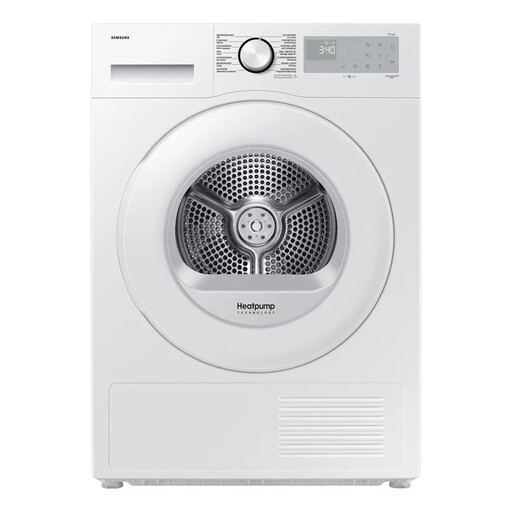
Samsung DV9UDG52A0THEN heat pump tumble dryer, 9 kg, energy label C
With a stated capacity of 9 kg, you can compare this model with your usual cotton load.
105 kWh per 100 cycles; condensation efficiency class B; 64 dB.
View at Joybuy
Frequently asked questions
What does the current energy label tell you about a tumble dryer?
The current Dutch label uses the A–G scale. Compare models using the same energy label system and, alongside the label rating, check consumption per 100 eco cycles, capacity, programme duration and noise level; condenser dryers also show their condensation efficiency. energielabel.nl explains the Dutch label information, and the European Commission describes the applicable EU rules.
Can I still buy a condenser or vented tumble dryer without a heat pump?
The EU ecodesign requirements in force since 1 July 2025 restrict which new household tumble dryers can be placed on the EU market; they do not automatically ban every purchase of every type without a heat pump. The European Commission explains when Regulation (EU) 2023/2533 applies. According to energielabel.nl, older stock may still be sold, and mini tumble dryers up to 3 kg are exempt from the new minimum requirement mentioned. So check the specific model and the applicable information.
How can I install a tumble dryer safely in an upstairs flat?
Make sure the tumble dryer is level on a stable, flat surface, and leave the clearance specified in the model’s manual. If stacking the appliances, place the tumble dryer on top of the washing machine and use a solution suitable for that combination; check both manuals. The Dutch Consumers’ Association recommends stable installation, and Brandweer Nederland advises following the manufacturer’s instructions for use and maintenance.
What maintenance is needed if you use your tumble dryer regularly?
Clean the fluff filter after every drying cycle and empty the condensate tank after each cycle if you use one, unless the model is connected to a water outlet. Condenser or heat exchanger maintenance varies by model; follow the manual for instructions. The Dutch Consumers’ Association provides this maintenance advice for tumble dryers.
Can I have my old tumble dryer taken away when I buy a new one?
When you buy a similar appliance, the retailer must take the old one free of charge, according to the Dutch government. This also applies to online purchases. Arrange in advance how the handover will work when your new appliance is delivered.


