Choose a heat pump tumble dryer with enough capacity for the towel loads your housemates usually dry together, and check that its programme and dryness settings are suitable. Then compare the current energy label, eco programme duration, and requirements for installation, noise and maintenance. These features alone cannot predict how dry a particular model will leave thick towels.
Who is this choice relevant to?
Housemates with lots of towels to wash
If you regularly dry towels together, you’ll want a load that fits and dries evenly, without keeping the drum occupied for longer than necessary. Milieu Centraal recommends choosing a capacity that suits your usual load.
Housemates who share electricity costs
If the tumble dryer is used often, it’s worth considering running costs as well as the purchase price. Energielabel.nl notes that energy use per 100 eco cycles is another useful point of comparison.
Housemates with a small utility room
If you’re putting a tumble dryer in a cramped or shared space, take its dimensions, noise level, moisture collection and the space around the appliance into account. Also follow the manufacturer’s installation and maintenance instructions.
What should you look for when buying?
Start with the usual shared load and the right programme. Then compare energy use and check whether installation and maintenance are manageable in your shared laundry space.
| What to consider |
What should you check? |
Who is this most important for? |
| Capacity and drying performance |
Compare the capacity in kg with your usual shared load. Check for a towel or cotton programme, adjustable dryness settings, and the care label on each towel. |
If I often dry thick towels with my housemates, I want a suitable load size and a programme to match. Around 33% of consumers prioritise drying performance and capacity. |
| Energy use with frequent use |
Compare kWh per 100 eco cycles using the same current label, and take capacity into account. Estimate running costs using your own electricity tariff and expected number of cycles. |
If we use the tumble dryer often and share the electricity costs, I want to compare energy use with how frequently we expect to use it. Around 27% of consumers prioritise shared electricity costs. |
| Noise and moisture in the laundry room |
Check the stated noise level in dB, condensation efficiency, external dimensions and the space required for ventilation and installation. |
If the laundry room is small or close to living or sleeping areas, I want to know in advance whether the noise and moisture collection are suitable for the space. Around 20% of consumers prioritise conditions in the laundry room. |
| Maintenance for everyone who uses it |
Check how to access the lint filter and heat exchanger, how to empty the water tank, and whether a suitable connection for draining condensation water is possible. |
If several housemates use the tumble dryer, I want everyone to know who is responsible for cleaning the filters and maintaining other parts. Around 20% of consumers prioritise easy shared maintenance. |
Common buying mistakes
-
Assuming a short programme will quickly dry thick towels
A short programme name doesn’t mean the programme is suitable for a full load of thick towels. Bosch says that SuperKort on the WQG133DANL is designed for a small amount of thin or synthetic laundry; AEG advises against drying thick and thin fabrics together. An extra drying cycle can keep the shared machine occupied for longer.
Check the suitable cotton or towel programme and adjustable dryness settings, rather than comparing only the shortest programme name.
-
Confusing a self-cleaning condenser with no maintenance
Self-cleaning applies to the condenser and doesn’t remove the need to clean the filter. Consumentenbond recommends cleaning the lint filter after every drying cycle.
Choose a model for ease of maintenance only if everyone who uses it can also take care of the other cleaning tasks.
-
Comparing only the purchase price or an old energy label
Energy use also matters if you use the tumble dryer frequently. Since 1 July 2025, tumble dryers in shops and online have displayed the A-to-G label, according to the European Commission. This means an old label rating cannot be directly compared with the current scale.
Compare current energy use in kWh per 100 eco cycles, and factor in your own usage and electricity tariff.
Brands to compare
AEG
The TR869T4C is a heat pump tumble dryer with a 9 kg capacity. It’s worth comparing if you often have larger shared loads and space is a consideration.
- AEG lists an energy rating of B, a noise level of 61 dB and condensation efficiency class A for this model.
- These specifications alone don’t confirm how dry the model will leave thick towels. Check the external dimensions too.
LG
The RHX1008NWH is an 8 kg model to consider if condenser maintenance is an important factor.
- LG lists a self-cleaning condenser and Sensor Dry for this model.
- The maintenance benefit is a claim made by LG; the lint filter still needs cleaning.
Bosch
The WQG133DANL is an 8 kg model with a moisture sensor and a connection for draining condensation water.
- Bosch lists a noise level of 63 dB and a SuperKort programme.
- Bosch says this model doesn’t have a self-cleaning condenser. According to Bosch, SuperKort is designed for a small amount of thin or synthetic laundry, not specifically for towels.
Beko
The BM3T3824W is an 8 kg heat pump tumble dryer with an OptiSense drying sensor.
- Beko lists an energy rating of C and a noise level of 64 dBA for this model.
- When comparing models, check the specific model and installation requirements alongside capacity and label details.
Heat pump tumble dryers at Joybuy
These heat pump tumble dryers are worth comparing for shared laundry loads, with capacity, sensors and space requirements in mind.
 No image available
Bosch WQB245B40, Series 8, 9 kg
The stated 9 kg capacity may be useful if your housemates regularly dry larger loads of towels together.
The product information lists an energy rating of B (German label panel), AutoDry, a dedicated towel programme, a self-cleaning condenser and a noise level of 61 dB.
View at Joybuy
 No image available
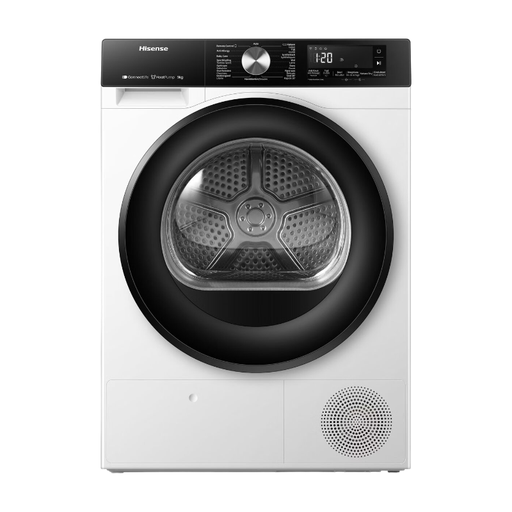
Hisense DH3S902BW3, 9 kg
The stated 9 kg capacity is worth considering if your housemates want to dry larger loads together.
The product specifications list a humidity sensor, condensation efficiency class B, a noise level of 64 dB and dimensions of 84,5 × 59,5 × 64 cm.
View at Joybuy
 No image available
Candy BR 8N3BX-S, 8 kg
The 8 kg capacity can be compared with the amount of laundry your housemates usually dry together.
The product information lists an energy rating of C, a moisture sensor, adjustable dryness settings and a noise level of 62 dB.
View at Joybuy
 No image available
Midea MD205H80WB/W-NL, 8 kg
The 8 kg capacity is a useful starting point for comparison with your usual shared load.
The product information lists a C rating, a sensor that detects temperature and humidity, a 115-litre drum and dimensions of 850 × 595 × 600 mm. According to the description, the 30-minute Turbo Dry programme is designed for small loads of slightly damp clothing.
View at Joybuy
 No image available
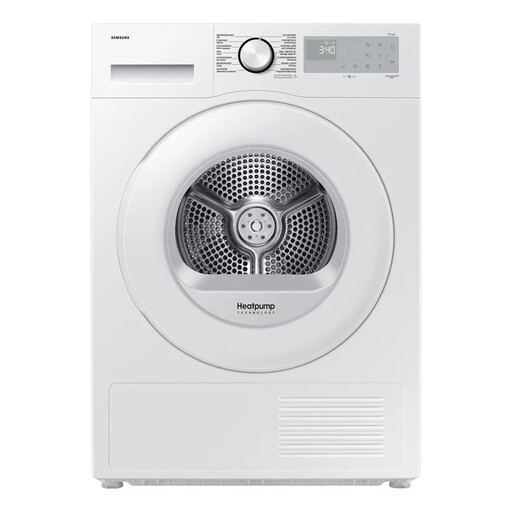
Samsung DV9UDG52A0THEN, 9 kg
The stated 9 kg capacity is worth comparing with the size of your shared laundry loads.
The product specifications list an energy rating of C, the Optimal Dry system, a noise level of 64 dB and condensation efficiency class B.
View at Joybuy
Frequently asked questions
Can all towels go on the same programme?
No. Check the care label on each towel and follow the instructions. AEG advises against drying thick towels with items such as T-shirts and recommends choosing a suitably higher dryness setting if the results aren’t quite right.
What should housemates agree to do after every drying cycle?
Clean the lint filter after every cycle and empty the water tank if the tumble dryer isn’t connected to a suitable drain. Follow the manual for instructions on the heat exchanger, filters and installation of your chosen model.
How should you compare running costs?
Compare energy use in kWh per 100 eco cycles using the current A-to-G label. Multiply energy use per cycle by the expected number of cycles and your own electricity tariff. Eco figures aren’t guaranteed energy-use or drying-time figures for a towel programme.
What warranty applies when buying in the Netherlands?
With normal use, you’re entitled to a product that does what you could reasonably expect it to do. According to ACM ConsuWijzer, the seller is responsible for providing an appropriate solution at no cost if the product breaks down too soon. A manufacturer’s warranty or an extended warranty you’ve paid for doesn’t remove this legal right. The statutory period isn’t a fixed two years for every appliance.
What energy label should a new tumble dryer display?
According to the European Commission, tumble dryers in shops and online have displayed the A-to-G label since 1 July 2025. So don’t compare an older A+++ claim directly with a current letter rating.


