What should you look for?
Start with the care label and the relevant programme. Then check whether the tumble dryer will fit in the space and whether its programmes suit how often and how quickly you need to dry clothes.
| What to consider |
What should you check? |
Who is this most important for? |
| A suitable programme for sportswear |
Check the care label, programme description and maximum load in the manual for the exact model. GINETEX distinguishes between tumble drying at a normal or lower temperature and items that must not be tumble dried. |
If I want to dry sportswear, the programme must suit the care label and fabric. Around 31% of consumers put textile care first. |
| Moisture and placement |
Measure the space and compare the condensation efficiency shown on the current energy label. Assess ventilation and drainage separately; the drain hose must be compatible with the model and the drain outlet. |
In a small or poorly ventilated utility room, I want to know whether the tumble dryer will fit and how I can ventilate the space. Around 25% of consumers prioritise moisture control and placement. |
| Energy use if you dry clothes often |
Compare the current energy rating and kWh per 100 eco cycles on the same labelling basis. This figure relates to the eco programme, not necessarily a sports or quick-dry programme. |
If the tumble dryer runs often, I want to be able to compare its standard energy use on a like-for-like basis. Around 25% of consumers also put energy use at the top of their list. |
| Drying time for a small load |
Check which fabrics and quantities of laundry are permitted in the short programme. AEG says that a quick-dry cycle may use more energy and make more noise. |
If I need a small load of sportswear again quickly, the permitted load and programme duration matter. Around 19% of consumers value being able to reuse clothes quickly above all else. |
Heat pump tumble dryers at Joybuy
This Joybuy selection features heat pump tumble dryers to compare for sportswear that the care label says is suitable for tumble drying, and for use in a utility room. Check that each model’s programmes, available space and installation requirements suit your needs.
 No image available
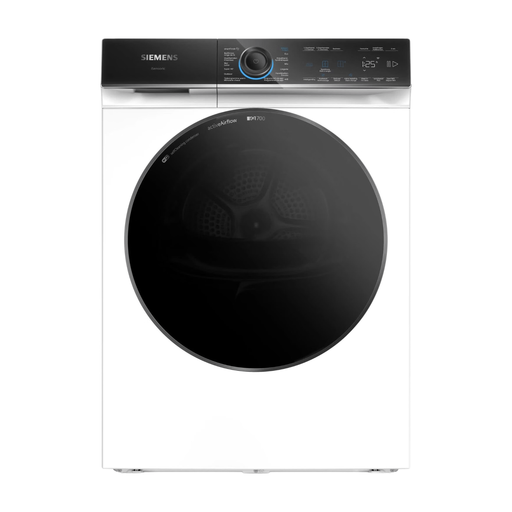
Siemens WR47B2C5FG iQ700, 9 kg, energy rating A
Worth comparing if you’re looking for a heat pump tumble dryer with a 9 kg capacity; check the manual to find a programme that suits your sportswear.
Specifications listed: 9 kg, energy rating A, Dutch/French control panel.
Joybuy
 No image available
Bosch WQH246DPFG Serie 6, 9 kg, energy rating B
Worth comparing if you’re considering a model with a 9 kg capacity; check which fabrics and load size are permitted for the programme you want to use.
Specifications listed: 9 kg, energy rating B, Dutch/French control panel.
Joybuy
 No image available
Bosch WQB245B40 Serie 8, 9 kg, energy rating B, German control panel
Worth comparing if you’re looking for a model with a 9 kg capacity; for this version, check the language of the control panel too.
Specifications listed: 9 kg, energy rating B, German control panel.
Joybuy
 No image available
Candy BR 8N3BX-S, 8 kg, energy rating C
Worth comparing if you’re looking for a heat pump tumble dryer with an 8 kg capacity; check which programmes are suitable for your sportswear.
Specifications listed: 8 kg, energy rating C, Wi-Fi via hOn.
Joybuy
 No image available
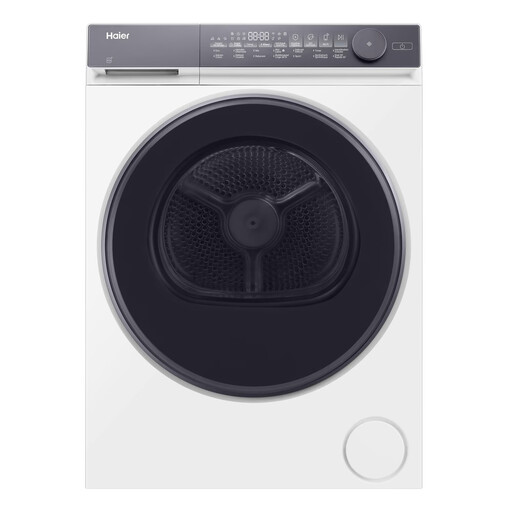
Haier HD80-C367U1-DF, 8 kg, energy rating C
Worth comparing if you’re considering a heat pump tumble dryer with an 8 kg capacity; check the programme instructions and installation requirements for this version.
Specifications listed: 8 kg, energy rating C, Wi-Fi and Bluetooth.
Joybuy
Frequently asked questions
Can I always tumble dry sportswear using a sports programme?
No. Check the care label on each item first, and only choose a programme that matches its instructions. GINETEX distinguishes between tumble drying at a normal or lower temperature and items that must not be tumble dried.
What should I check before putting a tumble dryer in the utility room?
Measure the available space and follow the installation instructions for the exact model. Also compare condensation efficiency and assess ventilation. A drain connection will only work if the tumble dryer, any hose and the drain outlet are compatible. Consumentenbond points out that humid air can cause problems in a poorly ventilated room.
What maintenance should I check if drying times increase?
Follow the model’s manual and check the lint filters, moisture sensor and condensation water container, among other things; clean the condenser if the manual instructs you to. Also stick to the maximum load for each programme. These are maintenance steps, but they do not guarantee that every drying problem will be resolved.
Which energy figures can I compare when buying?
Since 1 July 2025, the Dutch energy label for tumble dryers has shown the A–G scale and information such as kWh per 100 eco cycles, capacity, noise and eco programme duration. These figures do not automatically apply to a sports or quick-dry programme. Milieu Centraal explains the label changes; don’t compare an old A+++ rating directly with a current rating.
What about the warranty and taking away my old tumble dryer?
When you buy as a consumer in the Netherlands, you’re entitled to a legal guarantee if a product does not meet reasonable expectations; according to the Dutch government, there is no fixed statutory warranty period of two years. If you buy a similar new appliance as a private individual, the seller must take your old appliance away free of charge under the old-for-new scheme, according to the Dutch government. This also applies to online purchases.


