
A dryer for small loads
You usually dry just a few items at a time and want the capacity and programmes to suit smaller loads, rather than just a full drum.


If you mainly dry small loads, choose a capacity that suits the way you use your dryer. A larger model makes most sense if you also dry bigger loads, and you should check its settings for small loads. Then compare the programmes for the fabrics you want to dry, the current energy consumption of the eco programme and the space you have available. Milieu Centraal says that 6 or 7 kg is enough if you live alone or use your dryer infrequently. A dedicated quick or wool programme does not automatically mean that a garment is suitable for tumble drying.
You usually dry just a few items at a time and want the capacity and programmes to suit smaller loads, rather than just a full drum.
You’re bringing out clothes for a new season and want to check whether, and how, each item can go in the tumble dryer.
You want to take energy consumption and regular maintenance into account, even if you don’t use the dryer for every load of washing.
| What to consider | What should you check? | Who should pay extra attention? |
|---|---|---|
| Small loads and capacity | Compare your usual load with the maximum capacity, and check whether the exact model has a half-load option or a sensor programme suited to smaller loads. | I usually dry just a few items of clothing and want the capacity to suit that load. Around 28% of consumers give top priority to small loads and a suitable capacity. |
| Suitability for seasonal clothes | Check the care label first, then compare programmes that suit the fabrics you actually want to dry. | When changing over my wardrobe, I want to treat different fabrics with care and follow the instructions for each item. Around 22% of consumers prioritise fabric suitability. |
| Energy consumption | Compare the current energy label rating and the consumption in kWh per 100 eco cycles. This figure is not the same as the energy used for every small load. Energielabel.nl explains these details. | I want to consider the energy use of the programmes I typically use, not just the capacity. Around 22% of consumers say energy consumption is their main buying consideration. |
| Drying a small load on time | Check which fabric and load a short programme is designed for, and compare the duration of the eco programme too. Bosch Nederland describes the WQG243DENL’s short programme as suitable for a small load of lightweight or synthetic washing. | If I need certain clothes quickly, I want to know whether there’s a suitable programme for that fabric. Around 17% of consumers prioritise having their clothes ready on time. |
| Installation and maintenance | Measure the space and access route, check the drainage option and read the model manual for filter and condenser maintenance. Consumentenbond recommends cleaning the fluff filter after every drying cycle. | I want to know in advance whether the appliance will fit and what needs doing after use. Around 11% of consumers give installation and maintenance top priority. |
The maximum capacity doesn’t tell you how the appliance is set up to handle a small load.
Start with the amount of washing you usually dry. If you’re considering a larger model, check specifically what settings it offers for small loads.
The Bosch WQG243DENL’s short programme is designed for a small load of lightweight or synthetic fabrics, not for every fabric or load.
Check which fabrics and load sizes each programme allows, and follow the care label.
The European Commission reported that the revised energy label for household tumble dryers has applied since 1 July 2025. The old and new letter ratings are not on the same scale.
Compare current label information, including consumption per 100 eco cycles.
A drainage connection needs a suitable outlet, and the fluff filter still needs regular cleaning.
Check the installation space and the connection supplied in advance. Follow the manual for your chosen model when carrying out maintenance.
The WQG243DENL is worth considering if you alternate between small loads and larger ones.
The BM3T3722B is a 7kg heat pump tumble dryer for anyone looking for a lower maximum capacity.
The TR838N4B from the 8000 AbsoluteCare range is worth a look if programmes for different fabrics are important to you.
The DV90DG52A0ABEN is a 9kg model where the installation setup may also be a factor.
This selection includes heat pump tumble dryers with different capacities and features relating to clothing and drying settings. For small loads and seasonal clothes, check which programmes suit your washing and the care labels.
 No image available
Worth considering if you want to take features for different fabrics into account when drying seasonal clothes.
Listed features: AutoDry and Sensitive Drying. Colour: white. B energy label rating according to the German label.
 No image available
Worth comparing if you’re looking for an 8 kg heat pump tumble dryer.
Listed details: E energy label rating and white finish. The product name also includes Anti-Crease Plus.
 No image available
Worth comparing if you’re looking for an 8 kg model and want its listed drying features to suit the way you use it.
Listed details: Eco Heat Pump, 3D Drying, 3-in-1 filter and E energy label rating.
 No image available
Worth considering if the listed programmes and sensor features suit the types of washing you dry.
Listed details: C energy label rating, SmartHome, Sensor Drying and 30-Min Quick Dry.
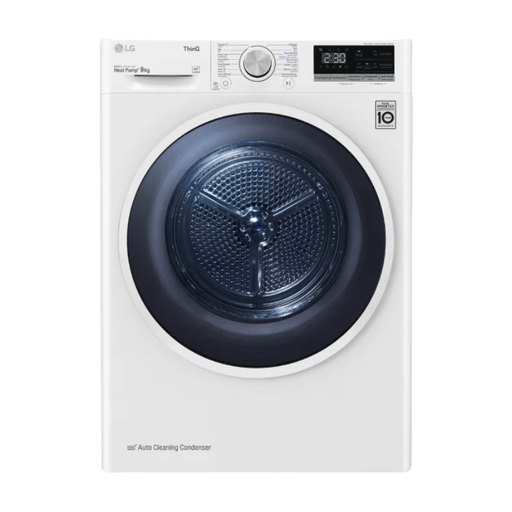 No image available
Worth comparing if you’re looking for a 9 kg capacity and want to take the listed drying features into account.
Listed details: Eco Hybrid, self-cleaning condenser and D energy label rating.
No. Check the care label for each item. A wool or delicates programme does not override the instructions on the label.
Since 1 July 2025, the label has used the A–G scale. The European Commission explains this change. As well as the rating, pay particular attention to the consumption in kWh per 100 drying cycles using the eco programme, and how long that programme takes. The stated eco figure is not a measurement of your small load.
Clean the fluff filter after every drying cycle, as recommended by Consumentenbond. Empty the condensate tank unless the appliance is connected to a drain. Follow your model’s manual for care of the condenser or heat exchanger.
You’re entitled to a product that works as it should, and can contact the retailer if something goes wrong. The Dutch government explains that the Netherlands does not have a fixed statutory two-year warranty period for all products. For distance purchases, you can usually change your mind within 14 days.
When you buy a similar new appliance, private customers can use the free old-for-new scheme, including for online purchases. The Dutch government also describes other free ways to return old appliances through the online retailer if collection at the time of delivery isn’t possible.