
Parents with urgent school laundry
You want a few items of clothing dry before the next school day. So, check which fabrics and load size a short cycle is designed for.


First, choose a heat pump tumble dryer that fits the available space according to its installation instructions. Then compare the cycle time for your usual load, condensation efficiency, noise level and energy consumption on the same label basis. A short cycle is not automatically suitable for a full, mixed load of school laundry: Bosch Netherlands lists a 40-minute cycle for a small amount of synthetic laundry and lightweight fabrics on the WQG233DLNL. If the clothes can wait and you have a suitable place to hang them, air-drying can save the electricity used by the tumble dryer, as Milieu Centraal points out.
You want a few items of clothing dry before the next school day. So, check which fabrics and load size a short cycle is designed for.
You have little room for an appliance or clothes airer. Measure the space and consider installation, moisture and noise at the intended location.
You regularly dry larger or mixed loads too. Compare the drum capacity and stated energy consumption for the cycles you use.
For school clothes on a rainy day in a small flat, the cycle limits, installation space required and conditions during regular use are particularly important.
| Consideration | What should you check? | Who is this most important for? |
|---|---|---|
| Getting school clothes dry in time | Check the maximum load and suitable fabrics for the short cycle. Compare the time for a full load separately. | If I only need a few suitable items dry before the next school day, the cycle limit is crucial. Around 26% of consumers put drying time first. |
| Fitting in the flat and managing moisture | Measure the height, width and depth, and check the connections and required clearance too. Look at the condensation efficiency, especially if the space is poorly ventilated. | If the dryer has to go in a cramped or poorly ventilated space, I want to know in advance whether it will fit and moisture can be managed. This is the main consideration for around 26% of consumers. |
| Electricity use when drying regularly | Compare the stated consumption on the same label basis. Since 1 July 2025, the European Commission has used the A–G label for tumble dryers. An eco-cycle figure does not predict the consumption of every other cycle. | If I dry clothes regularly, I want to compare consumption with my own usage. Around 21% of consumers put running costs first. |
| Noise near living areas | Compare the stated noise levels of the exact models. Follow the installation instructions to ensure the appliance is stable and level. | If the dryer is close to where I live or sleep, I want to take its stated noise level into account. Around 16% of consumers put noise first. |
| Suitability for different fabrics | Check the care labels and compare the fabrics and load limits allowed for each cycle. | If I want to dry different types of school clothes, I want to know which items are suitable for each cycle. Around 11% of consumers focus mainly on this. |
According to Bosch Netherlands, SuperKort on the Bosch WQG233DLNL is designed for a small amount of synthetic laundry and lightweight fabrics. It is not a promise that a full, mixed load will be dry in that time.
Check the cycle instructions against the clothes you want to dry and the time you have available.
You also need to allow space for connections, doors and installation. The stated depth alone does not confirm that the dryer will fit in the intended spot.
Measure the full available space and check the installation manual before choosing a model. If you plan to stack the appliances, check that the washing machine and stacking kit are compatible too.
A heat pump tumble dryer does not need an air vent to the outside, but condensation efficiency can still matter, especially in a poorly ventilated space. Filters and other parts also need maintenance.
Compare the condensation class and follow the maintenance instructions for the exact model. Consumentenbond recommends cleaning the fluff filter after every drying cycle.
The revised A–G energy label has applied to tumble dryers since 1 July 2025. An old label rating is therefore not directly comparable with the new scale.
Compare current product information on the same label basis and check the stated energy consumption too. The European Commission explains the new label basis.
The Dutch 8kg models BM3T3823WMM and BM3T3824W have different stated depths and energy labels.
The Dutch WQG233DLNL is worth comparing if you sometimes need to dry just a few suitable items of school clothing quickly.
The Dutch TR7386T4B from the 7000 SensiDry range is worth comparing if you dry mixed laundry as well as individual school items.
This Joybuy selection features heat pump tumble dryers with different drum capacities and cycles. For each model, check that its capacity, cycle instructions and space requirements suit your laundry and home.
 No image available
The 8 kg capacity may be useful if you dry larger loads as well as school clothes.
The product information lists energy class C, 142 kWh per year and 62 dB(A). It also mentions six quick cycles and sensor drying.
 No image available
The 9 kg capacity is worth considering if you regularly dry larger loads; check that the machine fits in your available space.
The product information lists energy class B, condensation efficiency class B and 59 dB(A). It also mentions Extra Quick 40' and AutoDry with moisture sensing.
 No image available
Cycles for different fabric types may be useful if you dry more than one type of laundry; always check the care labels.
The product information lists energy class B, 61 dB, AutoDry with moisture sensing and a self-cleaning condenser. This model has a German control panel.
 No image available
The product information describes a short-cycle option for small amounts of lightly damp clothing; check that the fabrics and load size are suitable.
The product title lists energy class C and an 8 kg capacity. The stated depth is 600 mm; according to the description, Turbo Dry takes 30 minutes for small amounts of lightly damp clothing.
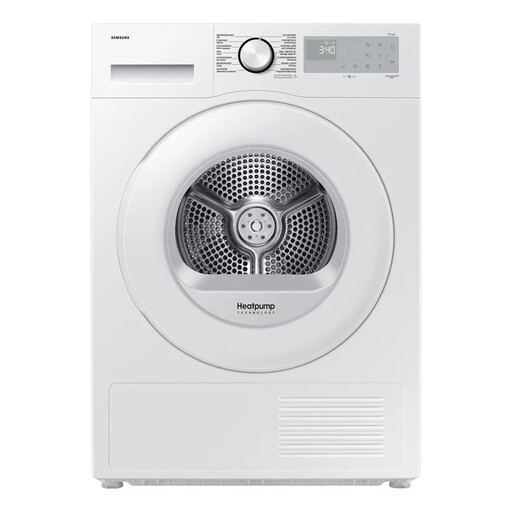 No image available
The 9 kg capacity is worth considering if you regularly dry larger loads; weigh this against the space you have available.
The product information lists energy class C, condensation efficiency class B, 105 kWh per 100 cycles and 64 dB. It also mentions an Optimal Dry system that monitors the moisture in the laundry.
No. Check the limit for the exact cycle. Bosch Netherlands describes the 40-minute SuperKort cycle on the WQG233DLNL as suitable for a small amount of synthetic laundry and lightweight fabrics, not as a drying time for a full, mixed load.
That depends on the space and the model's installation instructions. Make sure the dryer is stable and level, leave the required clearance and use a suitable stacking kit if you plan to stack the appliances; never place the washing machine on top of the dryer. If the space is poorly ventilated, compare the condensation efficiency too.
Clean the fluff filter after every drying cycle, as Consumentenbond recommends, and empty the condensate tank if the appliance is not connected to a drain. Check the instructions for the exact model for information about the condenser.
Compare the stated energy consumption of models on the same basis, using the A–G label that has applied to tumble dryers since 1 July 2025. Your actual costs depend on the cycles you use, how often you dry clothes and your electricity tariff; an eco-cycle figure does not predict the consumption of a short cycle.
Since 1 July 2025, the revised A–G energy label must be displayed for household tumble dryers in shops and online. The European Commission distinguishes between new machines and shop stock that was already on the market before that date. So, check the label and product information sheet for the specific model.