
Housemates who share an electricity bill
If you regularly dry cotton washing together, you can weigh energy use per eco cycle against the purchase price. Milieu Centraal and Energielabel.nl explain this trade-off when choosing a tumble dryer.


A heat pump tumble dryer is a good fit for shared cotton winter washing when its capacity suits your usual loads and the space meets the requirements for your chosen model. Then compare energy use per 100 eco cycles, programme duration, noise levels and condensation efficiency. A larger drum or faster setting won’t automatically make a load cheaper to dry. It’s also worth agreeing who will clean the lint filter and empty the water tank.
If you regularly dry cotton washing together, you can weigh energy use per eco cycle against the purchase price. Milieu Centraal and Energielabel.nl explain this trade-off when choosing a tumble dryer.
If several people want to use the dryer one after another, drum capacity, drying results and programme duration all matter. AEG Support points out that overloading can slow down drying.
If you share a space for your appliances, check that the dimensions, water drainage and noise levels are suitable. Ventilation and the temperature requirements for your chosen model may also be factors.
Start with the space available and the loads you actually dry. Then compare energy use and drying time on the same basis, and make maintenance part of your household arrangements.
| What to consider | What to look for | Who should pay particular attention? |
|---|---|---|
| Energy use and shared costs | Compare kWh per 100 eco cycles and the current A–G label. The European Commission says the new label scale for household tumble dryers came into effect on 1 July 2025, so don’t compare old A+++ ratings directly with the current scale. | If we use the dryer together regularly, I want to be able to factor its energy use into our shared bill. Around 36% of consumers prioritise energy use and shared costs. |
| Capacity and waiting time | Compare the capacity in kilograms with your usual cotton loads, and check the eco programme duration. Follow the programme instructions and avoid overloading the machine. | If we do several loads one after another, I want to know that they’ll fit without the dryer being tied up for longer than necessary. Around 29% of consumers prioritise capacity, drying results and waiting time. |
| Location, moisture and noise | Measure the space and check the installation requirements, condensation efficiency and stated noise level. Also see whether drainage is possible and whether the temperature in the space meets the model’s requirements. | If the dryer is going in a small or poorly ventilated room, I want to know in advance whether the space is suitable and moisture can be managed. Around 21% of consumers prioritise location, moisture and noise. |
| Maintenance and household arrangements | Check the instructions for the lint filter and condenser, and whether the water tank needs emptying. A self-cleaning condenser doesn’t mean you can neglect the filter. | In a shared home, I want to know which maintenance task each person is responsible for after using the dryer. Around 14% of consumers prioritise easy maintenance and clear arrangements. |
The label scale for household tumble dryers changed on 1 July 2025. The European Commission describes the current scale as A–G, so a letter from the old scale isn’t directly comparable.
Check which label applies to the exact model and compare its stated energy use per 100 eco cycles on the same basis.
A larger drum won’t automatically solve a busy laundry schedule. AEG Support says that overloading can reduce heat circulation around the clothes and extend drying time.
Compare the capacity with your usual cotton loads, and check the eco programme duration and programme instructions.
According to the Consumentenbond, humid air can cause problems in a poorly ventilated room. AEG Support says that, for the tumble dryers covered by its advice, a low ambient temperature can extend drying time.
Measure the space, check the ventilation and drainage, and follow the temperature and placement requirements for the exact model.
You may need a suitable drain hose or installation provision. What’s suitable depends on the model and the connection available.
A self-cleaning condenser doesn’t mean the lint filter no longer needs attention. Brandweer Nederland recommends removing dust from the filter after every use.
Read the model’s maintenance instructions, and agree who will clean the filter and, where necessary, empty the water tank after each use.
According to Bosch, the WQJ23200NL is an 8 kg heat pump tumble dryer with Auto Dry and a connection for a condensate drain set.
According to Beko, the BM3T3823WMM has an 8 kg capacity and a cabinet depth of 54,5 cm, which may be useful if space is limited.
Siemens lists the WQ35G2D0NL with an 8 kg capacity, autoDry, a half-load option and a self-cleaning condenser.
According to LG, the RH90V9AV3N is a heat pump tumble dryer with a 9 kg capacity and Sensor Dry.
According to AEG, the TR8ESSEN is an 8 kg heat pump tumble dryer with an eco programme for cotton.
This selection features heat pump tumble dryers for regular shared use. Compare the stated capacity with your cotton loads, and see which maintenance and scheduling features fit your household arrangements.
 No image available
The 8 kg capacity is worth considering if it suits your usual cotton loads.
The product name lists energy class C. The product information mentions moisture sensing, a delay start of up to 24 hours and a drain hose. Compare the label with the current scale and check that the drainage option suits your space.
 No image available
The 9 kg capacity may suit your shared cotton loads if they need the extra space. Compare it with the loads you actually dry.
The product information mentions a cotton programme and a self-cleaning condenser. The stated energy class B is identified as a German label, so it isn’t directly comparable with current Dutch label information.
 No image available
The 8 kg capacity makes this model worth comparing if your shared loads fit within that limit.
The product name lists class C. The product information mentions a cotton programme and sensor drying. Compare the current label information and check the maintenance instructions for the filter and condenser.
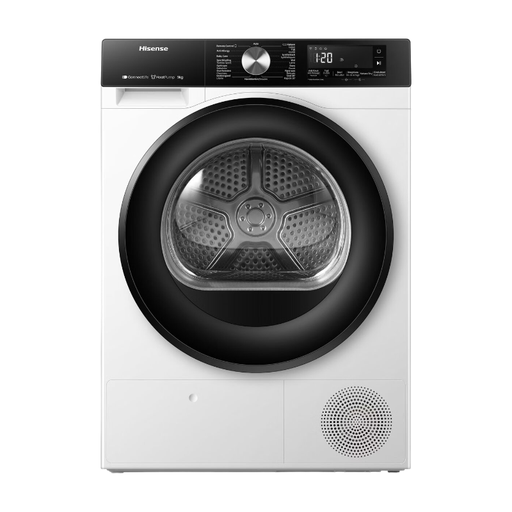 No image available
The 9 kg capacity may be useful if you often dry larger shared cotton loads.
The product information mentions automatic and quick programmes, as well as a water drainage option. An A+++ claim in the product description isn’t directly comparable with the current A–G scale, so check the label information for this model.
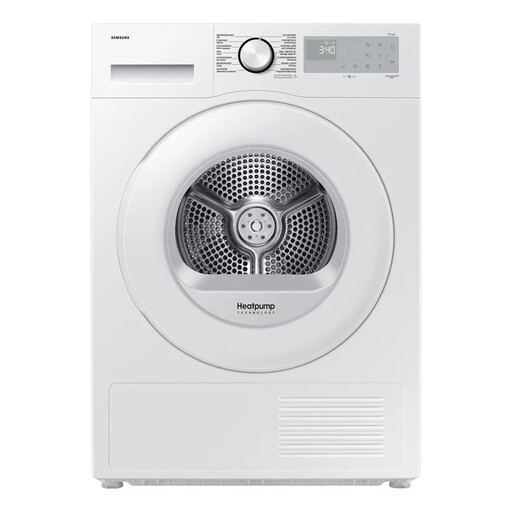 No image available
The 9 kg capacity is worth comparing if you want to dry larger loads together.
The product information mentions the Optimal Dry system and programmes for different fabrics. Check the cotton programmes, ventilation requirements and filter instructions for shared use.
Compare the number of kWh per 100 eco cycles on the energy label. Energielabel.nl lists this figure as a useful point of comparison; your actual bill will also depend on how many loads you dry, the programme you choose and your electricity tariff.
It depends on the temperature in the space and the manual for the exact model. For the tumble dryers covered by the relevant maintenance article, AEG Support recommends 5–35 °C and says that lower temperatures can extend drying time. This isn’t a general limit for all brands.
Clean the lint filter according to the manual. Brandweer Nederland recommends removing dust from the filter after every use. You should also agree who will empty the water tank and take care of any other model-specific tasks.
No, don’t compare those ratings directly. According to the European Commission, the current A–G scale for household tumble dryers has been in use since 1 July 2025. Check the label information that applies to the particular model and scale.
Check the ventilation, condensation efficiency and water drainage options in the space where you plan to put the dryer. The Consumentenbond warns that humid air can cause problems in a poorly ventilated room.