
Parents rushing around on school mornings
You want a small load of school clothes dry in time. So check that the quick programme is suitable for the fabric and amount of laundry you want to dry.


A heat pump tumble dryer with a suitable quick programme can help get a small load of school clothes dry in time, but the programme duration only applies to the specified fabrics and load size. In a shared utility room, noise levels, condensation efficiency, water drainage and actual energy use also matter.
You want a small load of school clothes dry in time. So check that the quick programme is suitable for the fabric and amount of laundry you want to dry.
Noise, moisture and emptying the condensate tank affect other users too. So consider the space, ventilation and whether the dryer can be connected to a condensate drain.
The drum needs to suit your usual loads as well as smaller loads in between. A larger capacity doesn’t automatically mean a particular school load will dry faster.
Start with a programme that suits the school clothes, then consider the shared space and choose a drum capacity and energy use that fit your usual laundry.
| What to consider | What should you check? | Who should give this more weight? |
|---|---|---|
| School clothes dry in time | Check which fabrics and load sizes are allowed for the quick programme. | If I need a small load ready in time on a rainy school day, I check that the fabric and load weight are within the programme limits. Around 25% of consumers would make drying time their top purchasing priority. |
| Noise and moisture in a shared space | Compare the stated noise level and condensation efficiency; also check ventilation and drainage options. | If the dryer is close to other people or in a poorly ventilated space, I want to know how much noise and moisture it produces. Around 25% of consumers would prioritise how comfortable the shared space is to use. |
| Capacity for family laundry | Compare the maximum drum capacity with the load limits for the programmes you use. | If I regularly do larger loads, I want a drum that suits how I use it, without assuming that a larger drum will dry a small load faster. Around 19% of consumers would make capacity their top purchasing priority. |
| Energy use | Compare the energy class and kWh per 100 eco cycles using the same current label basis. | If I dry clothes often, I want to compare the eco-cycle energy use with that of other models. Around 19% of consumers would make comparable energy use their top priority. |
| Different clothing fabrics | Check the care labels and which fabrics, dryness levels and load sizes are allowed for each programme. | If the school laundry includes a mix of fabrics, I want to know which clothes can be dried together on a suitable programme. Around 12% of consumers would prioritise the right treatment for different fabrics. |
The 40 minutes quoted by Bosch Netherlands for the WQG245D7NL applies to a small load of synthetic or lightweight laundry. The Consumentenbond also assesses drying time and drying results separately.
Compare programmes against the fabrics, load size and dryness level you actually need.
If the load isn’t suitable for the programme, you may need to run another drying cycle.
Tumble dryers vary in condensation efficiency. The Consumentenbond points out that damp air in a poorly ventilated utility room can cause problems.
Compare condensation figures and noise levels too, and check the room’s ventilation and drainage options.
You may need a drain hose to direct the condensate to a suitable drain.
The European Commission states that, since 1 July 2025, household tumble dryers offered in shops and online must display the new A–G scale. This means the letters on the old and new scales cannot be compared directly.
Check the current product information sheet and compare kWh per 100 eco cycles on the same label basis.
Beko lists the BM3T3824B as energy class B. The BM3T3824W is a differently designated model listed as class C at Joybuy; the model names don’t prove that the versions are identical.
Check the full model number and its product information sheet before comparing specifications.
The Serie 6 WQG245D7NL is worth comparing if you’re looking for a 9 kg drum and features for smaller loads.
The BM3T3824B offers an 8 kg heat pump option with an OptiSense drying sensor.
The 8 kg TR7386T4B is a useful comparison for mixed loads and published condensation figures.
The Dutch DV90DG6845LKU3 is a 9 kg option for comparing the current energy label and sensor features.
The 9 kg TEH788WP is worth considering if fabric-specific programmes and a model designed to reduce noise are important to you.
These heat pump tumble dryers are suited to small loads that need to be dried quickly, regular family laundry and use in a shared utility room. Check which programmes, load sizes and drainage options suit your needs for each model.
 No image available
An option to compare if you’re looking for an 8 kg drum and condensate drainage in a shared utility room.
8 kg; energy class C; 62 dB(A); condensation class B with 91% condensation efficiency; 1.01 kWh per cycle. A drain hose is included.
 No image available
A 9 kg option to compare if drum capacity, noise levels and condensate drainage matter to you.
9 kg; energy class B; 59 dB(A); condensation class B at 91%; self-cleaning condenser; Extra Quick 40′ programme and automatic moisture sensing. The available product information also states that a drain hose is included.
 No image available
An option to consider if you’re looking for a quick programme for a small, slightly damp load.
8 kg; energy class C; 30-minute Turbo Dry programme for small loads of slightly damp clothing; sensor-controlled drying. The stated programme duration doesn’t necessarily apply to other loads.
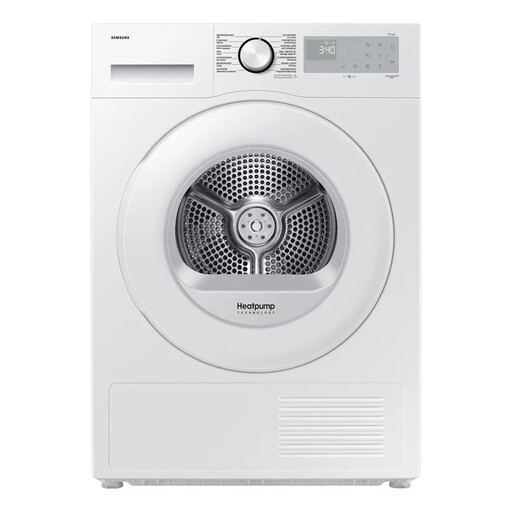 No image available
A 9 kg option to compare if you’d also like to consider a programme for smaller loads.
9 kg; energy class A; 79 kWh per 100 drying cycles; 60 dB; condensation class B; Super Speed 35′ for small loads. Condensate is collected in a tank, which the instructions say should be emptied after every cycle.
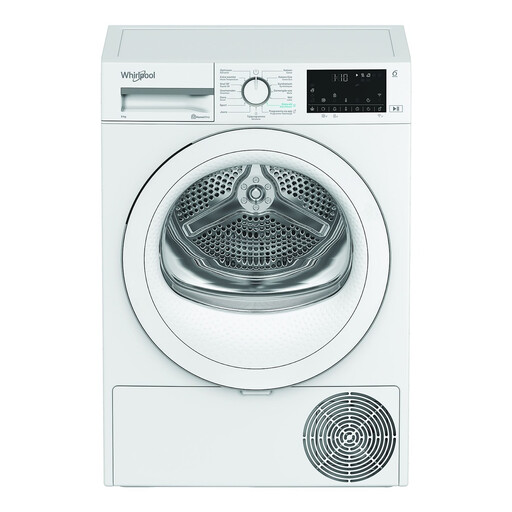 No image available
An option to compare if you’re looking for a 9 kg drum and the option of direct water drainage.
9 kg; energy class C; 63 dB; condensation class B; 106 kWh per 100 cycles; Direct Drain option.
No. Bosch Netherlands describes the WQG245D7NL’s 40-minute programme as suitable for a small load of synthetic or lightweight fabrics. Check the clothing care label and programme conditions; that time doesn’t automatically apply to a full load of cotton laundry.
Compare condensation efficiency, ensure the room has suitable ventilation and check whether the model can be connected to an available drain. The Consumentenbond warns that damp air can cause problems in a poorly ventilated space; you may need an extra hose for drainage.
When sharing the dryer, agree that whoever has used it will clean the filter after their cycle. The Dutch Fire Service advises cleaning the filter after every cycle; also follow the instructions for your chosen model.
Compare the kWh per 100 eco cycles shown on current labels using the same basis. This figure describes the eco programme and doesn’t directly predict energy use for a quick or other programme.
Since 1 July 2025, household tumble dryers offered in shops and online must display the new EU label, with a scale from A to G. This is the current basis for comparing products; check which scale is used in older product descriptions.